
 Water promptly after laying.
The first 24 hours
Confirm watering permissions before installation. Water promptly after laying and check beneath a corner to confirm moisture reaches the soil. Avoid runoff and standing water. Keep people and pets off the new sod.
Guide · Sod care
Check soil moisture, track rooting, and adjust care to your yard. Follow your confirmed project instructions and your water provider’s current rules.
Ask us about your yard

Check moisture.
Watch the roots.
Adjust care.
By the Sod Friend crew. Delivery and installs are done by the crew at Loera’s Landscaping, who have laid sod across Dallas-Fort Worth since 2010. Use these general checks alongside your project instructions. Read the full watering guide.
Confirm watering permissions before installation. Water promptly after laying and check beneath a corner to confirm moisture reaches the soil. Avoid runoff and standing water. Keep people and pets off the new sod.
Check beneath the sod and keep the root zone moist without saturation. Adjust watering to weather and rooting progress, within your water provider’s current rules and any approved allowance.
Keep checking beneath the sod. Reduce watering frequency as roots establish and moisture lasts longer; do not change the schedule just because week two has started. Follow current watering rules and any approved allowance.
Once sod resists a gentle tug, shift toward deeper, less frequent watering based on soil moisture, weather, and local rules. Mow when it is anchored and the ground supports the mower, using the high side of the variety’s mowing range. Remove no more than a third of the blade.
Texas A&M recommends, for home lawns mowed weekly with a rotary mower: Bermuda 1 to 2 inches, Zoysia 1 to 2 inches, St. Augustine 2.5 to 3.5 inches. Stay at the top of your range on new sod and under trees, and never take more than a third of the blade in one pass.
Wait 3 to 4 weeks after install, then a balanced starter fertilizer. Texas A&M puts the yearly nitrogen at 2 to 6 lbs per 1,000 sq ft for Bermuda, 2 to 4 for St. Augustine, and 1 to 3 for Zoysia, applied at 0.5 to 1 lb at a time in the summer growing season. Skip heavy nitrogen on St. Augustine in peak heat.
No pre-emergent on new sod until it has been mowed 3 or 4 times; it stops the sod from rooting too. Hand-pull early weeds. A dense, well-watered lawn is the best weed control.
Brown patch (circular tan rings) hits St. Augustine in cool wet weather, usually from evening watering: water in the morning. Chinch bugs cause dry, yellowing patches in hot St. Augustine lawns near driveways. Armyworms strip Bermuda fast in late summer: look for moths and chewed blades. Grubs make turf lift like a rug. Call us at the first sign.
All three grasses go tan from roughly November to March. That is normal, not dead. Water lightly during dry winter spells and expect green-up in April once soil warms.
Under mature trees, thin the canopy where you can, mow St. Augustine tall, and water less often but deeper. If a spot gets under 3 hours of sun, no grass will thrive there; consider a bed.
Keep dogs off new sod for two weeks. Hose down urine spots right away. Bermuda and Zoysia recover from wear; St. Augustine repairs slower.
Sod is laid tight in a brick pattern and rolled. If small gaps show after a week, sweep in a little topsoil. Settled low spots get a thin topdressing once the sod is rooted.
Test every zone before delivery day. New sod needs head-to-head coverage; a dry corner shows up as a dead strip within days.
Install within 24 hours of delivery. In summer heat, keep the stack shaded and damp; the middle of a stacked pallet yellows first.
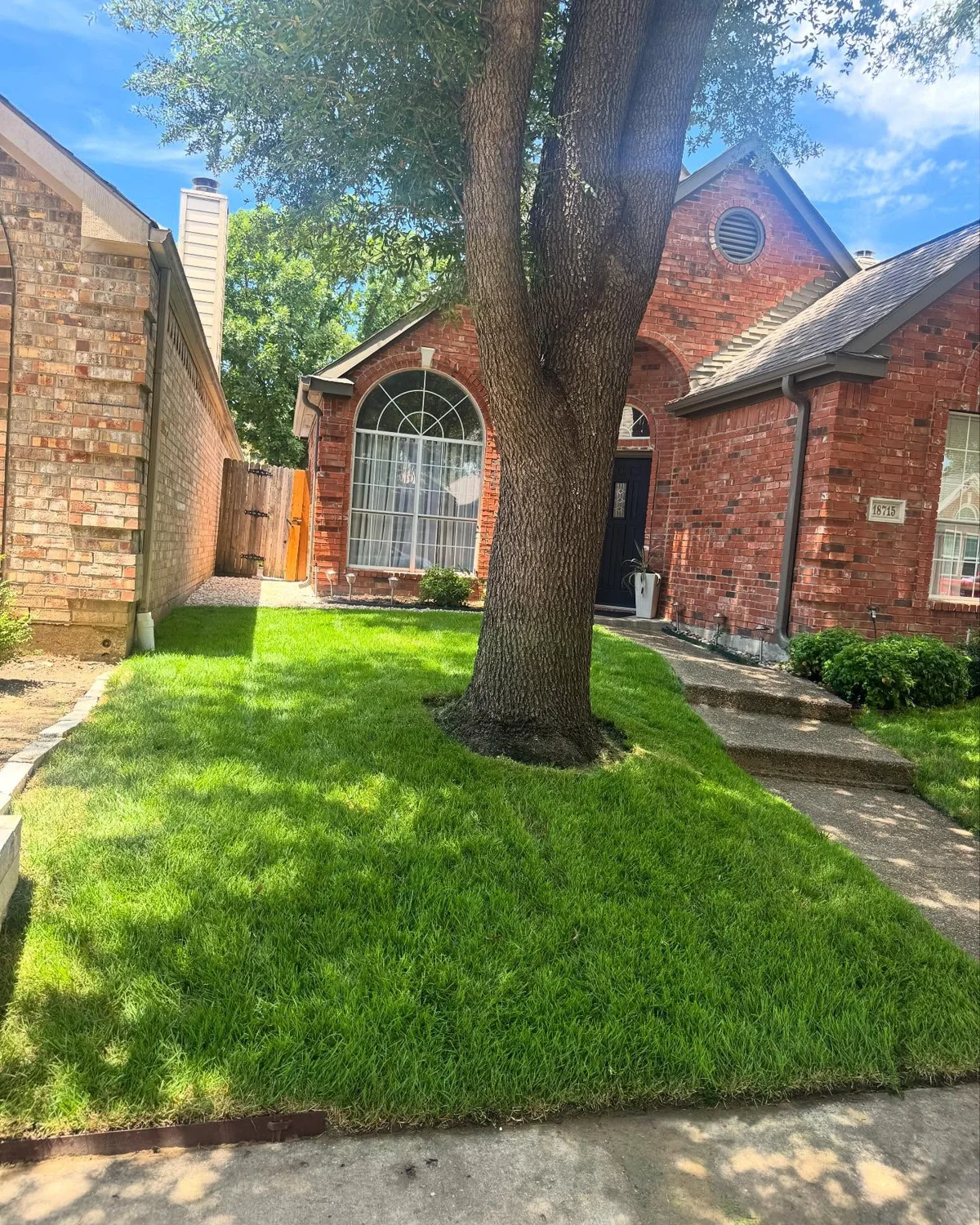
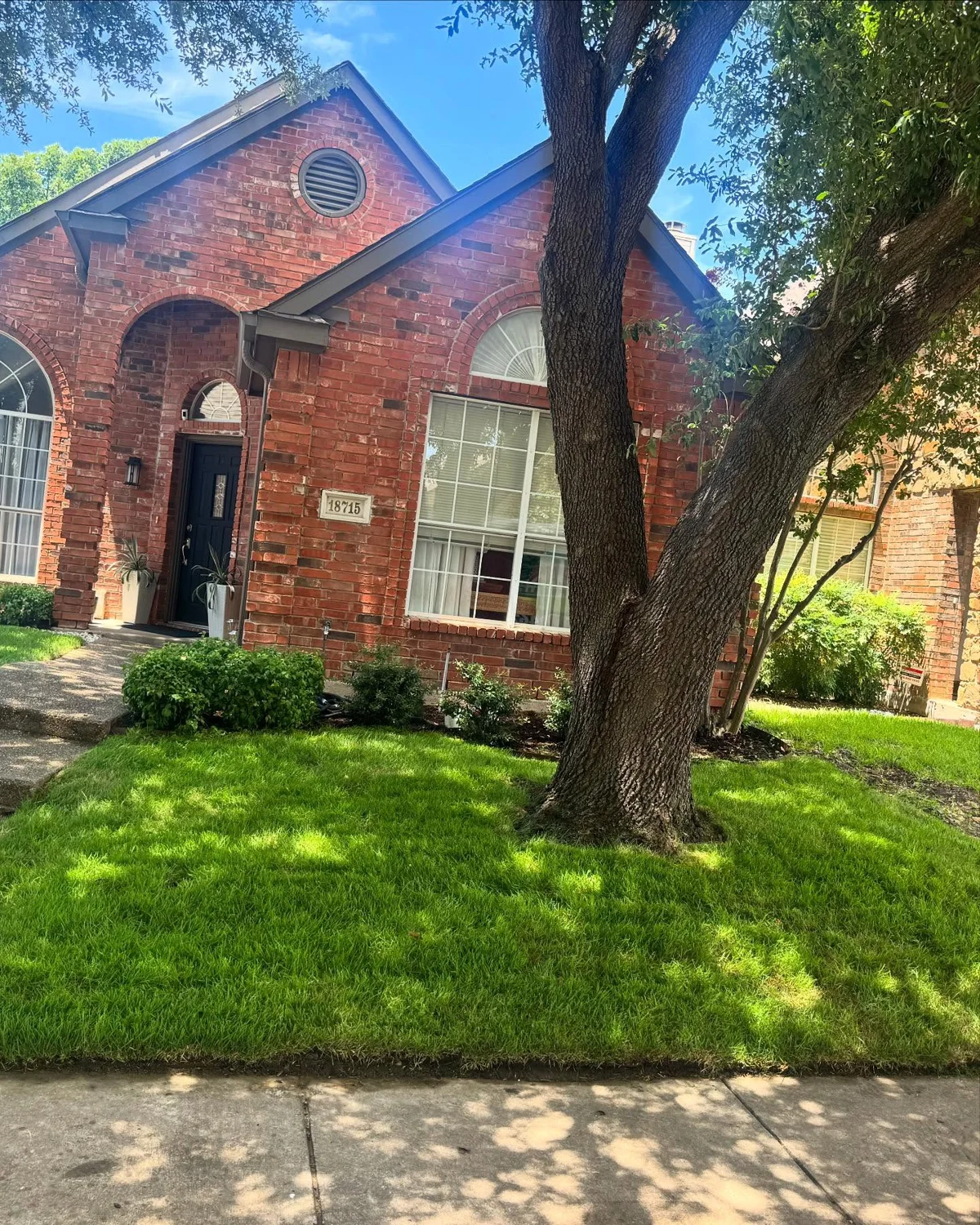
 What happens before the schedule starts.
Palette says
Install within 24 hours of delivery, and the same day in summer heat. A stacked pallet cooks from the middle out, so the rolls in the center yellow first. Keep the stack shaded and damp until it goes down.
Palette says
Old turf out, ground graded away from the house, and every sprinkler zone tested. Do it before delivery day, not after. Sod that lands on unprepped clay sits there drying out while somebody goes to rent a sod cutter.
Palette says
Lay it anyway. The bare strip by the mailbox, the alley side, the dirt under the trampoline. Sod does not keep, so a half pallet left in the driveway on Sunday is a half pallet of compost on Tuesday.
At two to three weeks, once the sod resists a gentle tug, which means it has rooted. Mow on the high side of the range for the variety and never take more than a third of the blade in one pass. Mowing before it roots pulls the seams apart.
Check rooting and soil information before feeding. A first feeding may be appropriate around three to four weeks, depending on growth, prior fertilizer, and product instructions. Do not fertilize stressed sod simply to change its color. See the first-mow and fertilizer guide below.
Usually not. From roughly November to March all three North Texas grasses go tan and dormant, which is normal. In the growing season, brown patches on new sod are almost always a watering problem: a dry corner from poor sprinkler coverage, or sod that dried out on the pallet. Circular tan rings on St. Augustine in cool wet weather are brown patch disease, and evening watering causes it.
No pre-emergent until the sod has been mowed three or four times, because the same chemistry that stops weed seeds from rooting stops your sod from rooting. Hand-pull early weeds instead. A dense, well-watered lawn is the best weed control you will get.
Send us a photo. We can help you check moisture and sprinkler coverage.
Tell us about your yard and our team gets back to you with a straight number.