
At a glance
Use milestones before maintenance
Let rooting guide the first maintenance
During early establishment, focus on moisture and protect the loose pieces. Delay work that could move sod or stress new roots.
The watering guide covers the first weeks. Check progress before adding mowing, fertilizer, or weed treatments.
Check rooting before the first mow
Rooting often takes two to three weeks in warm soil. Cooler conditions can take longer.
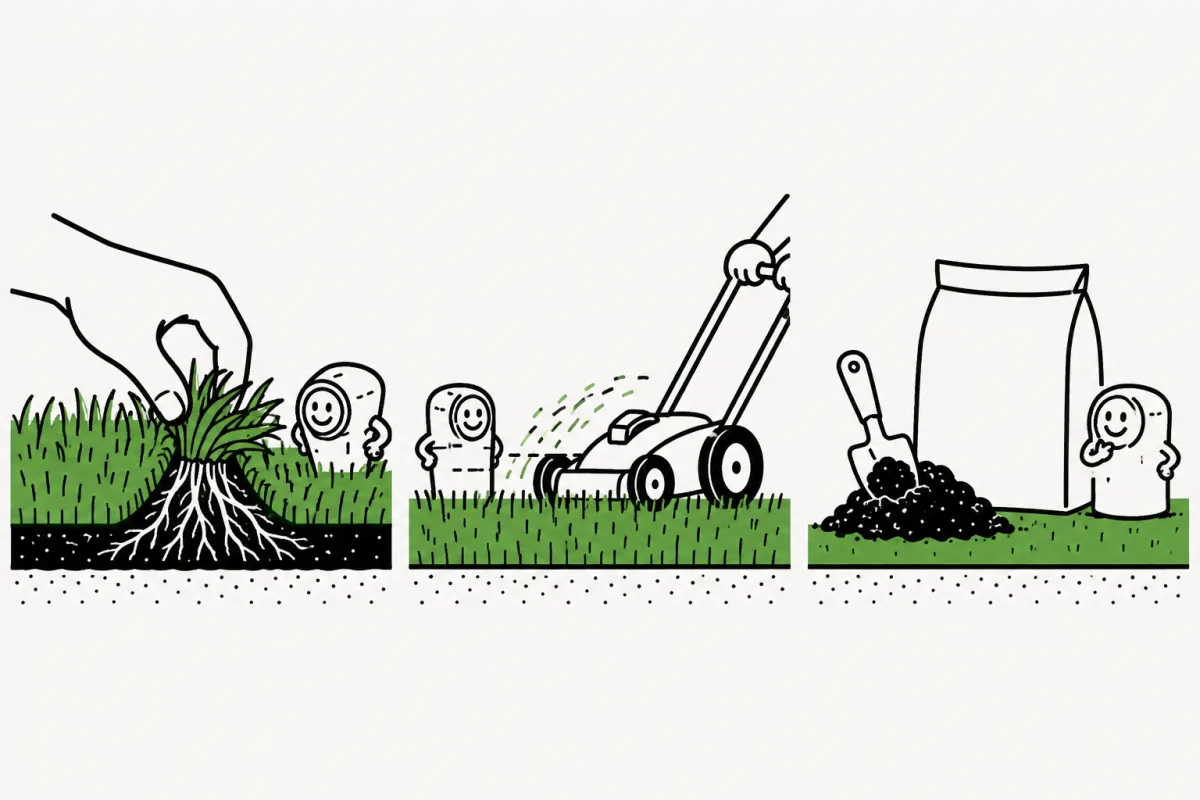
- Gently tug a corner to check that roots hold the sod.
- Wait until the surface supports the mower without sinking or rutting.
- Check that the mower blade is sharp.
- Set the mower within the recommended range for your grass.
If pieces still lift easily, wait. Turning a mower on loose sod can move pieces and damage new roots.
Roots need contact with the soil
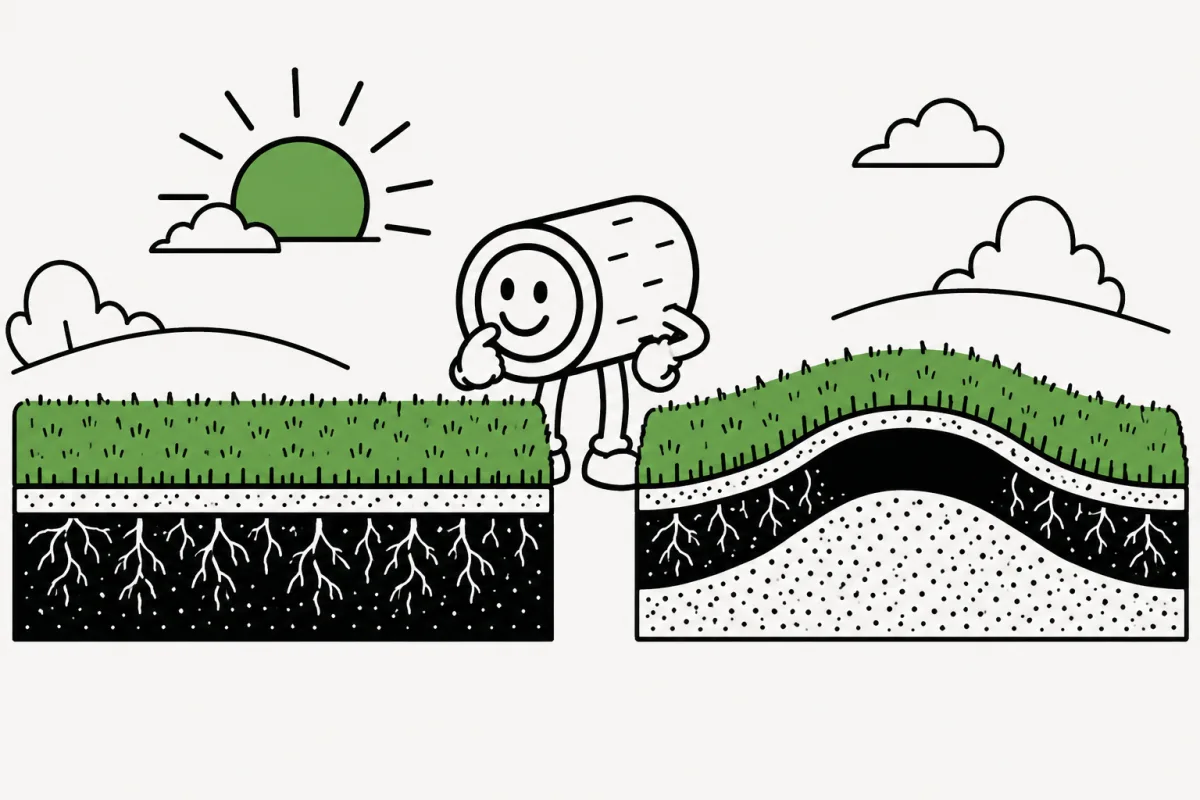
Firm the bed and fit each piece flat. Air pockets leave roots exposed and can contribute to uneven settling.
Avoid removing too much leaf
Texas A&M lists 1 to 2 inches for Bermuda and Zoysia home lawns. Its St. Augustine range is 2.5 to 3.5 inches.
Check the cultivar guidance too. Start toward the higher end during establishment, especially for St. Augustine in shade.
Remove no more than one-third of the leaf at a time. If the grass is too tall, reduce its height over several mowings.
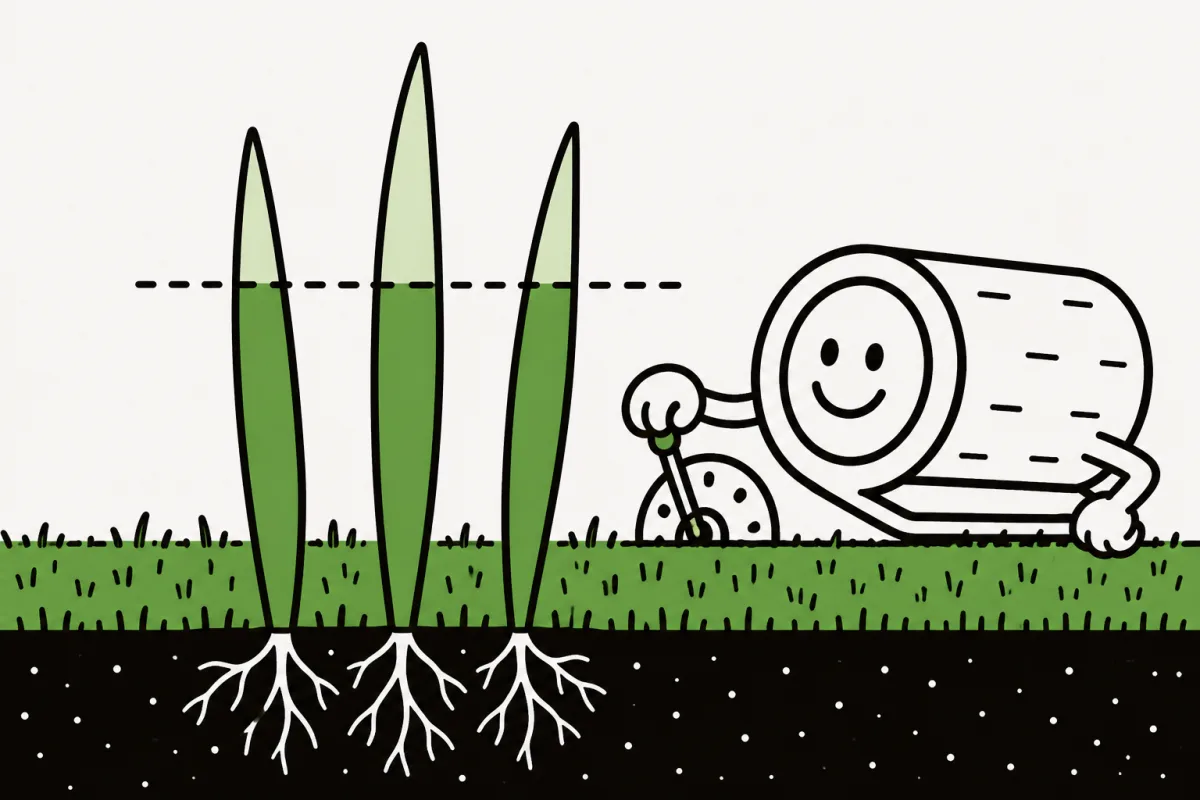
Keep at least two-thirds of the leaf
Remove no more than one-third in a single cut. Reduce an overgrown lawn’s height over several mowings.
Plan fertilizer from the lawn’s needs
Do not fertilize stressed sod simply to change its color. Check rooting and use soil information to choose a suitable product and rate.
A first feeding may be appropriate around three to four weeks after installation. The actual timing depends on growth, prior fertilizer, and the product instructions.
Texas A&M lists 2 to 4 pounds of nitrogen per 1,000 square feet annually for St. Augustine. Individual applications range from 0.5 to 1 pound.
Bermuda generally needs more fertilizer than Zoysia. Adjust the program to the grass and site rather than using one schedule for every lawn.
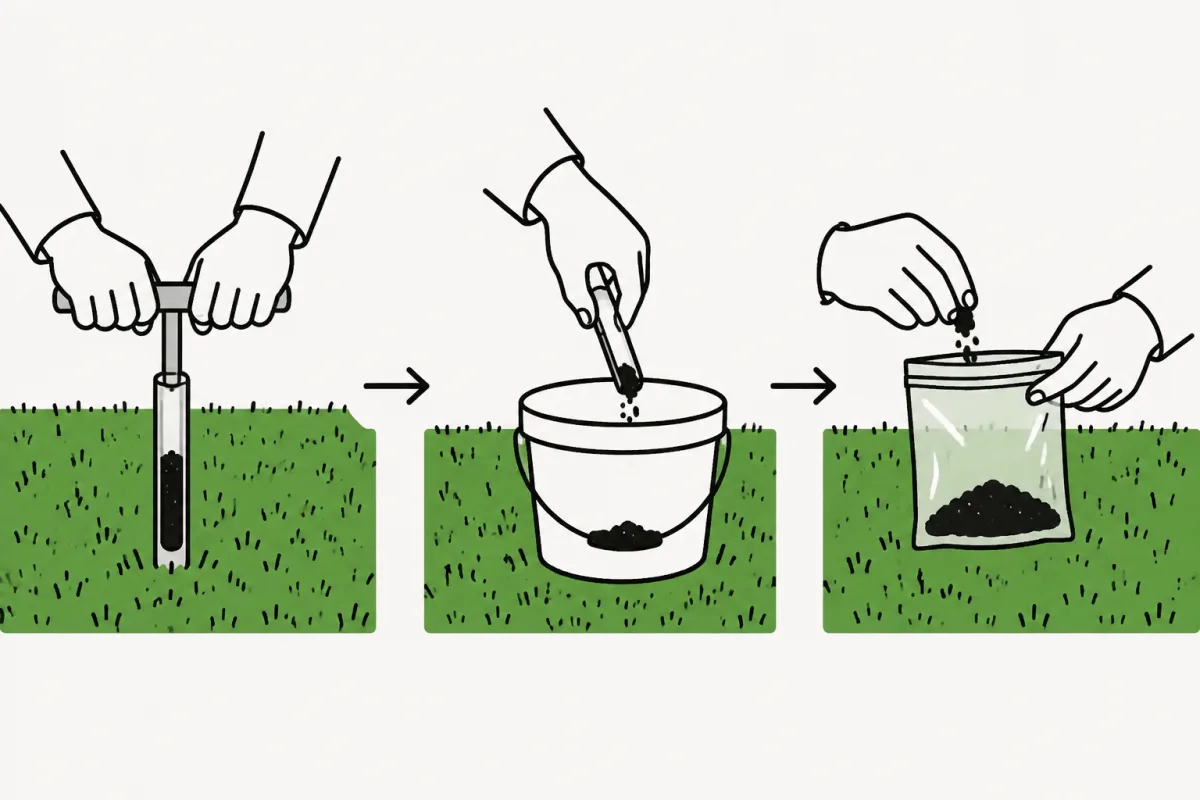
Check the soil before choosing fertilizer
Use the testing lab’s sampling instructions. Match the fertilizer to the results, grass type, and growth conditions.
Check the label before weed control
Some herbicides can interfere with rooting or injure young turf. Waiting for several mowings does not make every product suitable.
Read the label for the grass species, application rate, and restrictions on newly laid sod. Follow any waiting period it gives.
Weed-and-feed products contain fertilizer and a herbicide. The herbicide type varies, so read the label rather than assuming how it works.
Check the product’s restrictions for new sod before applying it. The care guide covers additional checks.
Remove isolated weeds carefully
Pull small weeds when you can do so without lifting the sod. Support the surrounding piece if its roots are still shallow.
Close joints, suitable mowing, and healthy growth reduce the open soil where weeds establish.
Avoid these early setbacks
- Mowing loose sod: Wait for roots to anchor the pieces.
- Cutting too low: Keep at least two-thirds of the leaf.
- Feeding stressed grass: Identify the cause before adding fertilizer.
- Using an unsuitable herbicide: Check the new-sod restrictions first.
If you are unsure, send the installation date, a lawn photo, and the product label before treatment.
Questions people ask
How soon can I mow new sod?
Often after two to three weeks in warm conditions. Wait until the roots hold the pieces and the ground supports the mower without rutting.
What height should I cut new sod?
General home-lawn ranges are 1 to 2 inches for Bermuda and Zoysia, and 2.5 to 3.5 inches for St. Augustine. Check the cultivar guidance too. Remove no more than one-third at once.
When should I fertilize new sod?
A feeding may be appropriate around three to four weeks, depending on rooting, growth, prior fertilizer, and the product instructions. Use soil information to choose the product.
Can I put pre-emergent on new sod?
Check the product’s new-sod restrictions first. Some products can interfere with rooting. Several mowings alone do not make every herbicide suitable.
Sources
This guide is part of The complete guide to sod in Dallas-Fort Worth.