

The first three weeks
Check the soil and rooting before adjusting care.
DFW heat check: July and August may require two waterings in a day. Your soil decides; your city’s current rules decide when.
Establishment guidance: Texas A&M AgriLife Extension. Check the current schedule linked from your city page.
Water as you install
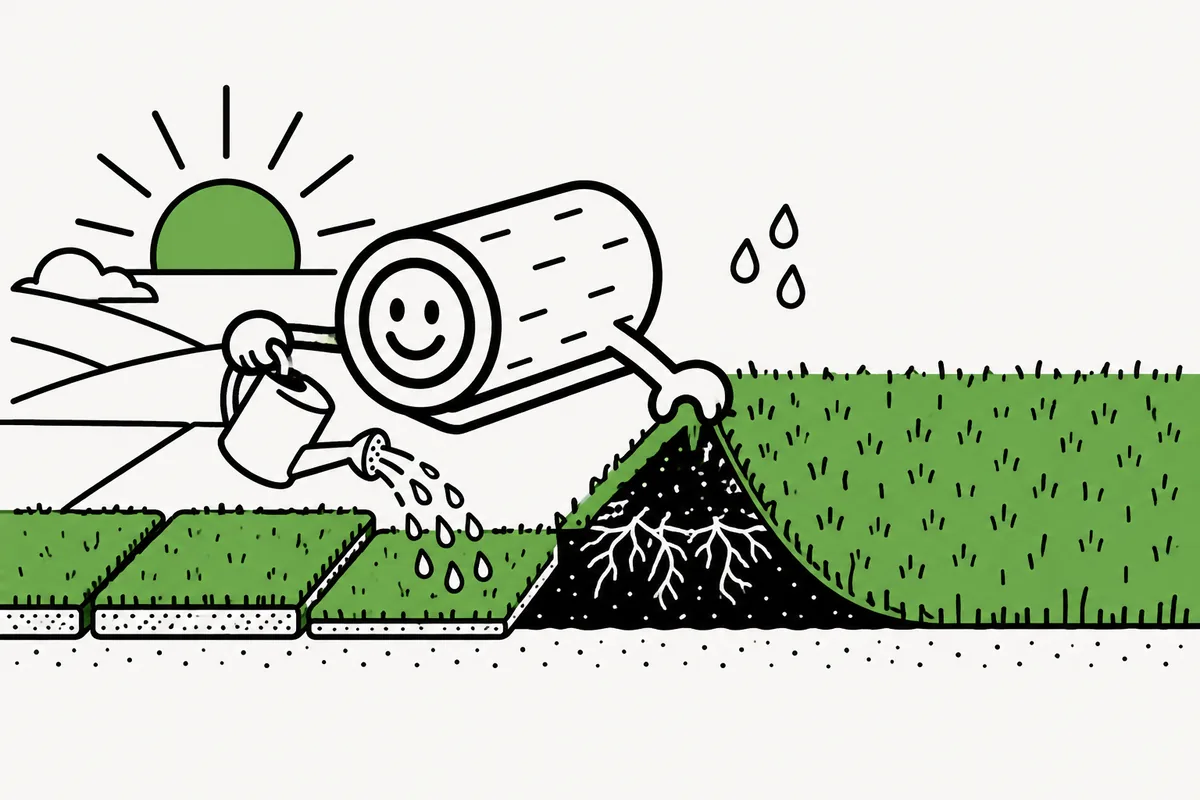
Water completed areas promptly. Do not let the first pieces dry while you finish the rest of a large lawn.
- Apply enough water to wet the sod and the soil beneath it.
- Lift a corner gently to check the soil below.
- Check seams and edges for missed coverage.
Check below the green surface
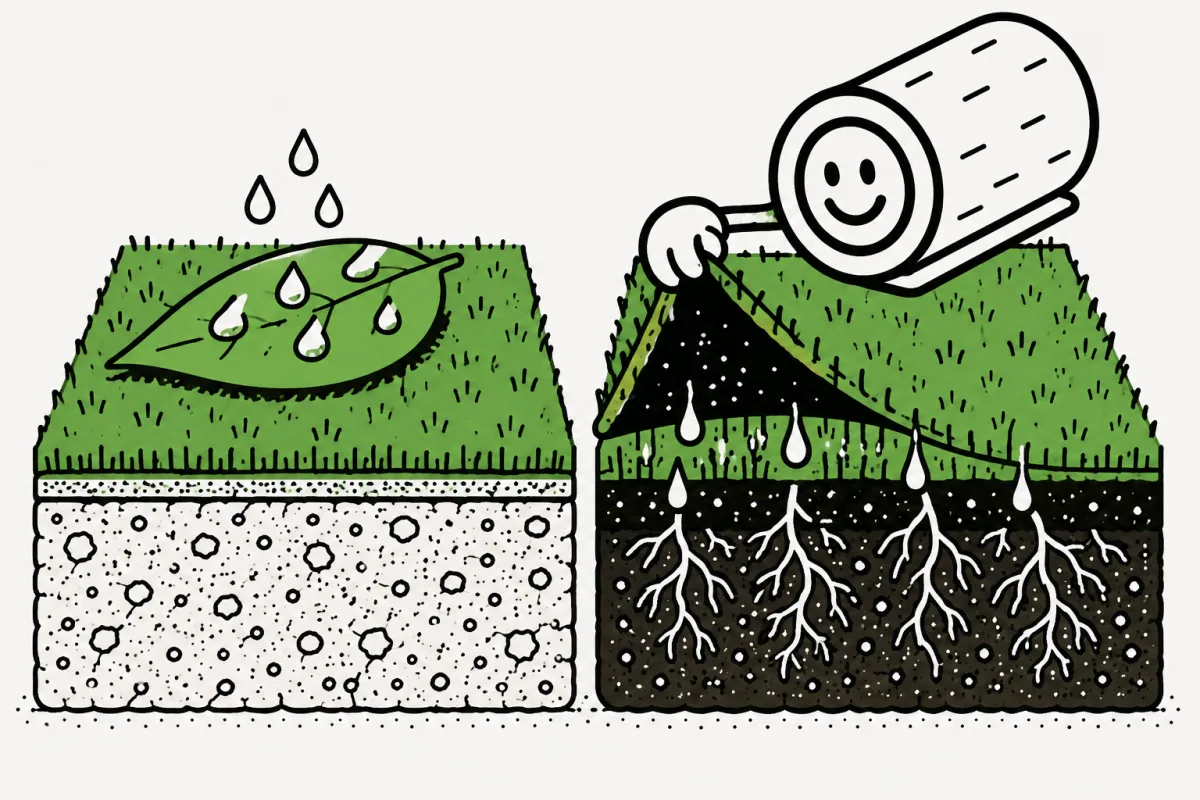
Lift a corner gently. The soil beneath the sod tells you more than the appearance of the leaves.
Days 1 to 10: keep the root zone moist
Check the soil in the morning and late afternoon. Water when it starts to dry. Keep people and dogs off the loose pieces.
July and August heat may require more than one watering each day. Rain and cool weather can reduce that need. Avoid leaving the soil saturated.
Week two: check for rooting
Gently tug a corner. Resistance shows that roots have started anchoring the sod. A loose piece needs more time.
If the soil stays moist between waterings, start increasing the interval. Do not switch to every other day solely because the calendar says week two.

Roots need contact with the soil
Firm the bed and fit each piece flat. Air pockets leave roots exposed and can contribute to uneven settling.
After rooting: reduce the frequency
Once the sod is firmly rooted, move toward fewer, deeper waterings. Adjust for rainfall, heat, soil drainage, and your city’s restrictions.
Before the first mow, check that the ground is firm enough for the mower. Follow the mowing guide for your grass.
Check changes in color or moisture
- Blue-gray leaves or lasting footprints: Check for dry soil beneath the sod.
- Yellow seams: Check edge moisture and sprinkler coverage before adding runtime.
- Muddy soil, pooling, or a sour smell: Reduce watering and investigate drainage.
These signs can overlap. Use the soil check with our yellow-sod guide before choosing a treatment.

Dry and saturated soil need different responses
Check underneath before adding water. Correct missed coverage for dry areas and investigate persistent saturation.
Check the current rules for your city
Watering days, permitted hours, and new-sod allowances vary by city and drought stage. Get any required approval before installation.
Our DFW watering-rules guide links to the official rules for Fort Worth, Dallas, Arlington, Plano, and Mansfield.
Prepare the system before delivery
Run every sprinkler zone or hose timer before the sod arrives. Fix leaks, blocked heads, and missed corners.
Use the sprinkler-coverage guide to check the whole lawn. If the system is not ready, delay installation.

Check where the spray patterns meet
Watch the edges between coverage areas. A missed strip can stay dry even when the rest of the zone gets enough water.
Questions people ask
How long should I run the sprinklers on new sod?
Run the system long enough to wet the soil beneath the sod. Check under a corner. Runtime depends on sprinkler output, soil, and conditions.
Can I water new sod at night?
Use the permitted watering window and avoid leaving the lawn unnecessarily wet overnight. Check moisture before adding another cycle.
What happens if new sod dries out for a day?
Drying can damage edges, crowns, and roots. Check beneath the affected pieces and restore moisture within the current rules. Recovery depends on the damage.
Sources
This guide is part of The complete guide to sod in Dallas-Fort Worth.