
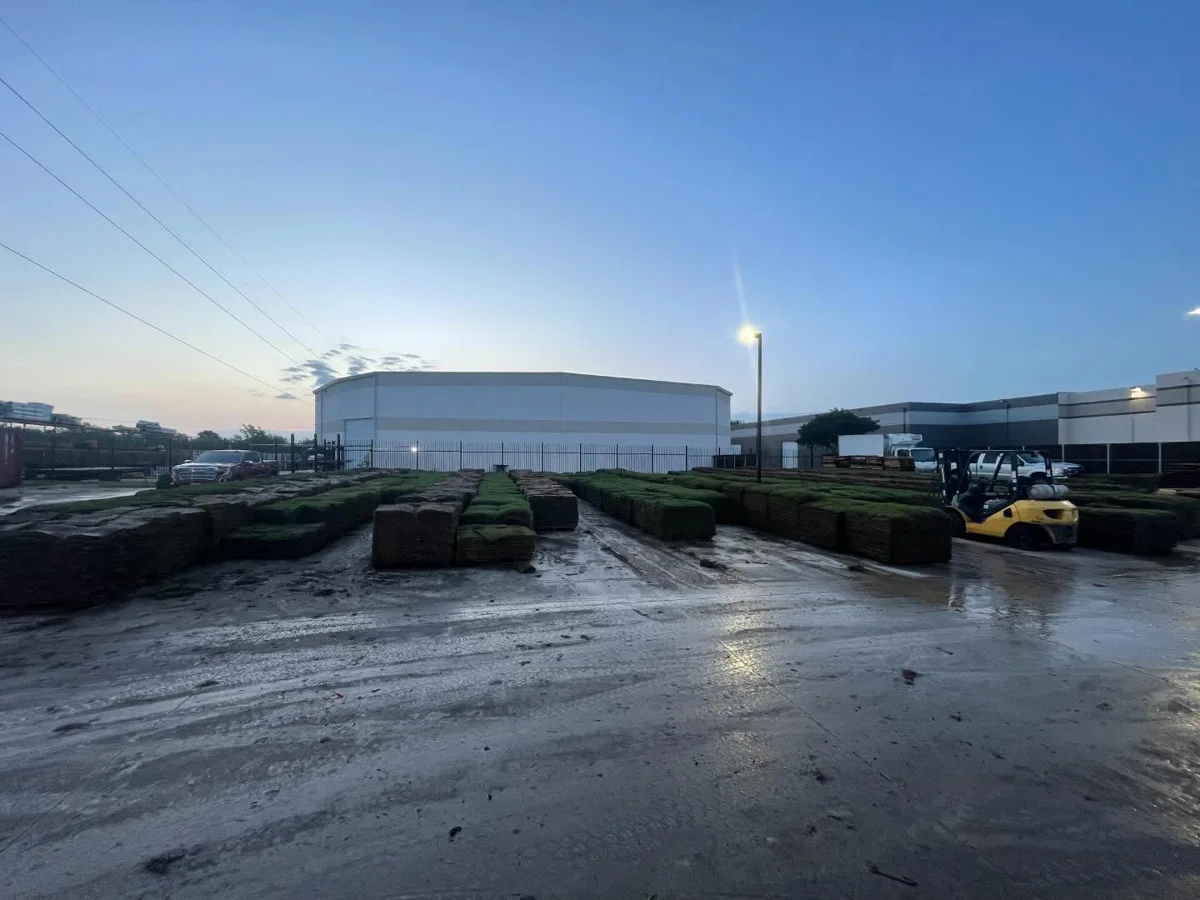
What does fresh sod look and feel like on the pallet?
A good pallet of sod has a moist soil layer, slabs or rolls that hold together when you lift them, and one grass with consistent blade color and width from the top row to the bottom. The middle of the stack should feel cool, not warm. If a pallet passes those checks, it is ready to lay. If it fails one, photograph it before you install anything.
Give yourself ten minutes before the first piece goes down. Walk around the pallet, then pull a piece from the top, one from the middle, and one from as low as you can safely reach. A clean top row tells you about the top row. It does not tell you about the rest of the 450 square feet.
- Soil: damp to the touch, dark, and not crumbling off the roots.
- Slabs: full pieces that bend without tearing when you hold one by the end.
- Grass: one color and one blade width across every piece you pull.
- Stack: cool when you push a hand between rows, with no sour or musty smell.
Check that the grass matches your order
Hold pieces from different rows side by side. Bermuda, Zoysia, and St. Augustine look different up close. St. Augustine has wide, flat blades. Bermuda is fine and low. Zoysia sits in between, dense and stiff. If one piece looks coarser, lighter, or patchier than its neighbors, you may have a second grass mixed in.
A mixed pallet is easy to miss on day one and hard to fix once it fills in. Texas A&M AgriLife notes that buying certified sod, where it is available, is the best way to be sure you are getting the stated variety. Compare the pieces with the variety you ordered before laying them. Our Bermuda, St. Augustine, and Zoysia comparison shows how the three differ.
Check the slabs and the soil layer
Lift a full piece by one end. A healthy slab bends and holds. A weak one breaks apart, sheds most of its soil, or leaves you holding a mat of bare roots. Watch for:
- Pieces crumbling into chunks before they reach the ground.
- A soil layer much thinner on some pieces than on others.
- Exposed, dried roots on the underside.
- Torn or half pieces making up a large part of a row.
Uneven soil thickness matters after installation too. Pieces cut at different depths finish at different heights, which shows up as ridges at the seams.
Feel for heat inside the stack
Sod left stacked on a pallet can heat up in the middle, which Texas A&M AgriLife calls sod heating. Texas A&M AgriLife Extension says sod is perishable and should not stay on the pallet or stack longer than 36 hours, and less in hot weather. Its sod selection guide also says sod performs best when installed within 36 hours of harvest.
Push your hand into a gap between the middle rows. Cool and damp is what you want. Noticeable warmth means the pallet has been heating, and the clock matters more than usual. In Dallas-Fort Worth summer heat, plan to lay the whole pallet the same day it arrives. Have the soil prepared and watering ready before the truck comes, not after.
We recommend installing sod where irrigation is close at hand and available for use.
If storms or extreme heat could push your delivery, check the current weather notice before the day.
Yellow leaves on arrival versus normal color
Not every color change is a problem. Warm-season grass delivered while dormant in winter is tan, not dead. What matters is what you find inside the stack.
Texas A&M AgriLife Extension describes mildew or yellow grass leaves seen as pieces come off the pallet as evidence of sod heating injury, which happens when sod sits on the pallet too long. Its guidance is direct: do not plant that sod. If the inner rows are yellow, slimy, or smell sour, stop and take photos before laying anything.
Yellowing that appears days after installation is a different problem, usually tied to moisture or rooting. Our guide to new sod turning yellow covers those checks.
Look for weeds in the pieces
Texas A&M AgriLife describes quality sod as weed free, and notes that sodded areas have few weed problems after planting when weed-free sod is used. Scan the pieces you pulled for broadleaf weeds, clumps of a coarser grass, or seed heads that do not match the rest. A few stray blades are hard to judge. Repeated weedy patches across several pieces are worth photographing.
Check for strap and forklift damage
Look at the edges and the top row where the straps sat. Straps pulled too tight can crush the top layer and leave a pressed line across the grass. Forklift forks can tear pieces near the base. Check the bottom rows as well as you can, since damage there is easy to hide under a good-looking top. Set badly crushed or torn pieces aside and photograph them where they are.
What to do if something is wrong
Sod Friend’s arrival-condition policy is simple. If a pallet arrives yellowed, dried out, or damaged, send photos to Rolly’s line at (817) 973-1411 or to hello@sodfriend.com within 24 hours of delivery so we can assess the arrival condition and discuss the next steps. The policy covers the sod as delivered. It does not cover sod that sat on the pallet more than 24 hours after delivery in warm weather.
- Photograph the whole pallet, then close-ups of each problem.
- Include a piece from the middle of the stack, held up so the soil layer shows.
- Add your order details and when the pallet arrived.
- Keep the affected pieces until we have looked at the photos.
For the full picture of buying, measuring, and laying sod, read the complete DFW sod guide. If you are still deciding whether to take delivery and lay it yourself, compare sod delivery and installation. Installation starts from $850 a pallet, depending on the grass and the prep the yard needs.
Get a free estimate for your sod delivery or installation.
Questions people ask
How long can sod sit on the pallet?
Texas A&M AgriLife Extension advises against leaving sod on the pallet or stack longer than 36 hours, and less in hot weather. In Dallas-Fort Worth summer heat, plan to lay the pallet the day it arrives.
Is it normal for delivered sod to be yellow?
Tan color on dormant warm-season grass in winter is normal. Mildew or yellow leaves inside the stack point to sod heating injury, and Texas A&M AgriLife advises against planting that sod.
How do I know if a pallet has the wrong grass mixed in?
Hold pieces from different rows side by side. A piece with coarser or finer blades, or a different color, can be a second grass. Photograph it before laying it.
What should I do if my sod pallet arrives damaged?
Send photos of the pallet and the problem pieces to Rolly’s line at (817) 973-1411 or hello@sodfriend.com within 24 hours of delivery so we can assess the arrival condition and discuss the next steps.
Sources
This guide is part of The complete guide to sod in Dallas-Fort Worth.