

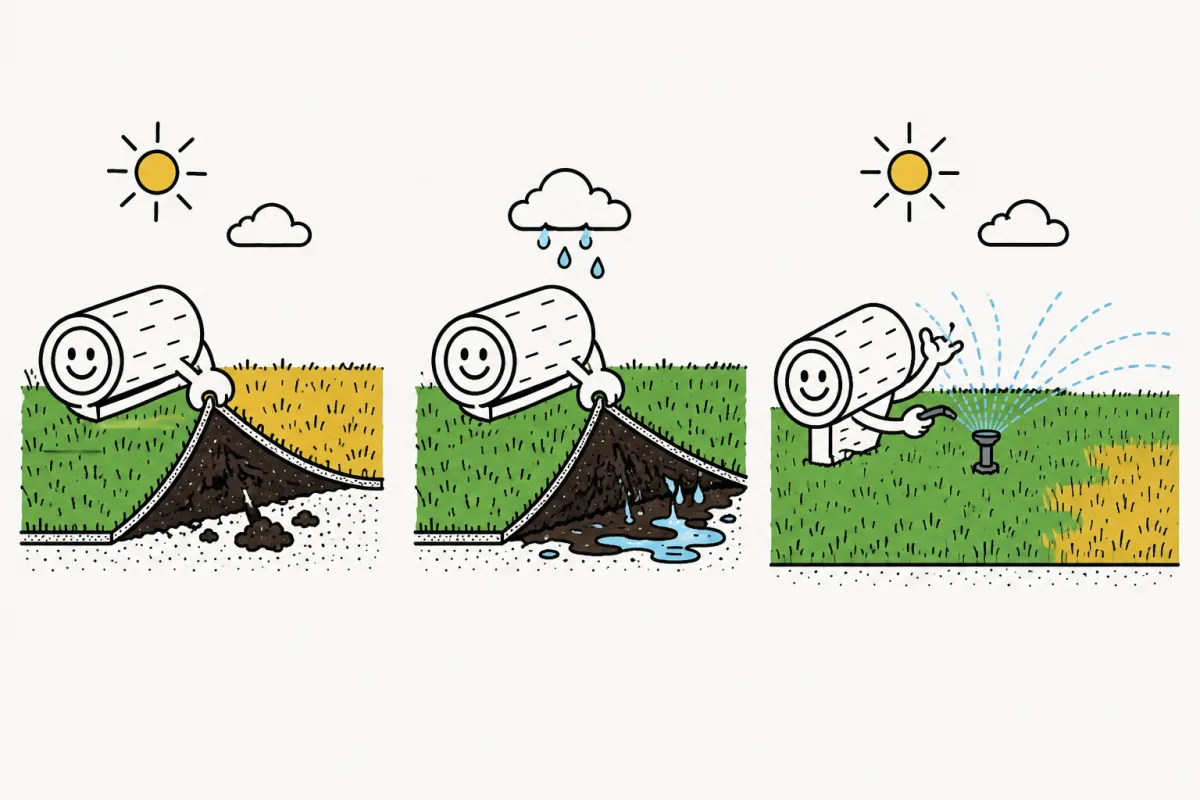
At a glance
Check underneath before adding water
Check moisture and rooting first
Yellowing has several possible causes. Check beneath the sod before increasing the watering.
- Lift a corner gently and feel the soil underneath.
- Compare moisture in a yellow area and a greener area.
- Tug a piece gently to check whether roots anchor it.
The soil should be moist without staying muddy. Loose new sod needs more time to root. Rooting does not rule out other problems.
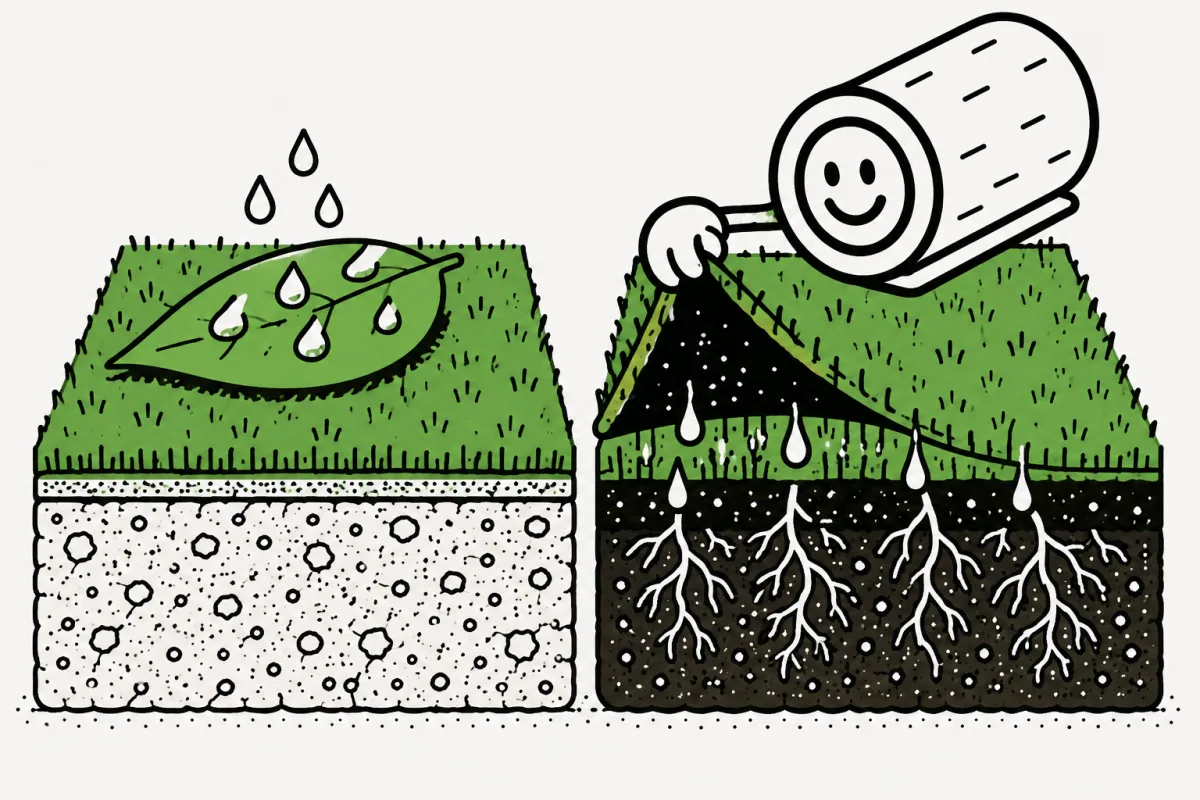
Check below the green surface
Lift a corner gently. The soil beneath the sod tells you more than the appearance of the leaves.
Check dry seams and edges
Exposed edges can dry before the center of a piece. Look for gaps in sprinkler coverage, especially beside pavement and between zones.
Run the system and inspect the affected strip. Correct blocked or misdirected heads. Water dry areas within the current rules.
Use the watering guide to adjust watering as roots develop.
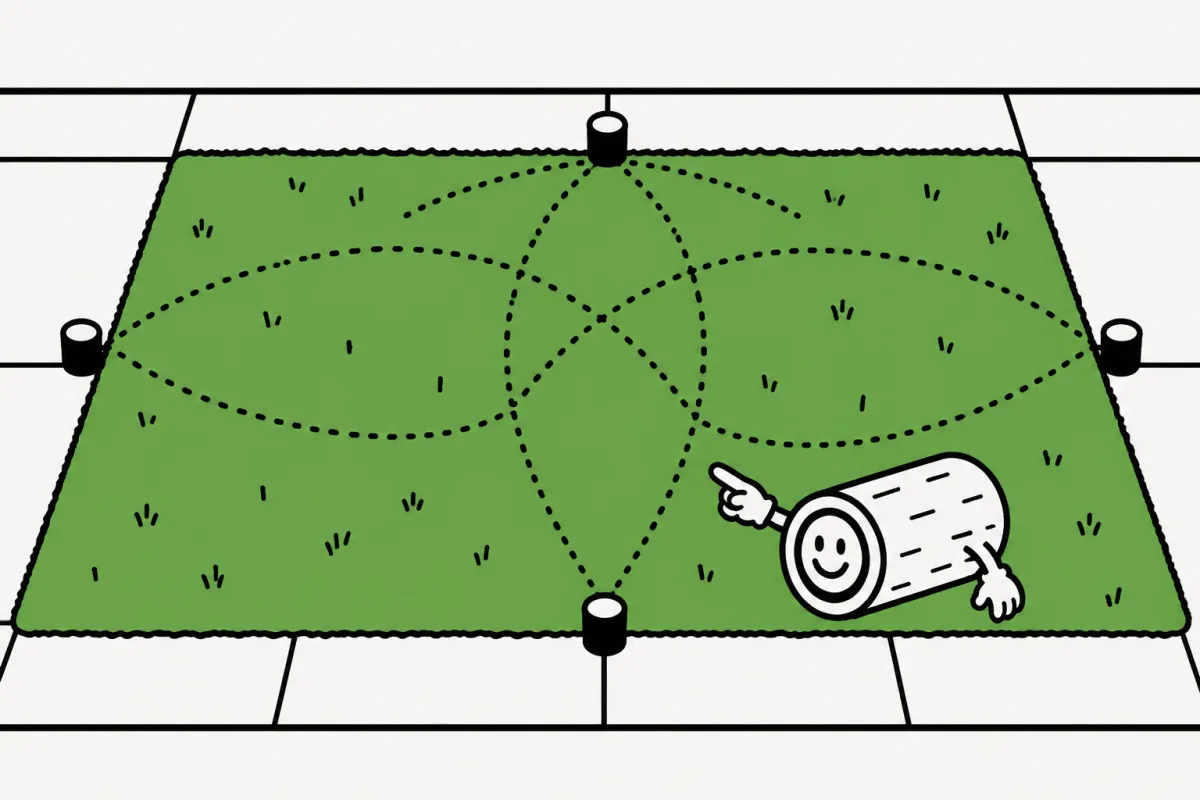
Check where the spray patterns meet
Watch the edges between coverage areas. A missed strip can stay dry even when the rest of the zone gets enough water.
Check saturated soil
Roots need oxygen as well as water. Persistent saturation can damage them, especially where drainage is poor.
Look for pooling, muddy soil, spongy footing, or a sour smell. Mushrooms alone do not establish the cause of yellowing.
If the soil is saturated, reduce watering and monitor it. Investigate areas that remain wet after the surrounding soil drains.
Document sod that arrives damaged
Heat can build inside a stacked pallet. If the sod arrives yellowed, dried out, damaged, or unusually hot, photograph it before installation.
Contact us within 24 hours of delivery. Our delivery warranty explains the reporting and replacement conditions.
Lay sound sod promptly after delivery. Summer heat reduces the time it can safely remain stacked.
Inspect rings and spreading patches
Yellow or tan rings in cool, wet weather may indicate disease. St. Augustine is susceptible to large patch, often called brown patch.
Insect damage can also resemble drought stress. Inspect the leaves, crowns, and soil before choosing a treatment.
The pest guide explains where to look for chinch bugs, armyworms, and grubs.
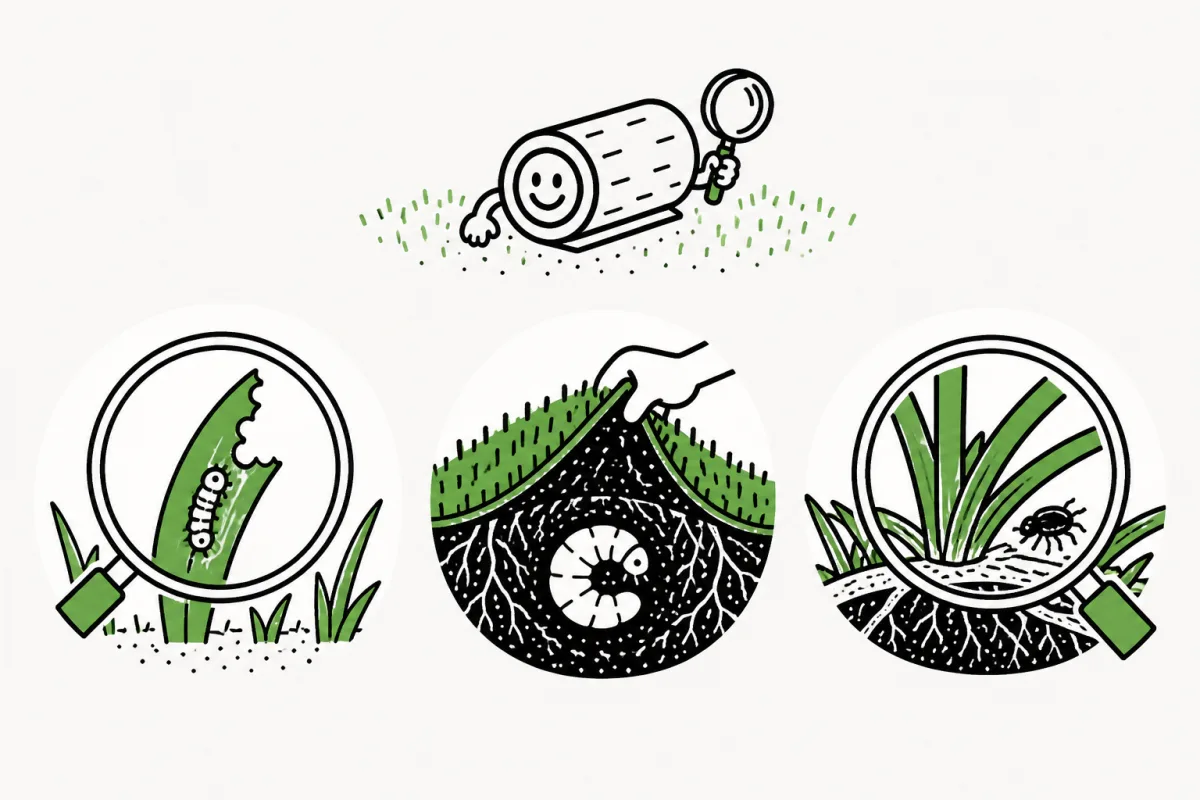
Inspect leaves, crowns, and soil
Use the damage to choose where to inspect. Confirm the insect before selecting a treatment.
Account for winter dormancy
Warm-season grass can turn tan during winter. Check the season, roots, and crowns before deciding that the lawn has failed.
Use the dormancy guide if cold weather matches the color change.
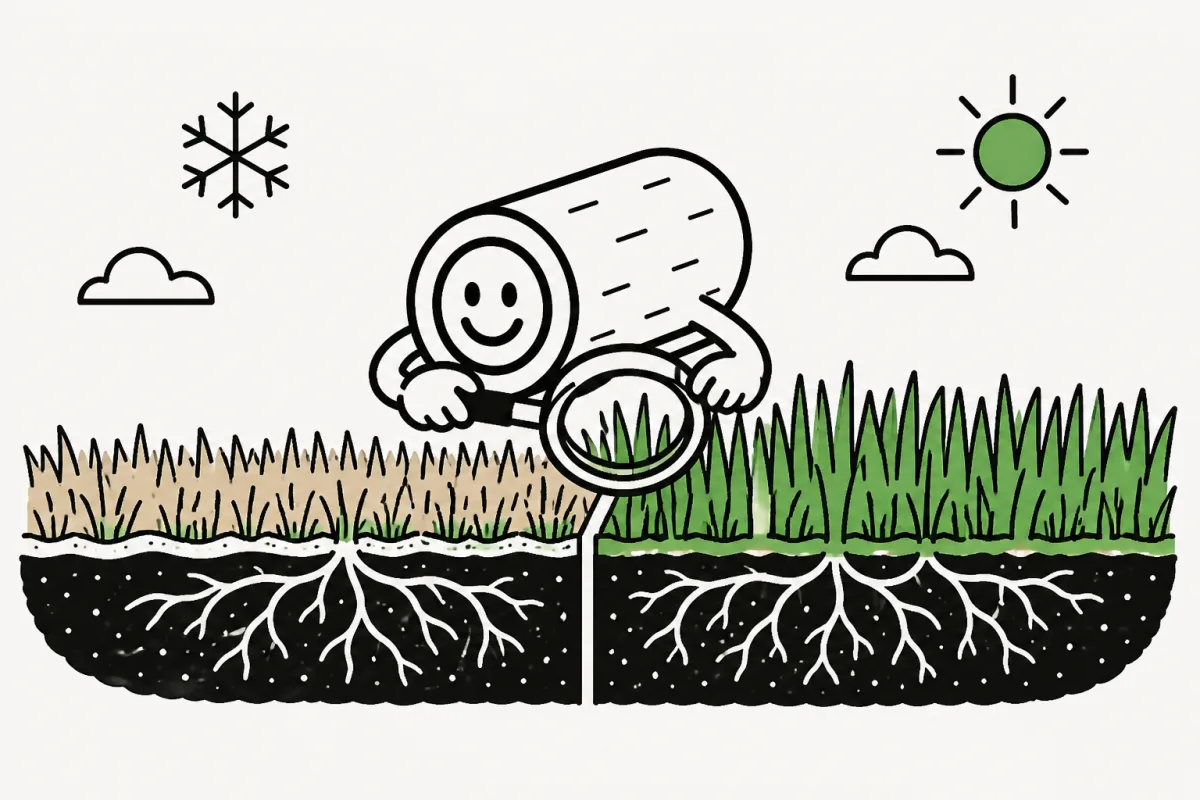
Winter color changes above living roots
Dormancy can change leaf color while the plant remains alive. Inspect roots and crowns before deciding a patch has failed.
Change one thing at a time
- Record the moisture and rooting checks.
- If the soil is dry, correct missed coverage.
- If the soil is saturated, reduce watering and investigate drainage.
- If damage keeps spreading, inspect for insects or disease.
- Delay fertilizer and weed treatments until you understand the cause.
Follow product labels and new-lawn restrictions before treatment. The first-care guide covers mowing, feeding, and weed control.
If an area remains bare after you correct the cause, compare patching the damaged section with replacing the lawn before ordering more sod.
Send photos when the cause is unclear
Send a whole-yard photo and a close-up with a corner lifted. Include the installation date and your recent watering schedule.
If sod arrived damaged, photograph it and contact us within 24 hours of delivery. See the arrival coverage for details.
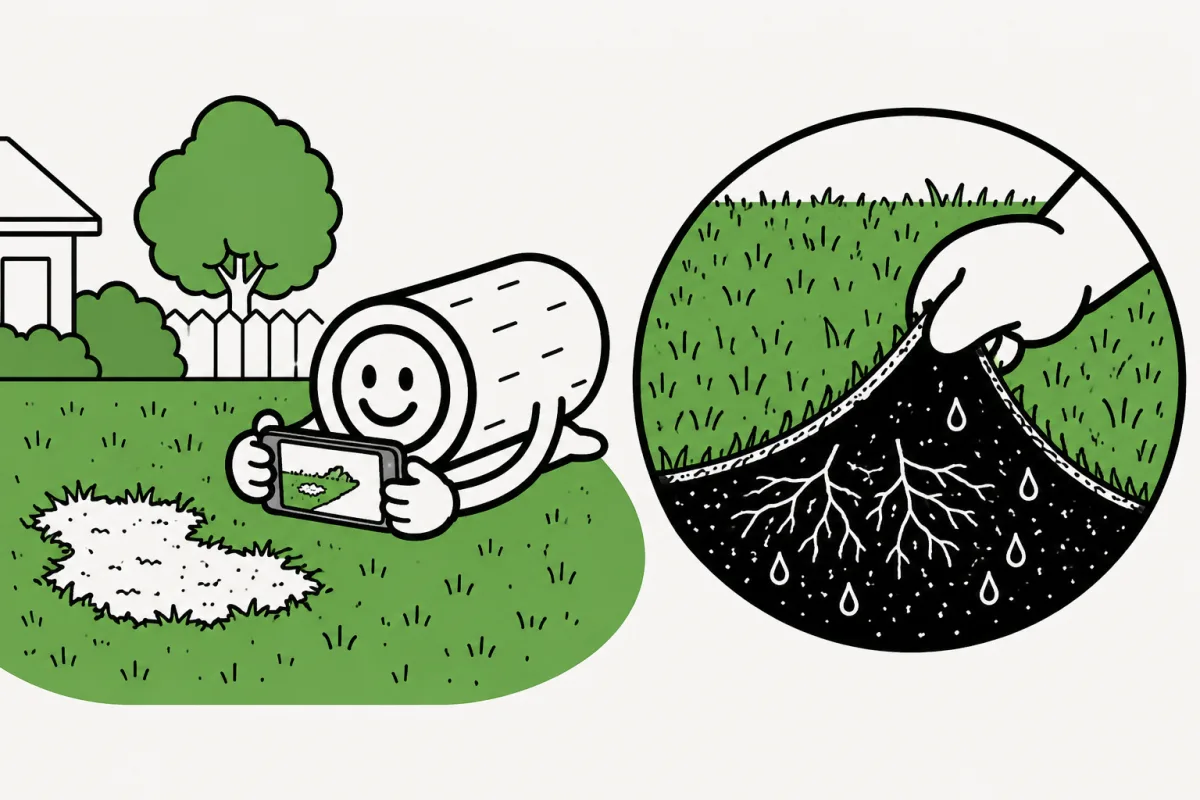
Take a wide photo and a close-up
Show the whole pattern, then the soil beneath a corner. Include the installation date and recent watering.
Questions people ask
Is yellow sod dead?
Color alone cannot tell you. Check crowns, roots, and soil moisture in several areas. Resistance to a tug shows anchoring, but does not guarantee recovery.
Why is my new sod yellow at the seams but green in the middle?
Exposed edges can dry faster than the centers. Check the soil and sprinkler coverage along the affected joints before changing the schedule.
Can too much water turn new sod yellow?
Yes. Persistent saturation can limit oxygen around the roots. Reduce watering if the soil stays muddy and investigate areas that do not drain.
My whole pallet was yellow when it arrived. What now?
Photograph the sod before laying it and contact us within 24 hours of delivery. The warranty explains the reporting and replacement conditions.
Sources
This guide is part of The complete guide to sod in Dallas-Fort Worth.