

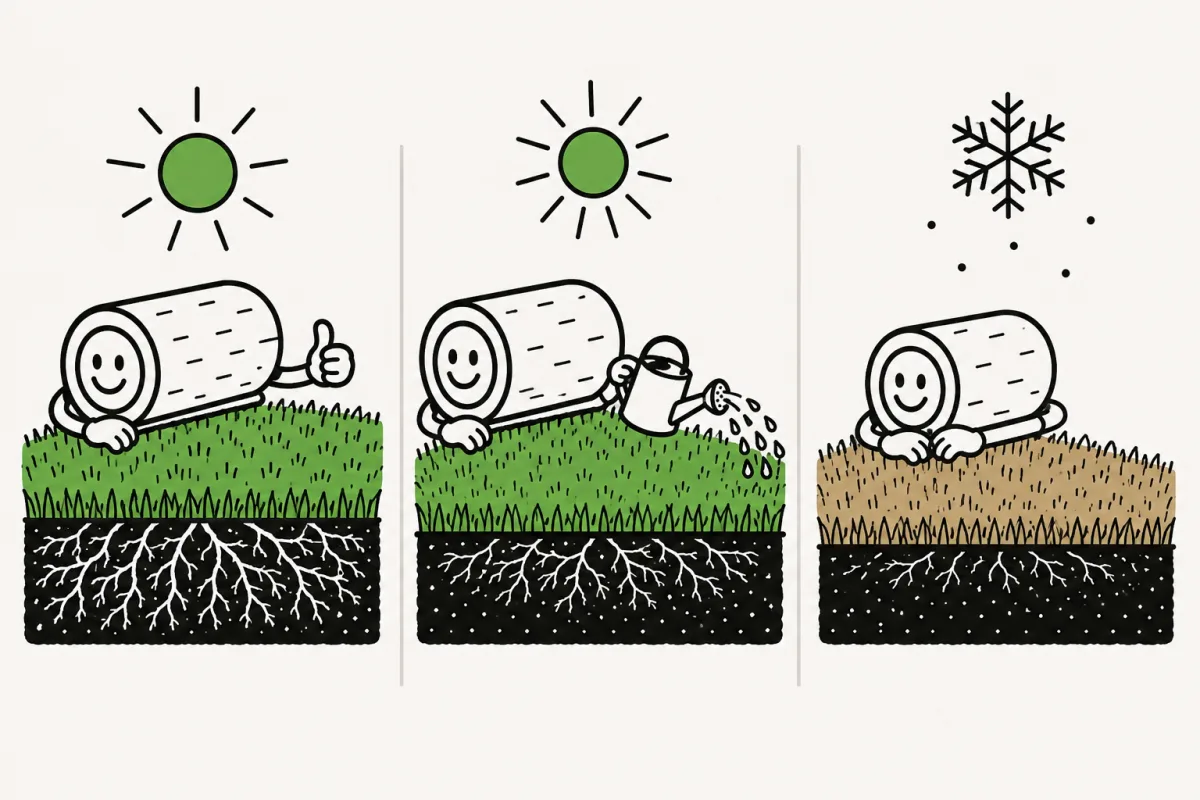
At a glance
Plan around growing conditions
Choose warm soil and a workable watering plan
April through early October is a useful installation window in Dallas-Fort Worth. Warm-season grasses root actively when the soil is warm.
Can you still lay sod in late October, November, or winter? Yes, as long as the ground is not frozen. Sod laid after the soil cools roots slowly and may not root fully until it greens up in spring, so keep checking moisture through the cool months and keep traffic off it until it anchors. St. Augustine carries the most cold risk of the three grasses.
What changes through the year
- March and April: Growth resumes as the soil warms. Rain can delay harvesting or leave the yard too wet to prepare.
- May and June: Warm soil supports establishment. Confirm availability early because installation schedules can fill.
- July and August: Install promptly and check moisture closely. Confirm sprinkler coverage and permitted watering times before delivery.
- September and October: Cooler air can make watering easier while the soil remains warm. Allow several growing weeks before frost.
- November through February: Expect tan color and limited rooting. Avoid frozen soil, unnecessary traffic, and fertilizer while the lawn is dormant.
In warm conditions, rooting often takes two to three weeks. Cold weather can extend that period. Check the roots rather than assuming a fixed date.
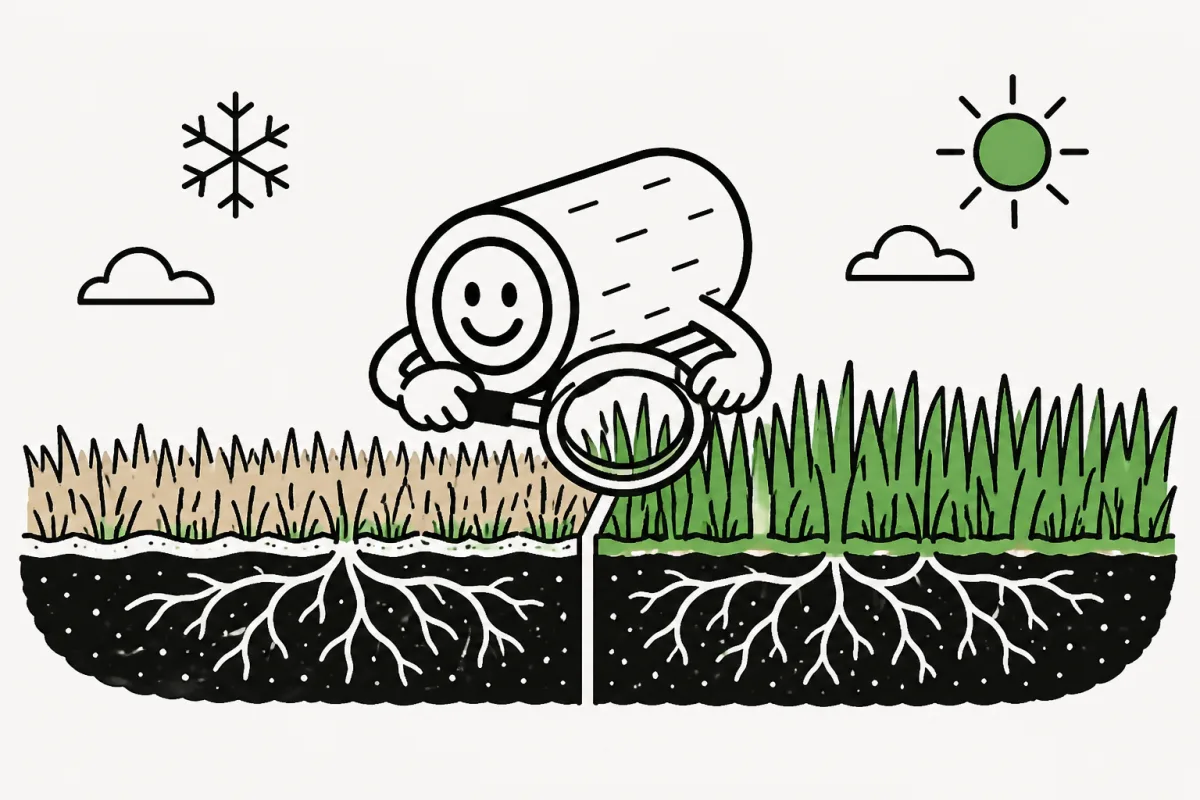
Winter color changes above living roots
Dormancy can change leaf color while the plant remains alive. Inspect roots and crowns before deciding a patch has failed.
Account for the grass type
- Bermuda: Rapid establishment suits spring and summer installation. Dormant installation needs continued moisture checks. Compare Bermuda varieties.
- Zoysia: Slower recovery makes preparation and early establishment especially useful. Compare Zoysia varieties.
- St. Augustine: Lower cold tolerance favors installation during warm growing conditions. Compare St. Augustine varieties.
Sunlight still determines which grass suits the site. Use the grass comparison before choosing by installation date.
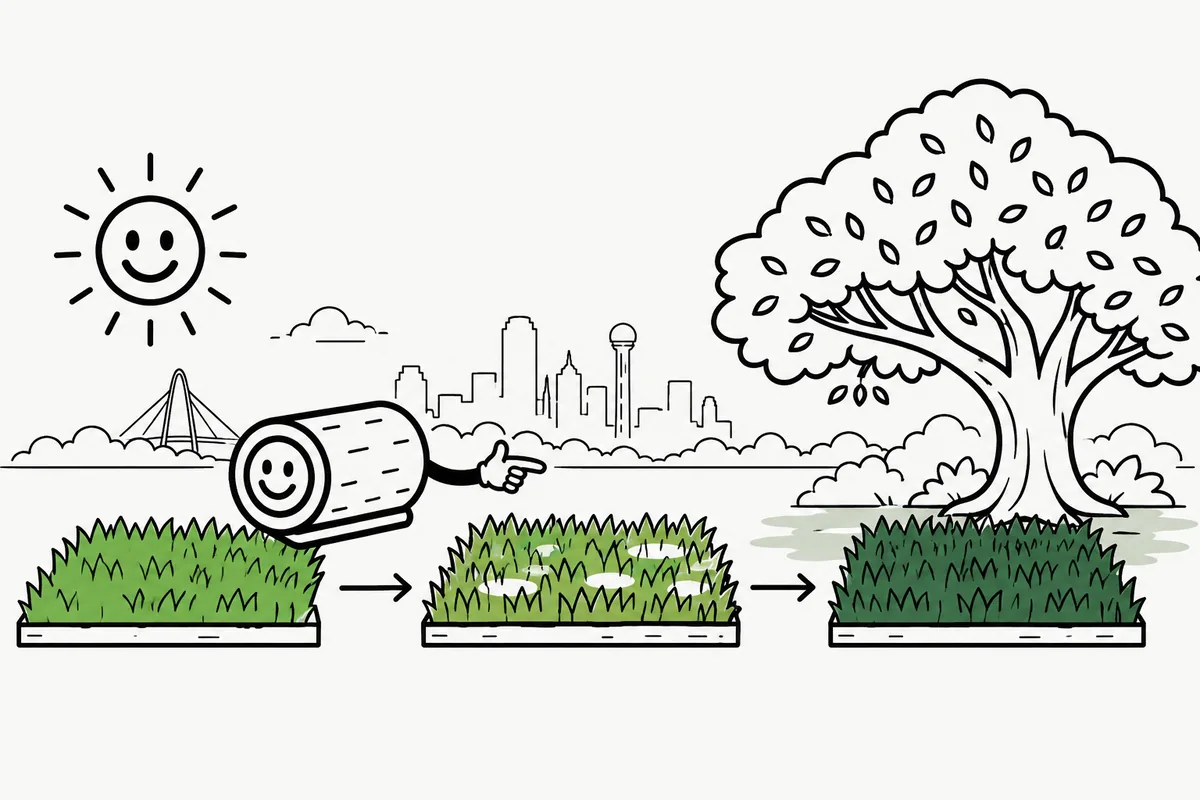
Match the grass to available light
Bermuda suits full sun. St. Augustine tolerates more shade. Zoysia varies by cultivar, and deep shade can limit every grass.
Delay installation when conditions are unsuitable
- Saturated soil: Wait until the ground can support preparation and installation without deep ruts.
- Extreme heat: Confirm that you can water the entire area and monitor it during establishment.
- Rain at the farm: Harvesting may move to a later day even if your yard is dry.
- Frozen ground: Wait for the soil to thaw before laying sod.
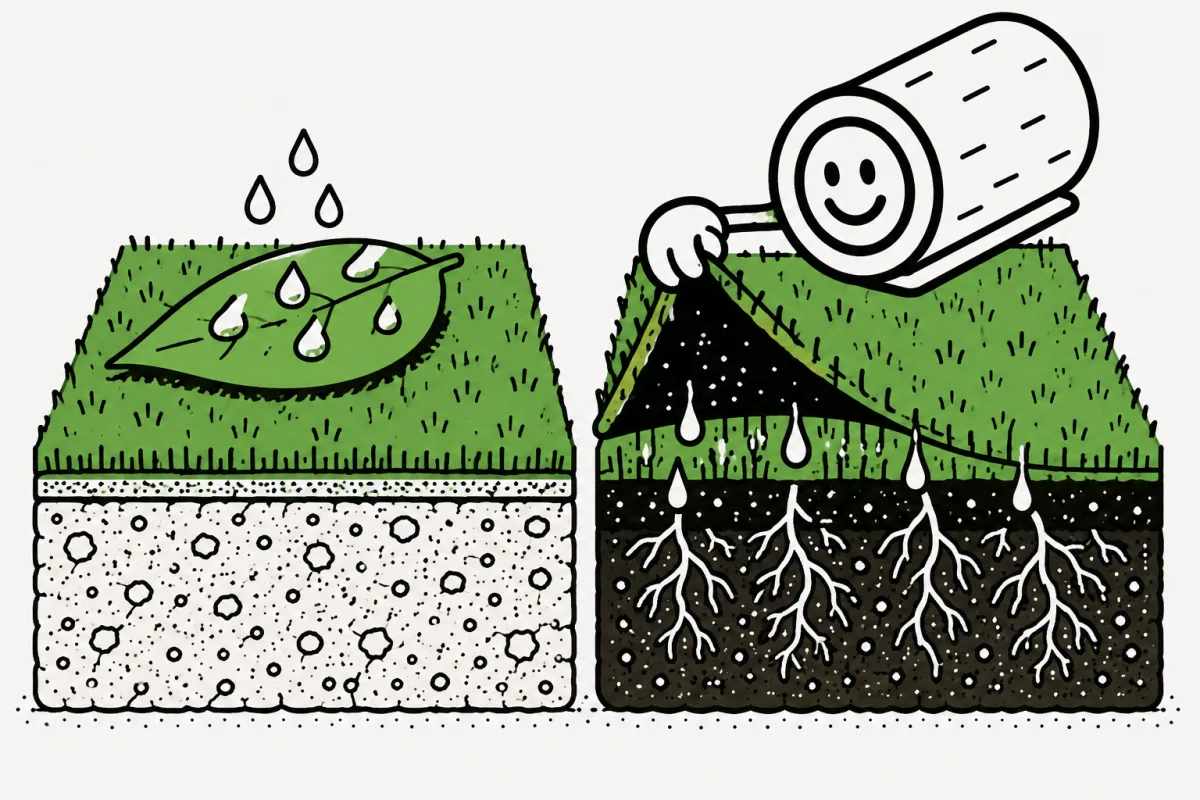
Check below the green surface
Lift a corner gently. The soil beneath the sod tells you more than the appearance of the leaves.
Prepare before you confirm delivery
Sod normally arrives 24 to 48 hours from the cut, weather permitting. Confirm the cut and delivery dates when you order.
- Prepare and grade the soil.
- Test every sprinkler zone.
- Check the current city restrictions.
- Get any required watering approval.
- Arrange enough help to lay the sod promptly.
The soil-preparation guide and watering guide cover the next steps.
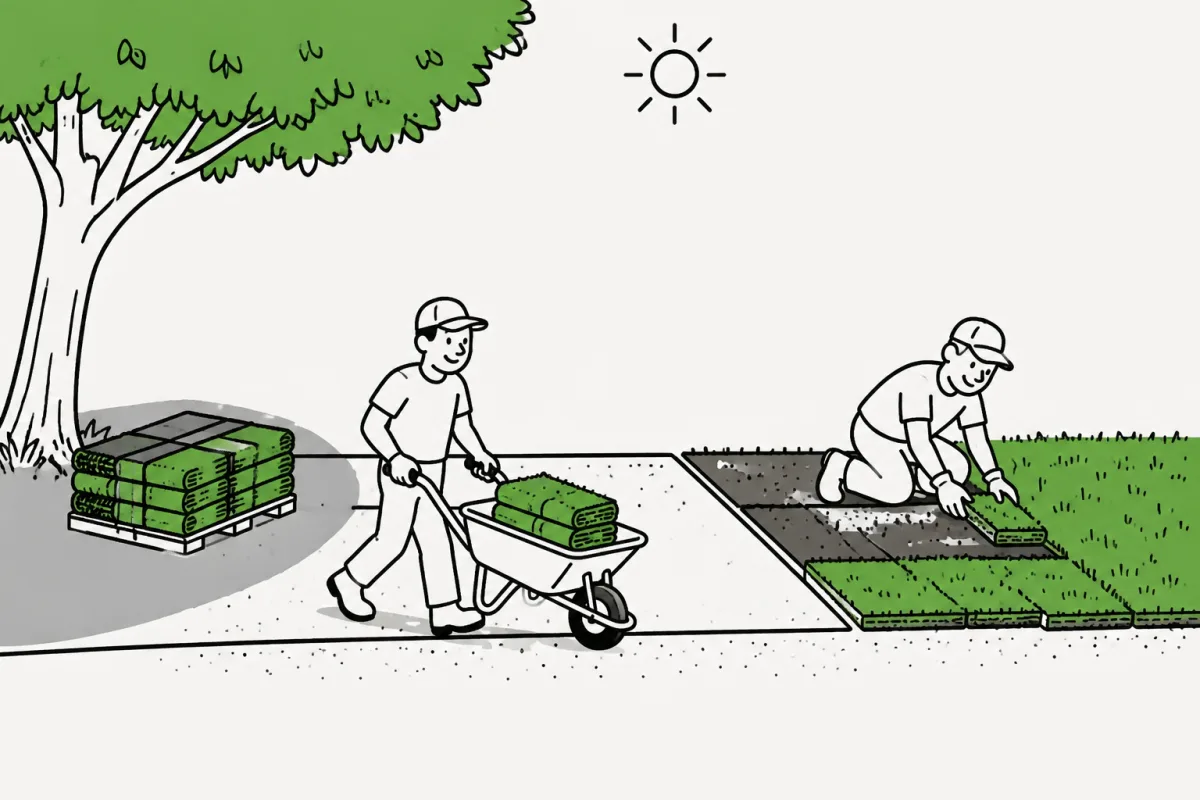
Keep the installation moving
Keep waiting pallets shaded and lay the sod promptly. Plan the route from the delivery point to the lawn.
Questions people ask
Can you lay sod in winter in Texas?
Dormant installation is possible when the ground is not frozen. Expect slow rooting and keep checking moisture. Cold injury remains a risk, especially for St. Augustine.
Can you lay sod in July in DFW?
Yes, with prepared soil, reliable watering, and prompt installation. Check the current restrictions and any required approval before delivery.
What month is best for St. Augustine?
Late spring through early fall offers warm growing conditions. Its lower cold tolerance makes time for establishment before winter useful.
Sources
This guide is part of The complete guide to sod in Dallas-Fort Worth.