

At a glance
Give new roots some quiet time
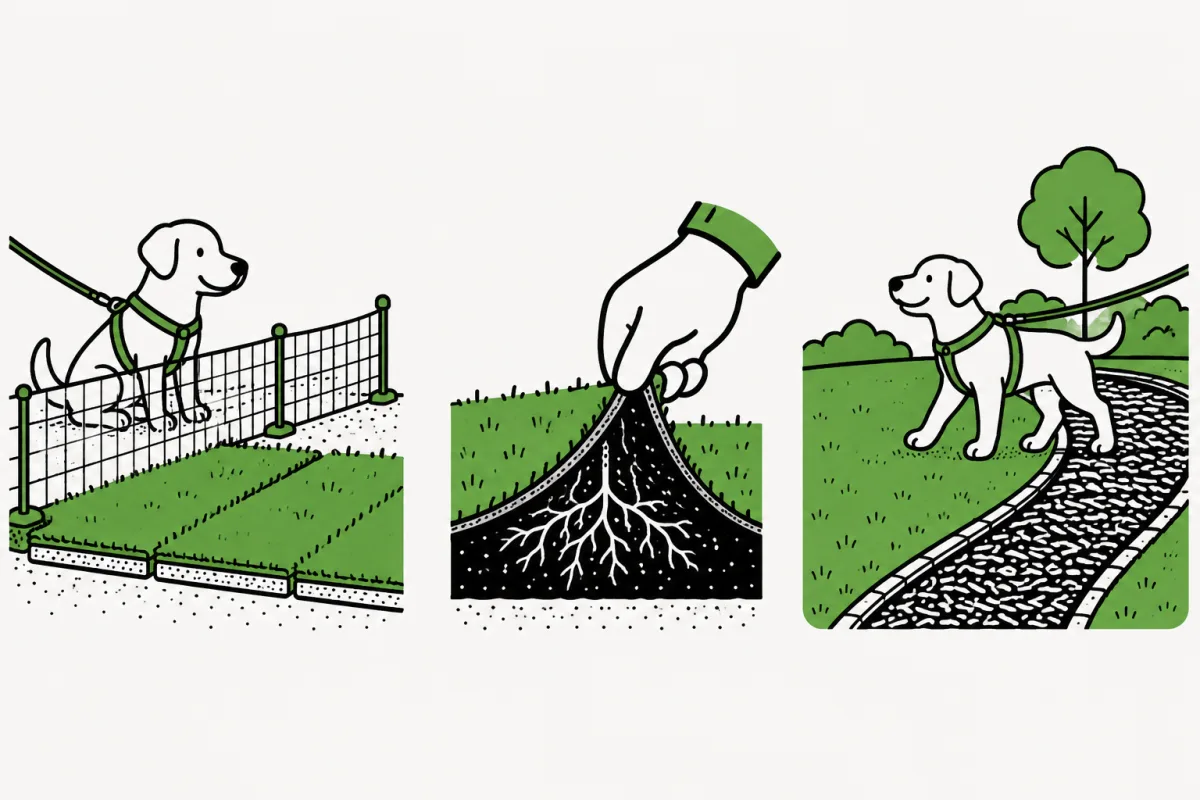
Keep dogs off while the sod roots
Running and sharp turns can move loose sod pieces and damage new roots. Plan a separate route before installation.
Keep dogs off for about two weeks, and longer if the pieces still lift easily. Use a gentle tug to check rooting.
Leash walks, a side yard, or a temporary fenced area can protect the new lawn. Return to normal use gradually after rooting.
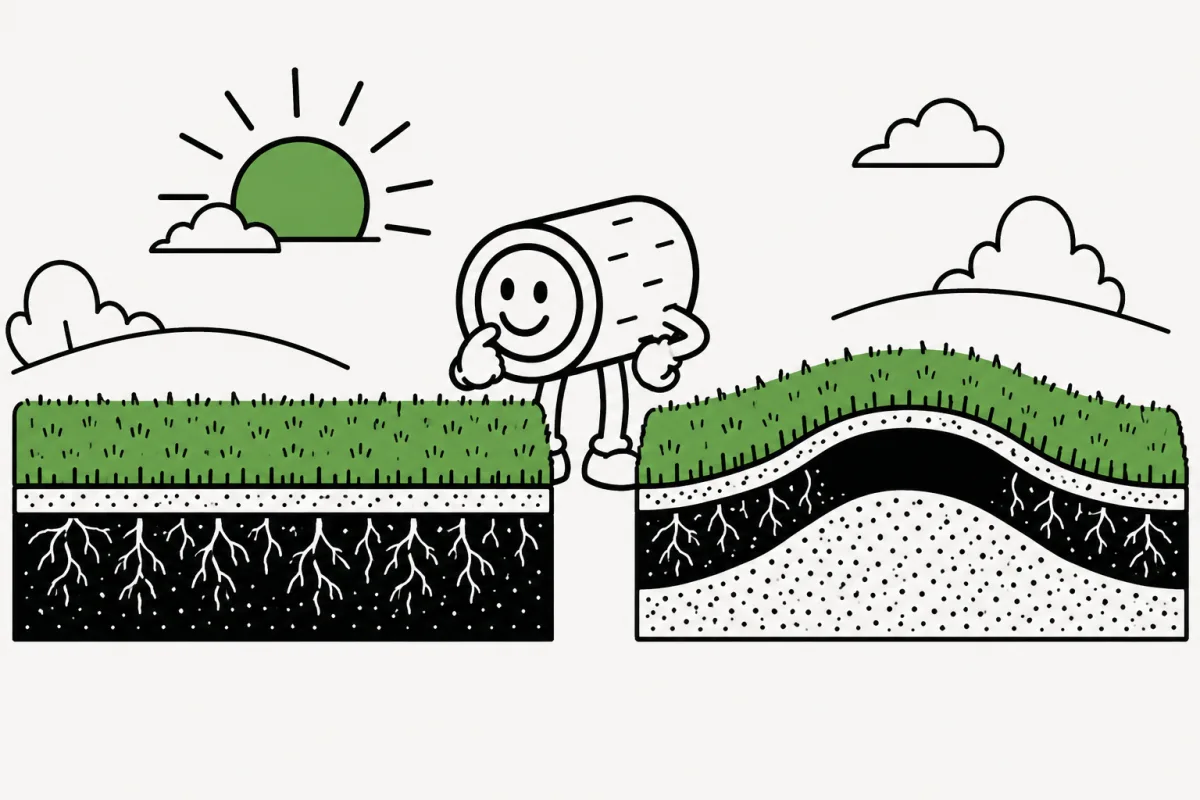
Roots need contact with the soil
Firm the bed and fit each piece flat. Air pockets leave roots exposed and can contribute to uneven settling.
Why urine damages grass
Concentrated nitrogen and salts can damage a small area of turf. A dark green ring may surround the brown center where the dose is lower.
Repeated use of one spot increases the exposure. Urine volume and where the dog stops both affect the pattern.
Respond to spots early
Rinse a fresh urine spot with water when permitted. Keep a watering can near the route if that makes prompt rinsing easier.
For an existing bare patch, check whether the surrounding grass is growing into it. Bermuda generally repairs wear faster than Zoysia.
If a patch stays bare during good growing weather, consider replacing that section. First address repeated use or poor soil conditions.
Do not add extra fertilizer to a suspected urine burn. More nitrogen can increase the problem.
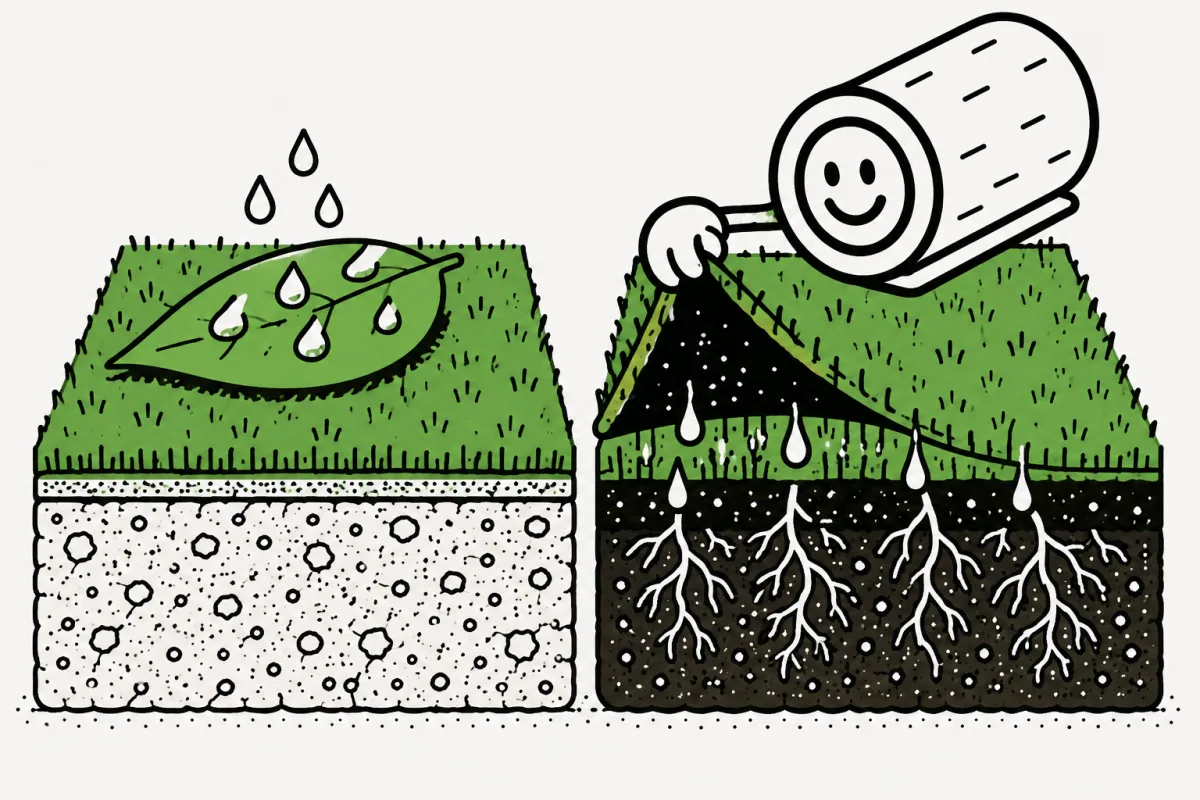
Check below the green surface
Lift a corner gently. The soil beneath the sod tells you more than the appearance of the leaves.
Choose for sunlight and wear
- Bermuda: Suits full sun and regular traffic. Its recovery rate makes it useful for active yards.
- Zoysia: Tolerates traffic, but worn areas can recover slowly.
- St. Augustine: Tolerates more shade, but traffic tolerance is a weakness. It still needs adequate light.
Use the grass comparison to check the rest of the requirements.
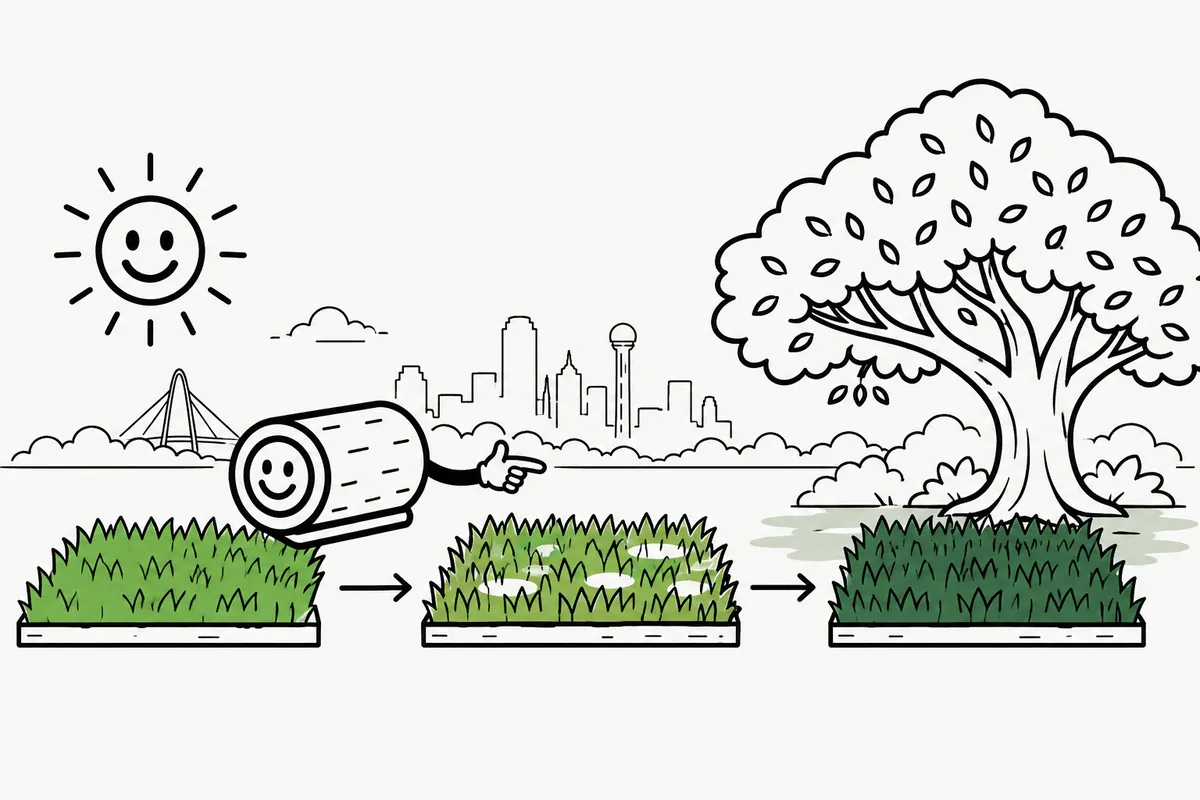
Match the grass to available light
Bermuda suits full sun. St. Augustine tolerates more shade. Zoysia varies by cultivar, and deep shade can limit every grass.
Give repeated traffic a durable route
A dog may use the same fence line or corner every day. Repeated wear can exceed the grass’s recovery rate.
Consider a mulch or stepping-stone path along that route. A bed or temporary barrier can also redirect traffic while damaged turf recovers.
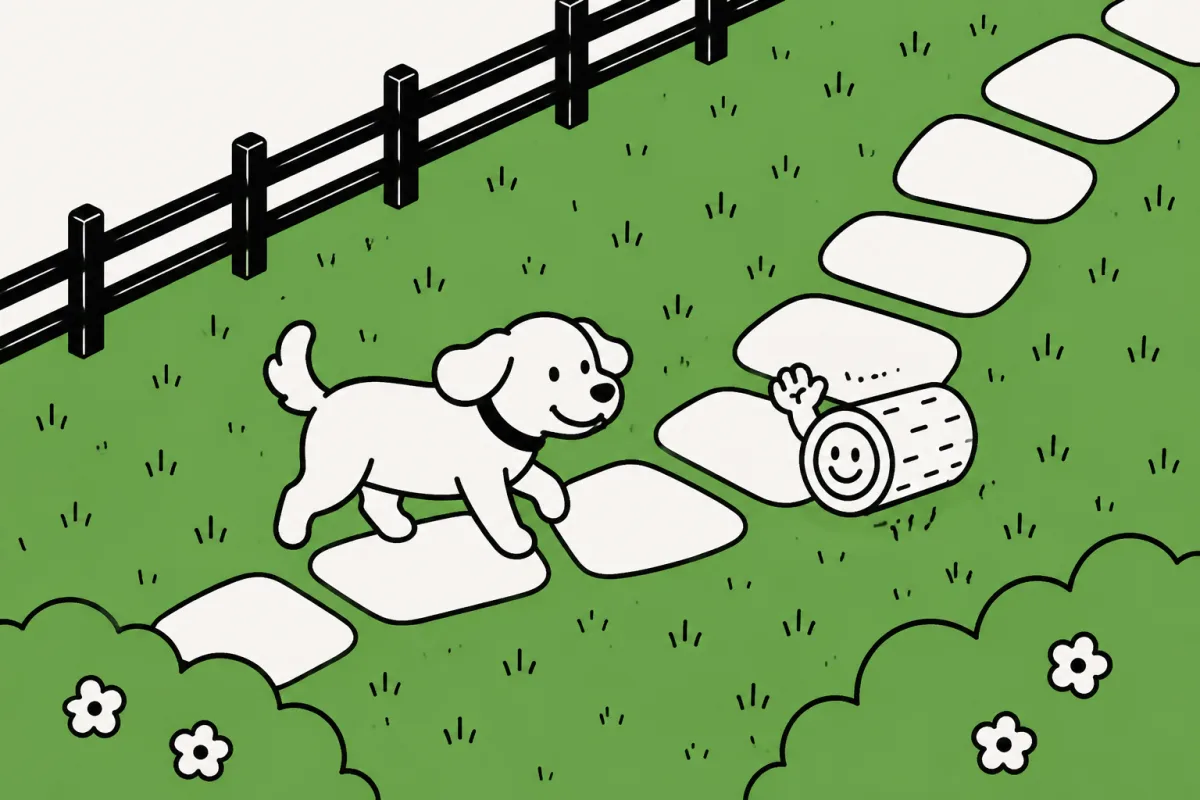
Give repeated traffic a path
A durable route can protect the same corner or fence line from daily wear. Keep dogs off loose sod.
Plan for normal lawn maintenance
Even durable grass can develop worn spots with daily dog traffic. Choose for the site, protect new roots, and respond to damage early.
Continue with the care guide for watering and mowing after establishment.
Questions people ask
How long should I keep my dog off new sod?
About two weeks, and longer if pieces still lift easily. Use a separate route until roots hold the sod, then return to normal use gradually.
Why does dog urine kill grass?
Concentrated nitrogen and salts can damage a small patch. Repeated use of the same spot increases exposure. A lower dose can produce a greener ring.
What is the best sod for a yard with dogs?
Bermuda suits sunny yards with regular traffic. Zoysia tolerates wear but recovers slowly. St. Augustine offers more shade tolerance with lower traffic tolerance.
Can I repair urine spots in new sod?
Rinse fresh spots when permitted. Small patches may recover from surrounding growth. If an area stays bare, address repeated use before replacing the sod.
Sources
This guide is part of The complete guide to sod in Dallas-Fort Worth.