

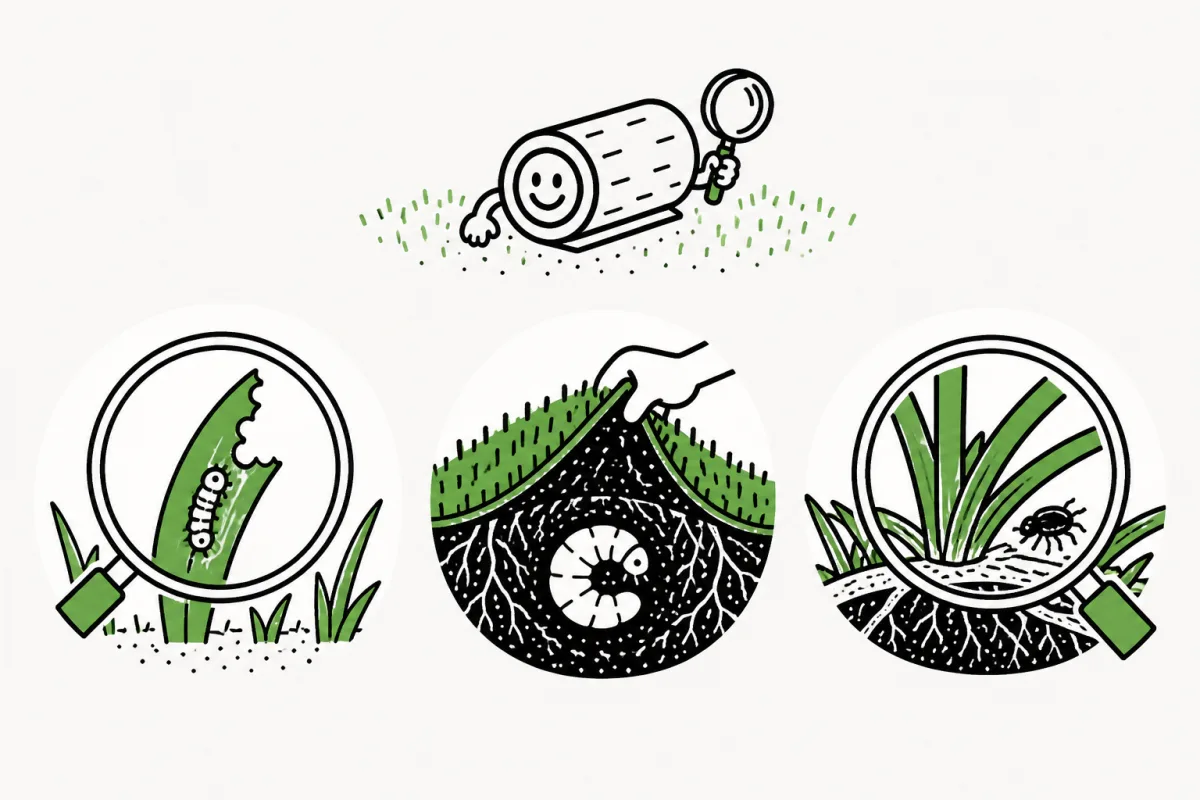
At a glance
Find evidence before treating
Check water before choosing a treatment
Dry soil and insect damage can produce similar yellow or brown patches. Check the moisture and sprinkler coverage in the affected area.
Look beneath the sod as well as at the leaves. Good coverage does not rule out pests, and a dry patch does not confirm them.
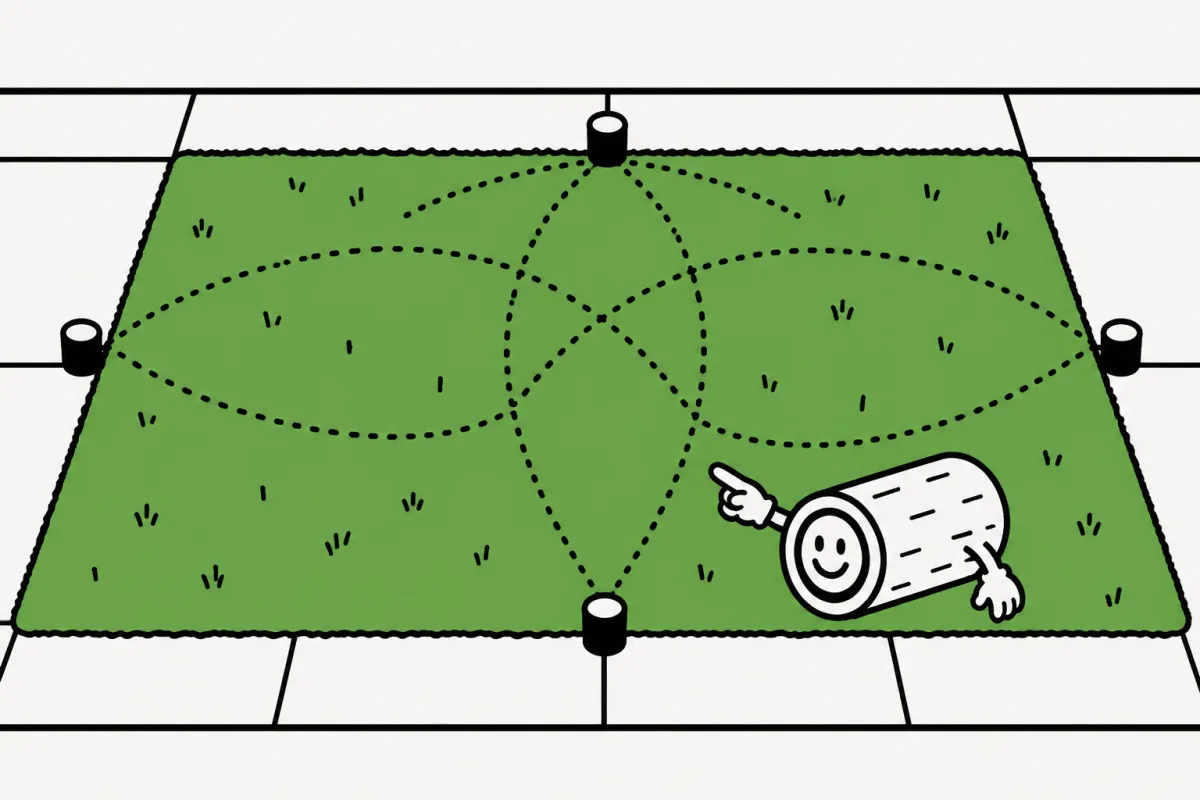
Check where the spray patterns meet
Watch the edges between coverage areas. A missed strip can stay dry even when the rest of the zone gets enough water.
Look for chinch bugs near the damaged edge
Chinch bugs cause their most serious lawn damage in St. Augustine. Hot, sunny areas near driveways and sidewalks are common places to inspect.
Adults are about 3 to 3.6 millimeters long, with black bodies and white wings. Part the grass where healthy and damaged turf meet.
Look near the base of the plants for movement. Finding insects at the active edge is more useful than inspecting only the dead center.
Inspect chewed leaves for armyworms
Fall armyworms eat leaf tissue. Damage can spread quickly, leaving Bermuda thin or ragged during late summer.
Inspect in the evening when caterpillars may be feeding. A pale inverted Y on the head helps identify fall armyworms.
The adults are moths that lay eggs in masses near turf. Established roots can support recovery after leaf loss, but young sod has fewer reserves.
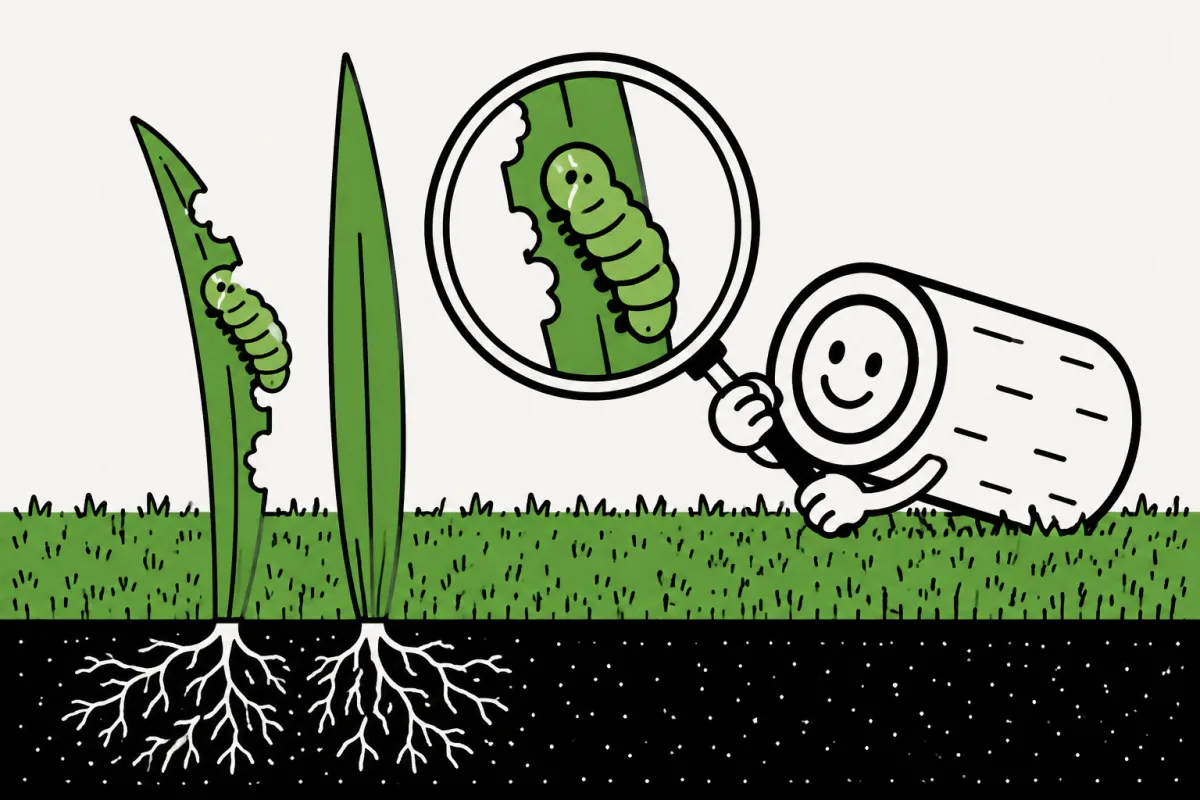
Look for chewing on the leaves
Inspect damaged blades for caterpillars. Use a clear close-up to identify the insect before selecting a treatment.
Inspect below turf with damaged roots
White grubs are beetle larvae that feed underground. Root loss can leave irregular patches that resemble drought damage.
Lift a small section and look for grubs and damaged roots. Loose turf alone is not enough: fresh sod may not have anchored yet.
Animal digging can be another clue because some animals feed on grubs. Confirm what is beneath the turf before treating it.
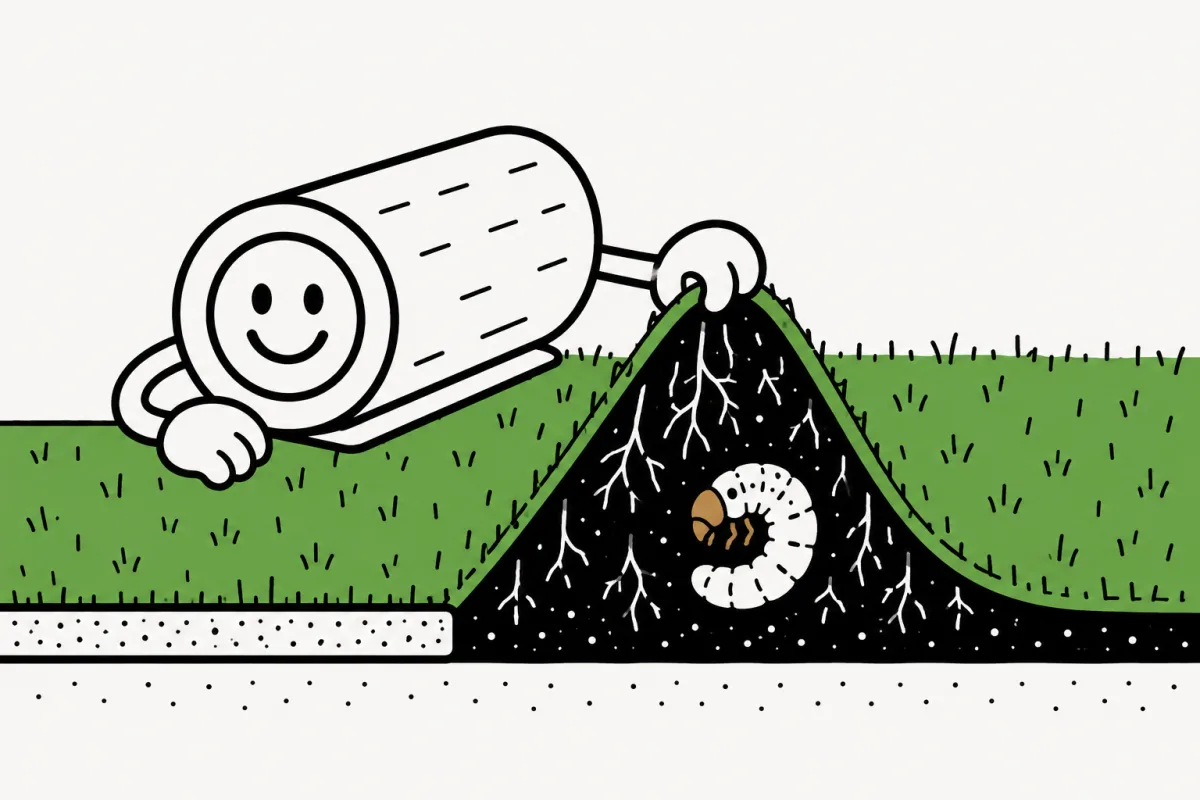
Inspect below loose turf
Look for insects and damaged roots beneath the affected area. Fresh sod also starts out loose, so lifting alone is not a diagnosis.
Use symptoms to choose where to inspect
| What you see | What to inspect |
|---|---|
| Chewed or missing leaves | Leaf blades and caterpillars |
| Hot St. Augustine patches | Moisture and chinch bugs at the patch edge |
| Root loss or animal digging | Soil and roots for grubs |
| Dry seams or strips | Sprinkler coverage and soil contact |
| Rings in cool, wet weather | Disease signs and drainage |
These are inspection clues, not confirmed diagnoses. The yellow-sod guide covers other causes.
Monitor new sod while it establishes
New sod has fewer established roots and stored reserves than an older lawn. Damage can therefore interrupt its establishment.
Check the lawn regularly during the first season. Photograph changes so you can show where damage started and how it spread.
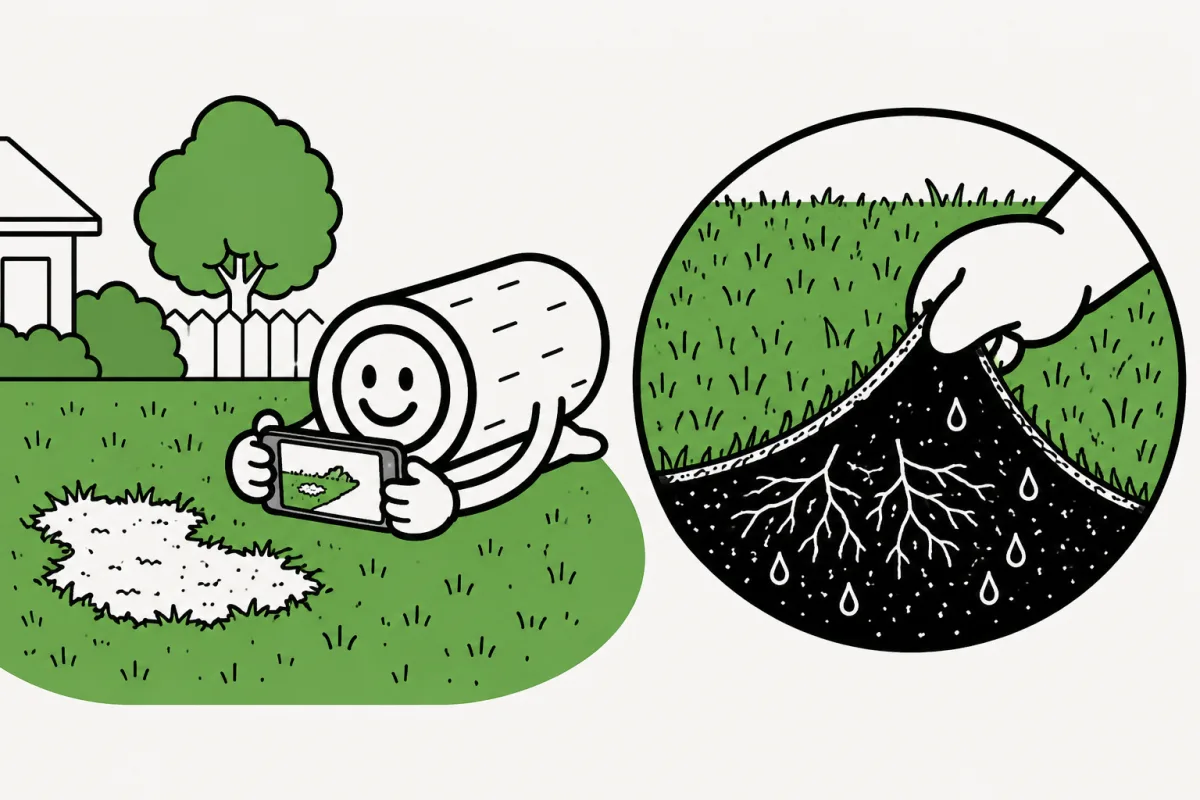
Take a wide photo and a close-up
Show the whole pattern, then the soil beneath a corner. Include the installation date and recent watering.
Identify the pest before treatment
- Confirm the insect and the damage it is causing.
- Check whether the product lists your grass and target pest.
- Read the restrictions for newly laid sod.
- Follow the label’s rate, timing, and watering instructions.
If identification is uncertain, contact us or your local Extension office. Send a clear insect photo and a wider photo of the lawn.
The care guide covers ongoing lawn maintenance.
Questions people ask
How do I know if it is bugs or just dry?
Check soil moisture and sprinkler coverage, then inspect for insects. Drought and pest damage can overlap, so the shape alone is not enough.
What do chinch bugs do to St. Augustine?
They can cause yellow and brown patches, especially in hot, sunny areas. Inspect the boundary between damaged and healthy grass for the insects.
Why did my Bermuda get stripped overnight?
Fall armyworms are one possibility. Inspect for caterpillars and chewed leaves, especially in the evening. A pale inverted Y on the head helps identification.
What makes turf roll up like a carpet?
Root loss can make turf lift easily, and grubs are one possible cause. Inspect below it. Fresh sod also starts out loose before it roots.
Sources
This guide is part of The complete guide to sod in Dallas-Fort Worth.