
At a glance
Think bricks, not a checkerboard
1. Prepare the yard and tools
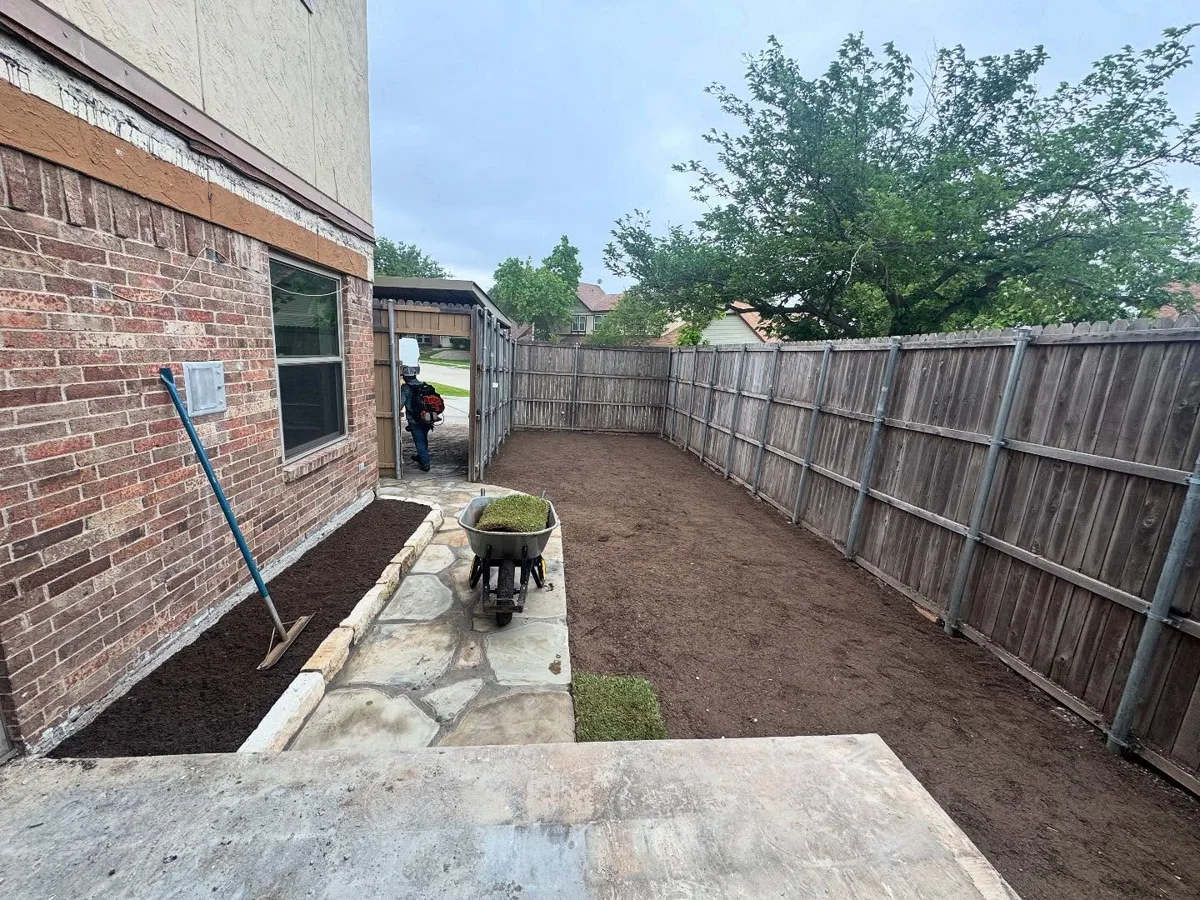
Finish preparation before the sod arrives. Once the pallets are on site, spend the available time laying and watering the turf.
- Measure the planting area and subtract beds and hard surfaces.
- Add 5% for trimming, then divide by 450 and round up to whole pallets.
- Remove old grass, thick thatch, and debris.
- Correct drainage and compaction before adding soil.
- Rake and firm the surface so each piece will sit evenly.
- Run every sprinkler zone and mark the heads.
- Confirm the permitted watering times and any required new-sod approval.
Check the height beside paths and driveways. Allow for the sod’s actual thickness so the finished lawn does not form a raised edge.
Prepare the grade before covering it
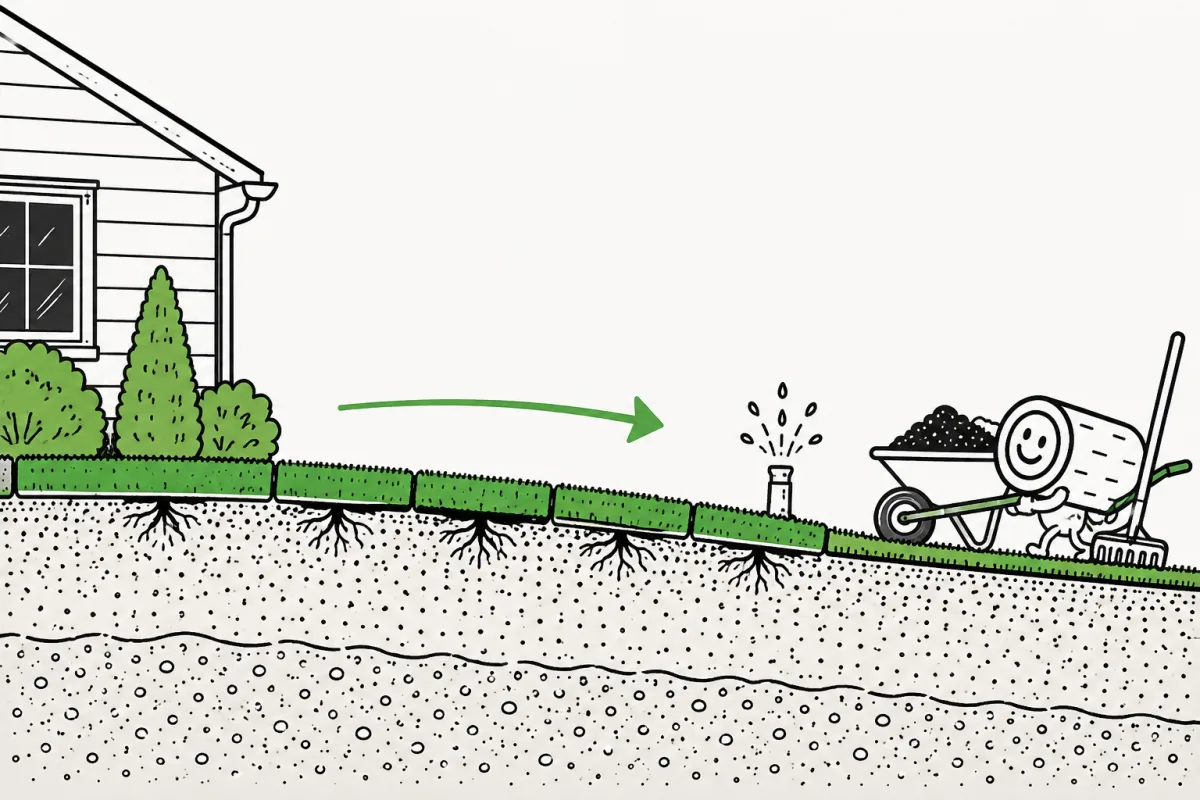
Check drainage and the finished level before laying sod. Correct low areas and prepare an even surface.
Use the soil-preparation guide for the ground work and the measuring tool for the quantity.
Have these tools ready
| Tool | Use |
|---|---|
| Sod knife or utility knife, plus spare blades | Cut pieces and trim boundaries. |
| Gloves and suitable footwear | Handle the turf and work around tools. |
| Wheelbarrow | Move small loads from the pallet to the work area. |
| Landscape rake | Correct small ridges before covering the bed. |
| Plywood boards | Spread your weight and protect the prepared surface. |
| Sprinkler flags | Keep heads visible while laying and cutting. |
| Working hose or sprinklers | Water completed areas immediately. |
| Light lawn roller, if suitable | Improve contact between the sod and soil. |
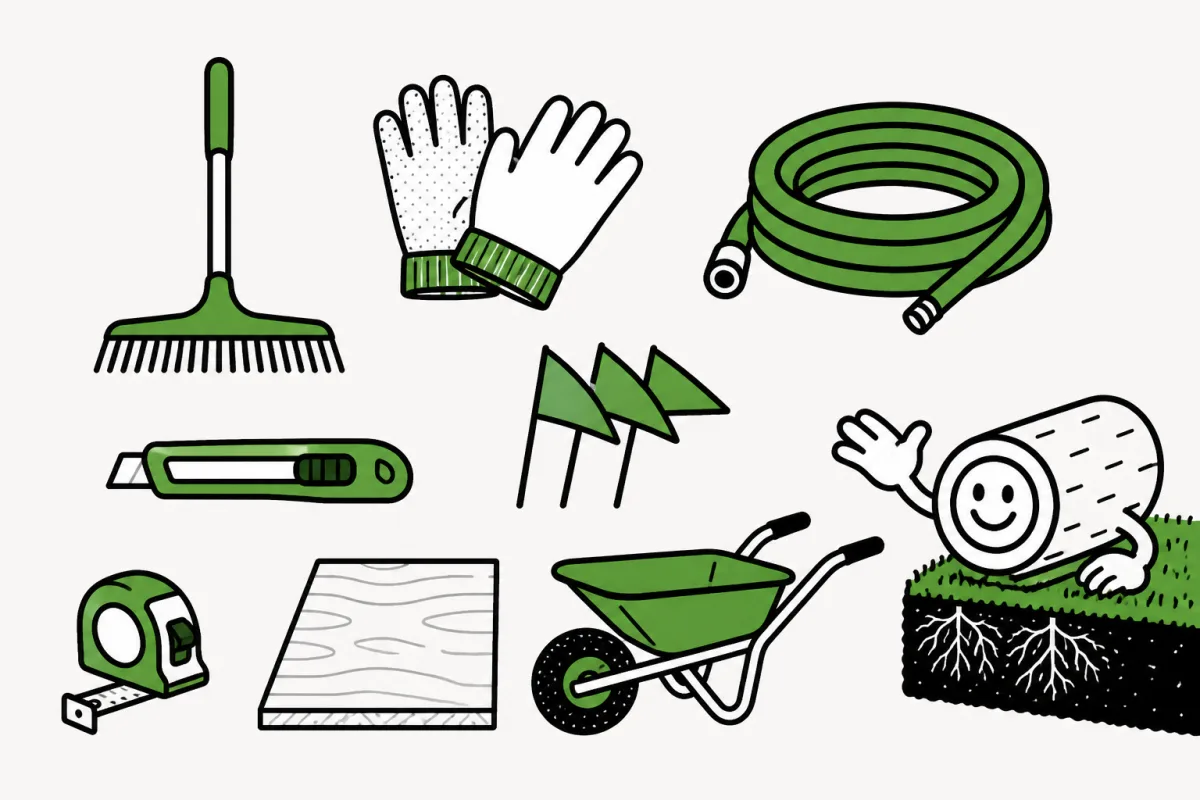
Set out the tools before delivery
Have the cutting, carrying, and watering tools ready before the first pallet arrives. Keep spare blades and sprinkler flags within reach.
Arrange help before delivery. Two people may need about two hours per pallet, but long carrying routes and detailed cuts add time.
2. Plan the delivery area
Confirm a firm, accessible unloading location with the driver. Ask for pallets near their work areas where access permits.
- Keep the route to the lawn clear.
- Inspect the sod as it arrives.
- Photograph any delivery damage before laying the affected pieces.
- Keep waiting pallets shaded where possible.
- Move manageable loads to the work area and start laying promptly.
Stacked sod can heat quickly, especially in summer. Do not soak the stack or leave pieces waiting in a wheelbarrow unnecessarily.
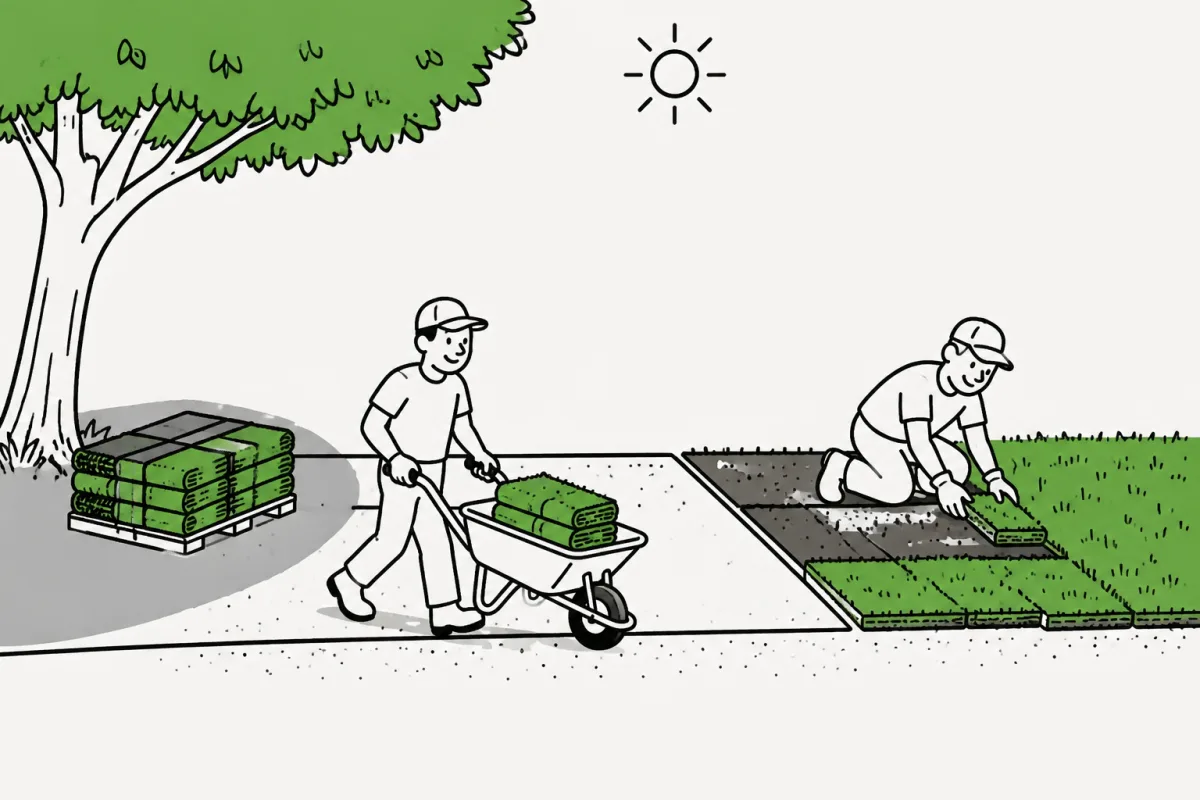
Keep the installation moving
Keep waiting pallets shaded and lay the sod promptly. Plan the route from the delivery point to the lawn.
If the sod arrives yellowed, dry, or damaged, contact us within 24 hours. The delivery warranty explains the conditions.
3. Lay a straight first row
Use a straight walkway or driveway as the starting line. If the lawn has no straight boundary, set a straight reference line.
- Moisten dry soil before placing the first piece.
- Lay the piece flat against the prepared bed.
- Fit the next piece against it with the edges touching.
- Continue along the reference edge.
- Check the row’s alignment before starting the next row.
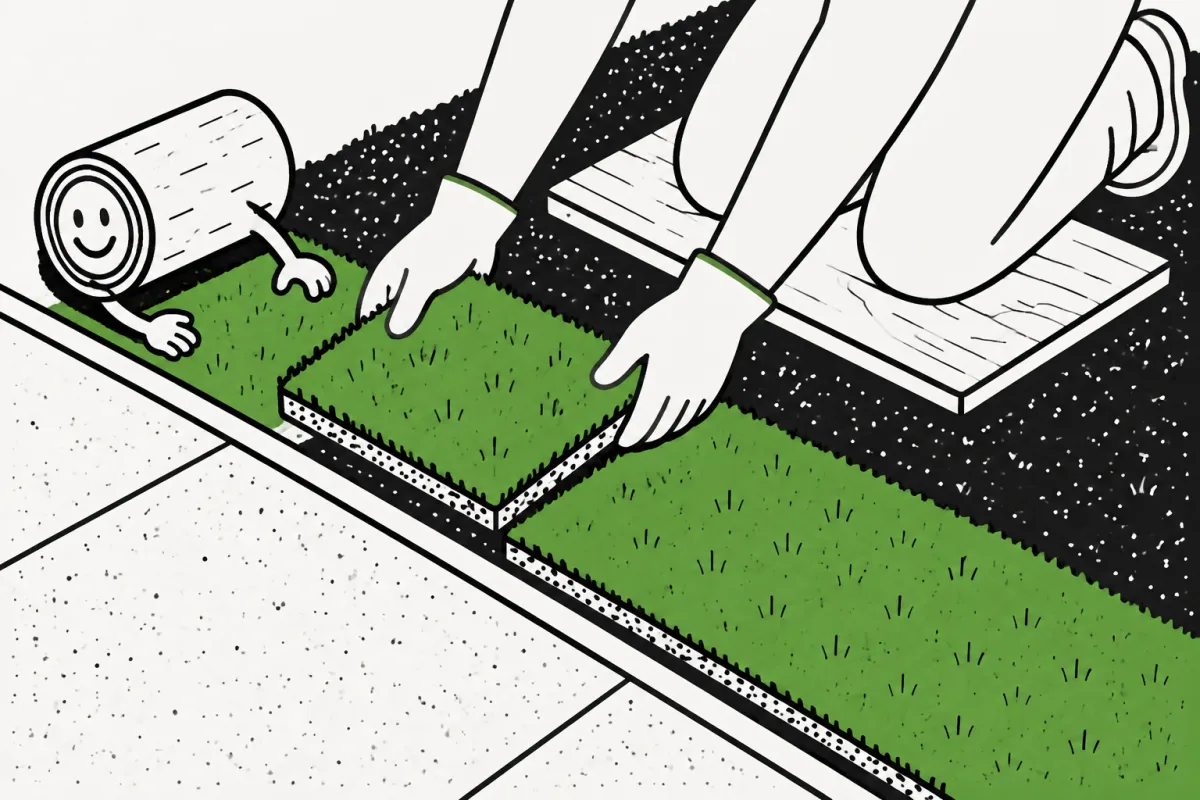
Use a straight edge for the first row
Keep the first row straight and each piece flat. Use a board to spread your weight instead of leaving deep footprints in the bed.
Use plywood to spread your weight while working. Avoid deep footprints in the prepared soil, which can become low spots beneath the lawn.
If a piece folds or bridges a ridge, lift it and correct the bed. Keep the piece flat rather than pressing a fold into it.
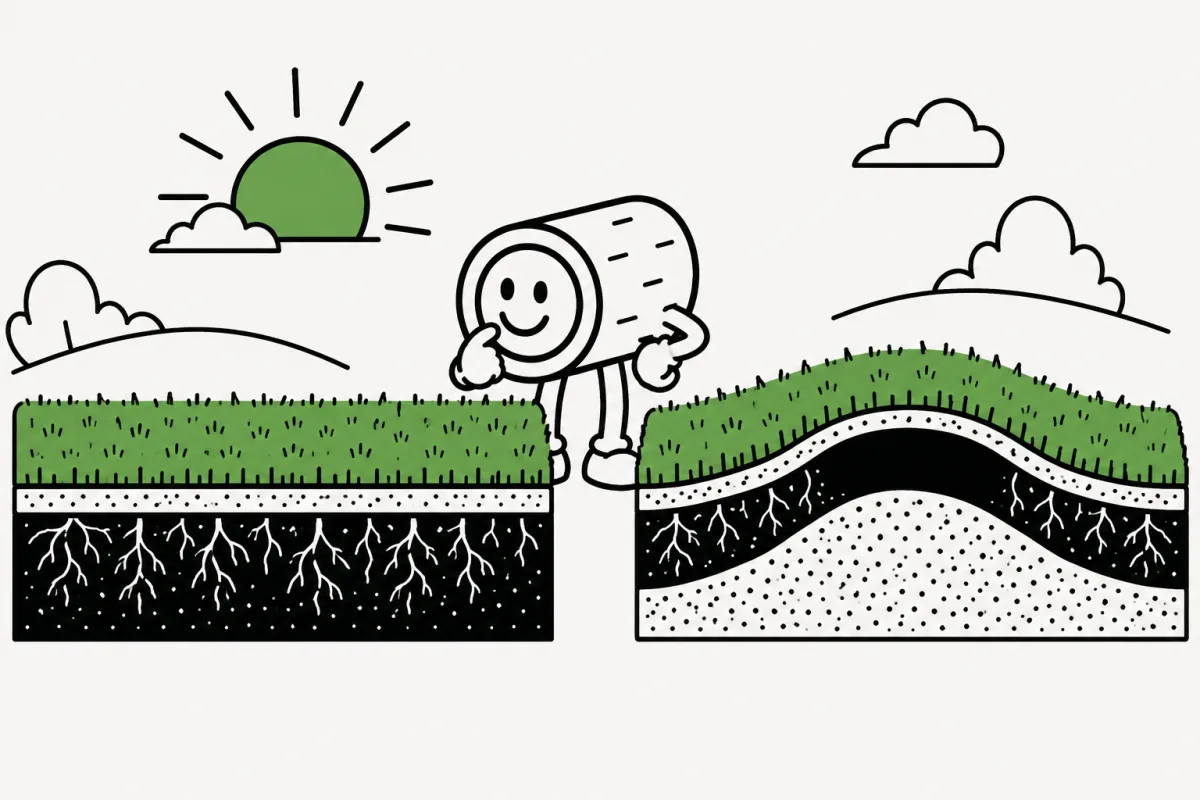
Roots need contact with the soil
Firm the bed and fit each piece flat. Air pockets leave roots exposed and can contribute to uneven settling.
4. Stagger the joints
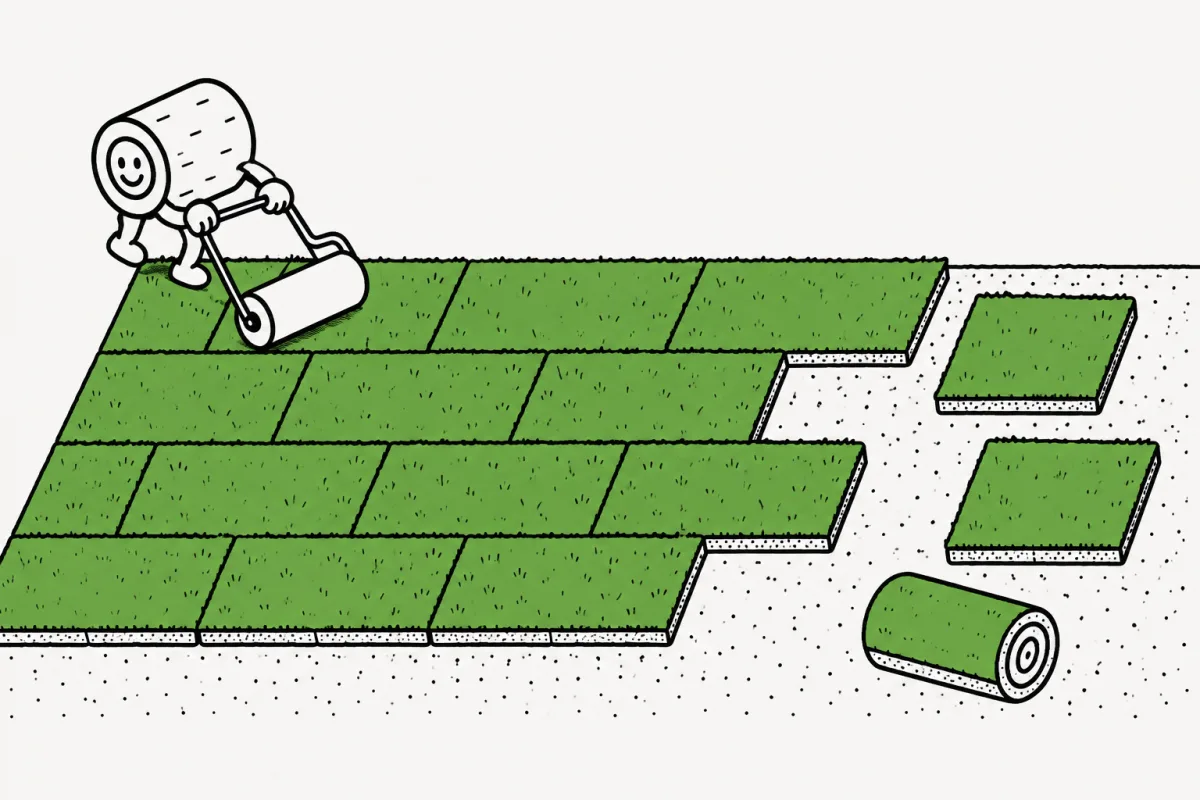
Offset the short joints between rows. The pattern resembles brickwork, with the joint in one row near the middle of the neighboring piece.
- Start the second row with a half piece.
- Fit full pieces along the rest of that row.
- Start the next row with a full piece.
- Continue alternating the starts as you cross the lawn.
Offset the short joints
Start alternate rows with a half piece. Fit edges closely without stretching or overlapping the sod.
Keep the edges close without overlapping them. Do not stretch a piece to reach the next one. Cut a filler instead.
On a slope
Lay the rows across the slope. This breaks up long downhill seams that could channel water.
On steep ground, get site-specific advice about securing the sod and controlling erosion before installation.
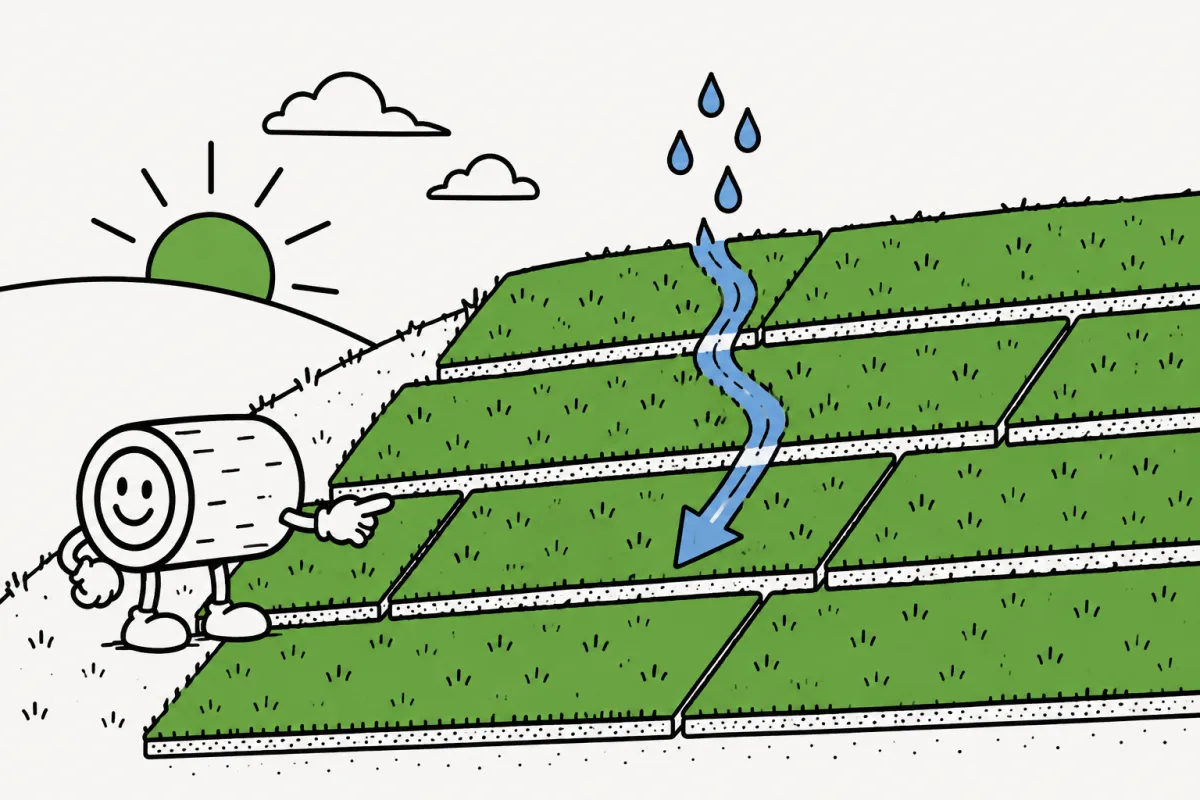
Run the rows across the slope
Break up long downhill seams by laying across the hill. Steep sites may need a separate plan for securing the turf and controlling erosion.
5. Cut curves and fit gaps
Use larger pieces along exposed boundaries where possible. Tiny edge scraps dry quickly and are easier to disturb.
- Place a full piece across the curved boundary.
- Mark or follow the intended bed edge.
- Keep your supporting hand clear of the blade.
- Cut the excess away from your body and hand.
- Fit the trimmed piece flat against the soil.
For a substantial gap, cut a sod piece that fits the opening. Do not stretch adjacent pieces or fill a large planting gap with soil.
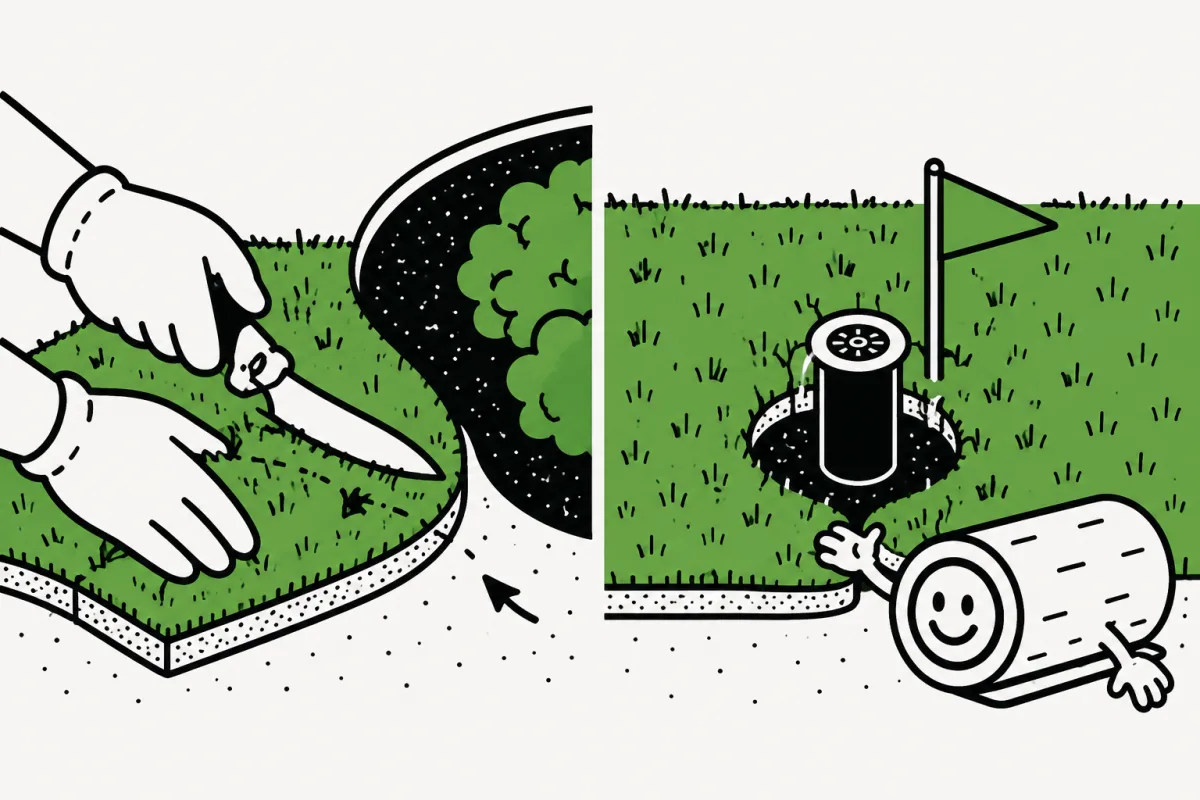
Trim the boundary and clear the head
Keep the supporting hand away from the blade. Leave the sprinkler opening clear, then run the zone to check its movement and spray.
Around sprinkler heads
Keep the flags visible while cutting. Leave each head clear so it can rise, rotate if designed to, and spray above the turf.
Run the zone after fitting the surrounding pieces. Check that grass does not block the nozzle and that the spray still reaches the intended area.
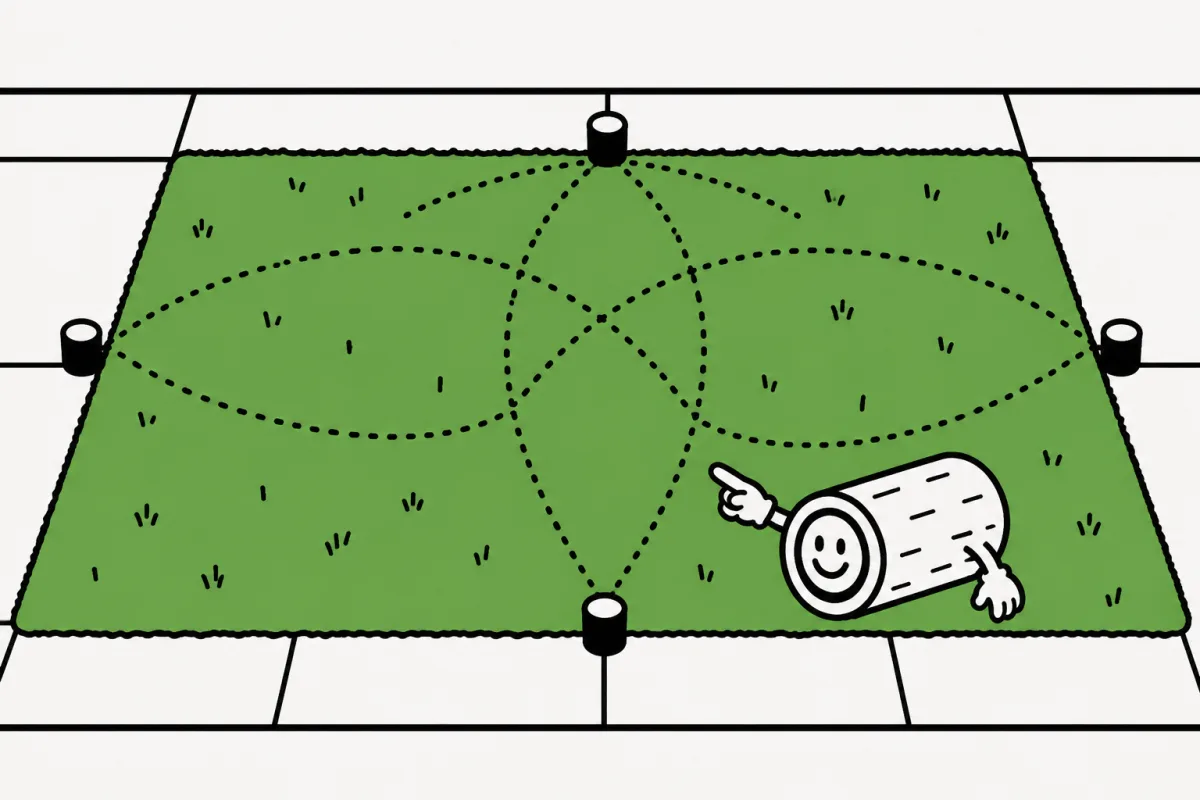
Check where the spray patterns meet
Watch the edges between coverage areas. A missed strip can stay dry even when the rest of the zone gets enough water.
6. Make soil contact
Fresh roots need contact with the soil beneath the sod. Check for folded edges, overlaps, and pieces that bridge an uneven patch.
- Lift and refit any piece that does not sit flat.
- Use suitable light pressure to seat the turf against the bed.
- Check the edges again after pressing.
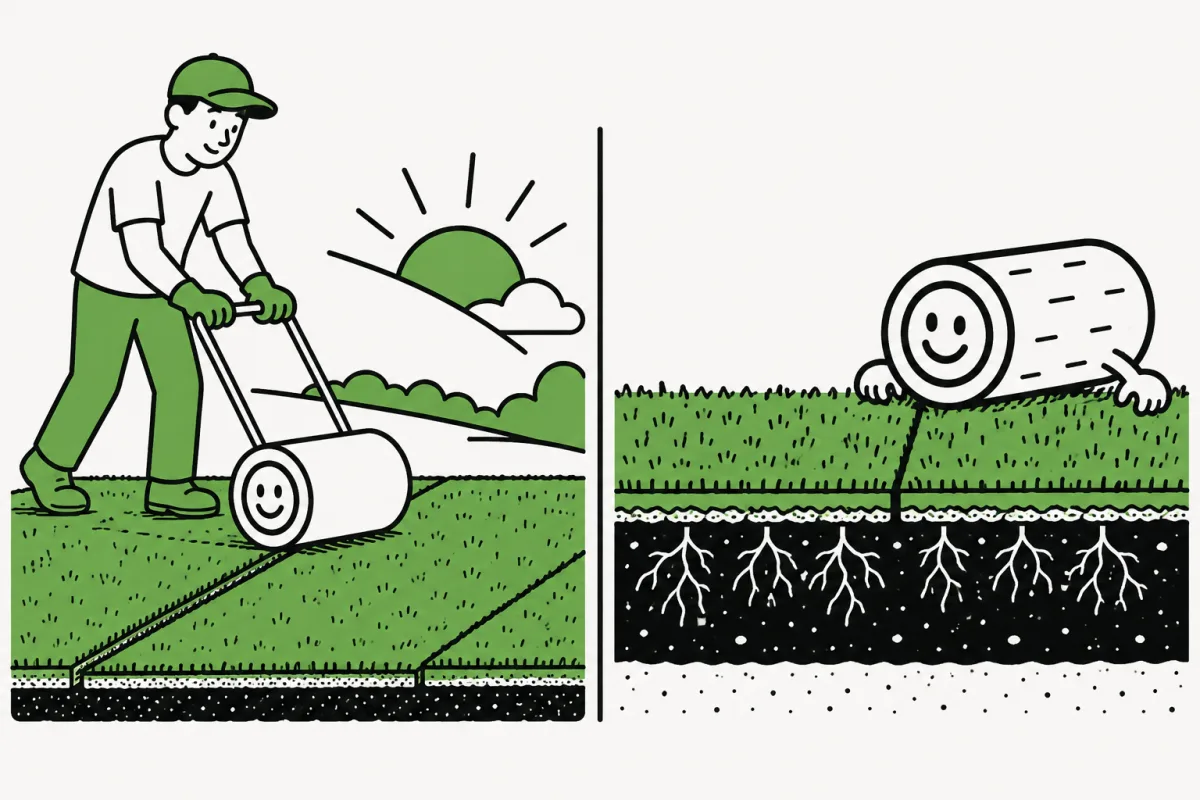
Seat the turf without heavy compaction
Use light, even pressure on suitable ground. Refit folds and overlaps instead of trying to flatten them with more weight.
A light roller can help on suitable ground. Plywood also spreads pressure. Avoid heavy rolling or working on saturated soil.
If the lawn feels deeply soft or shows persistent low areas, inspect the ground rather than adding more roller weight.
7. Water completed areas as you work
Start this step as sections are ready. Do not wait until the entire lawn is laid, especially during hot or windy weather.
- Water a completed area to wet the sod and soil beneath it.
- Lift a corner gently to check the moisture below.
- Check exposed edges and seams for dry soil.
- Correct missed coverage before moving on.
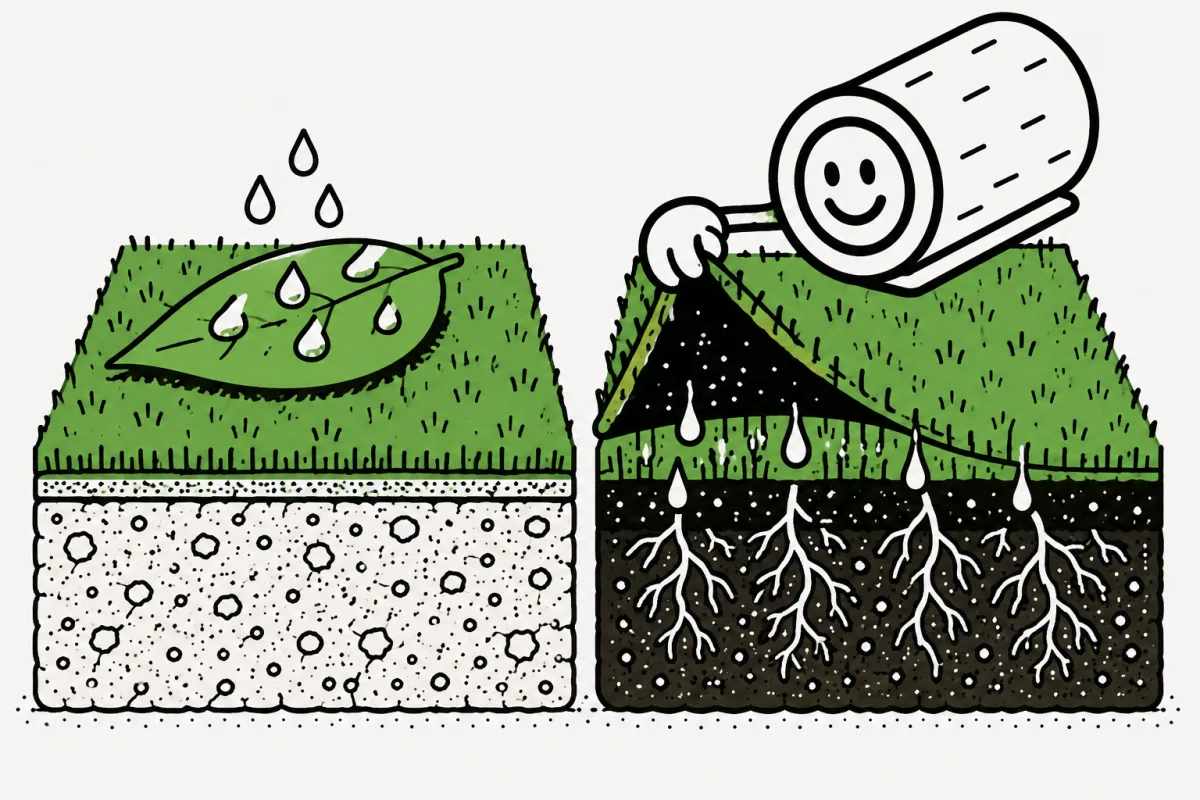
Check below the green surface
Lift a corner gently. The soil beneath the sod tells you more than the appearance of the leaves.
Wet leaves do not prove that the soil is moist. Check below the turf, and avoid keeping the root zone saturated.
If runoff starts before enough water soaks in, use shorter cycles with soaking time between them. Keep every cycle within the permitted window.
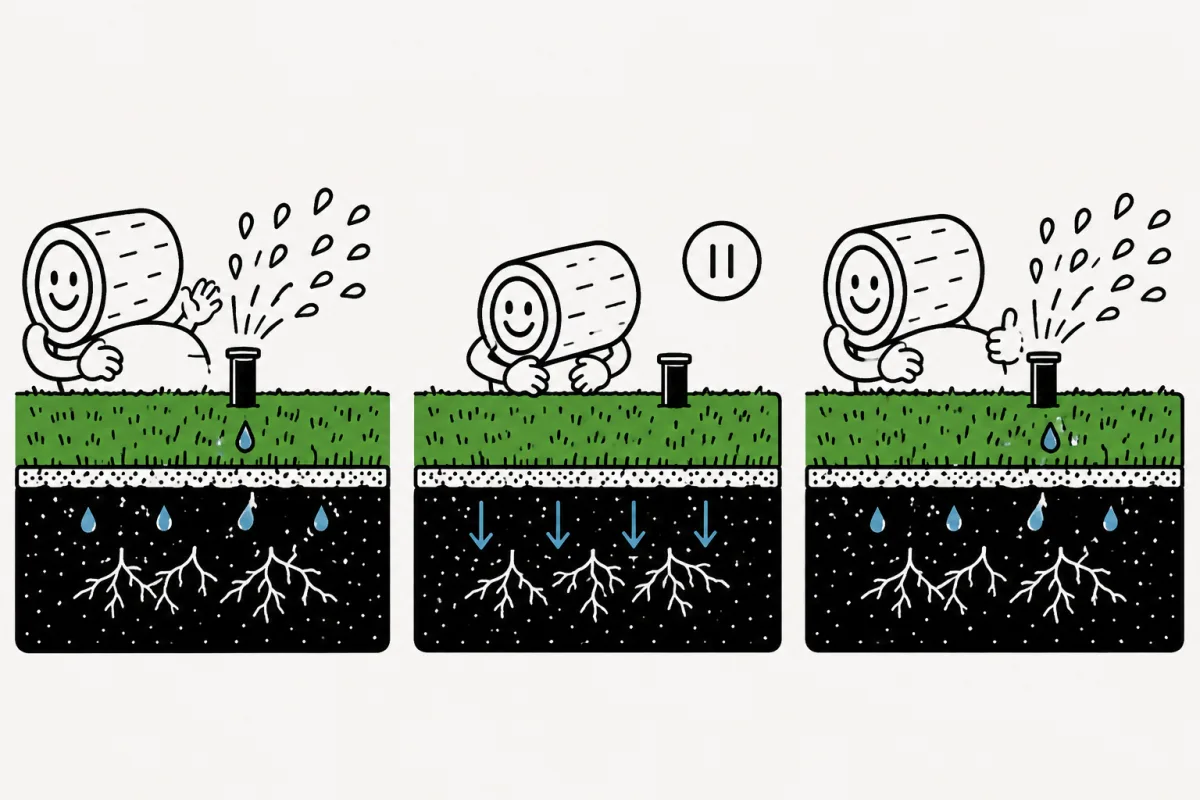
Water, pause, then reassess
Shorter cycles can help water soak in before runoff starts. Keep every cycle within your permitted watering window.
The watering guide explains how to adjust the schedule as the roots develop.
8. Protect the new roots
Keep people and dogs off loose pieces. Use a separate route while the sod establishes.
Check moisture in the morning and late afternoon during early establishment. Adjust watering to the soil, weather, and current restrictions.
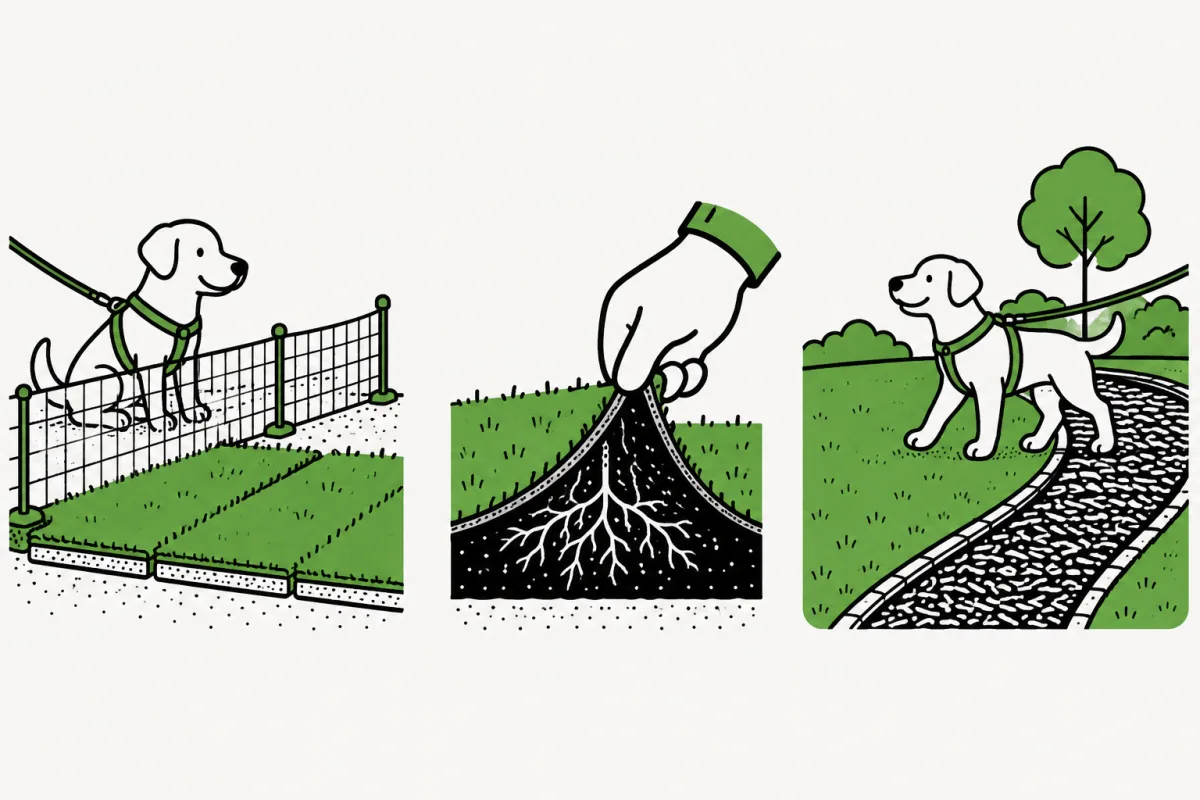
Protect the lawn until it roots
Use a separate route during establishment. Resume use gradually after the sod resists a gentle tug.
Before the first mow
- Gently tug a corner to check that roots hold the piece.
- Wait until the ground supports the mower without rutting.
- Set the mower to the recommended height for your grass.
- Remove no more than one-third of the leaf.
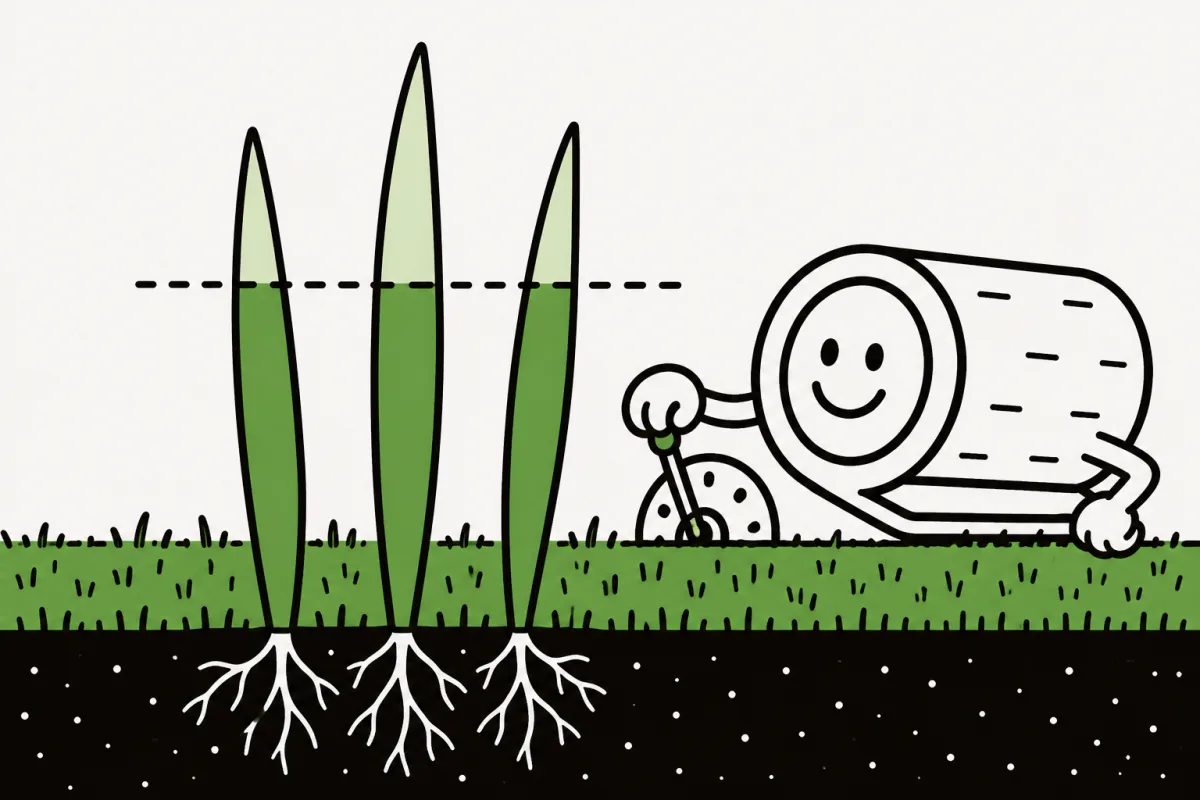
Keep at least two-thirds of the leaf
Remove no more than one-third in a single cut. Reduce an overgrown lawn’s height over several mowings.
Rooting often takes two to three weeks in warm conditions. Cold weather can take longer, so check progress rather than relying on the date.
Use the first-maintenance guide before fertilizer or weed treatments.
9. Check the finished lawn
Walk the perimeter and inspect the installation before putting the tools away. Avoid unnecessary traffic over soft areas.
| What you find | What to do |
|---|---|
| An open gap | Fit a sod piece without stretching its neighbors. |
| An overlapping or folded edge | Lift and refit it flat against the soil. |
| A dry edge or corner | Check coverage and water the missed area within the rules. |
| A low piece | Inspect the bed and soil contact beneath it. |
| A blocked sprinkler | Clear the opening and run the zone again. |
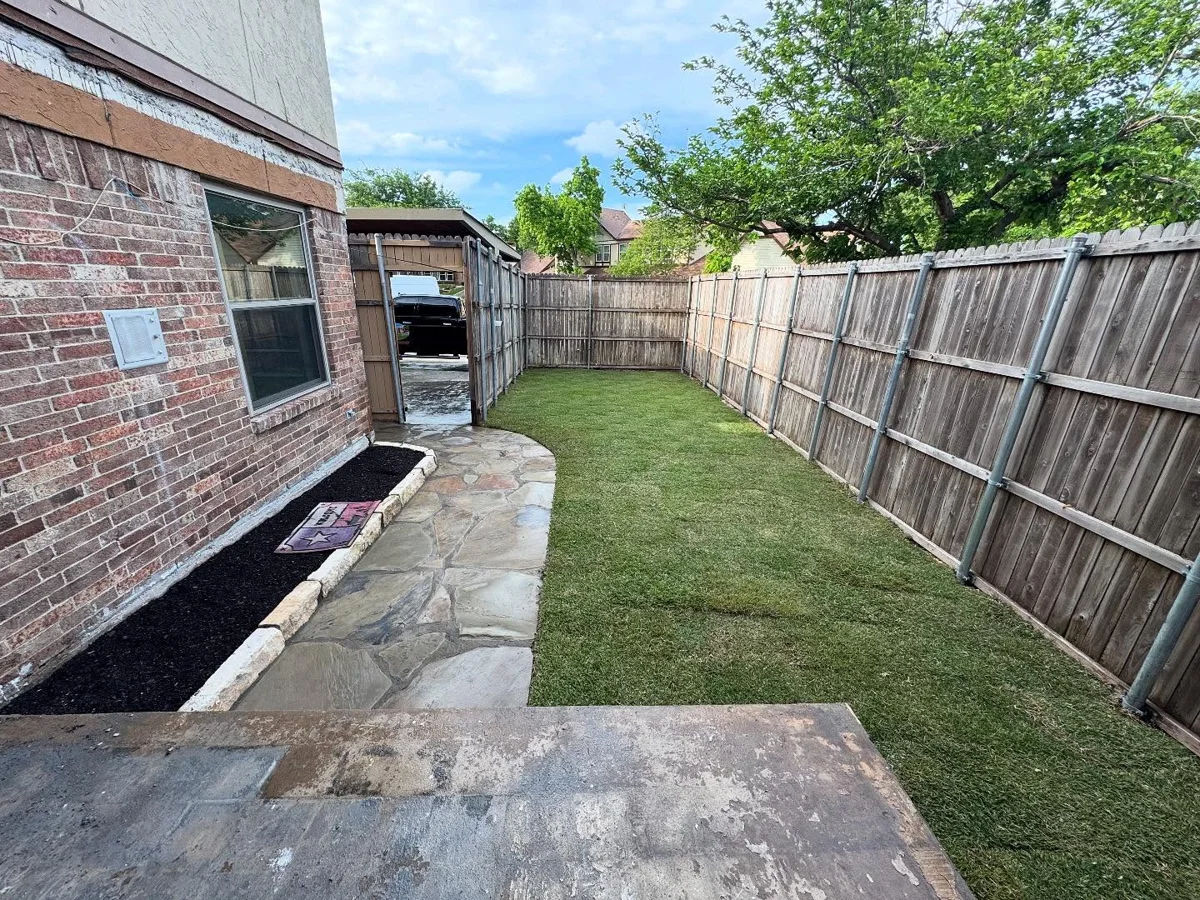
| A green, level seam | Monitor it as the grass grows together. |
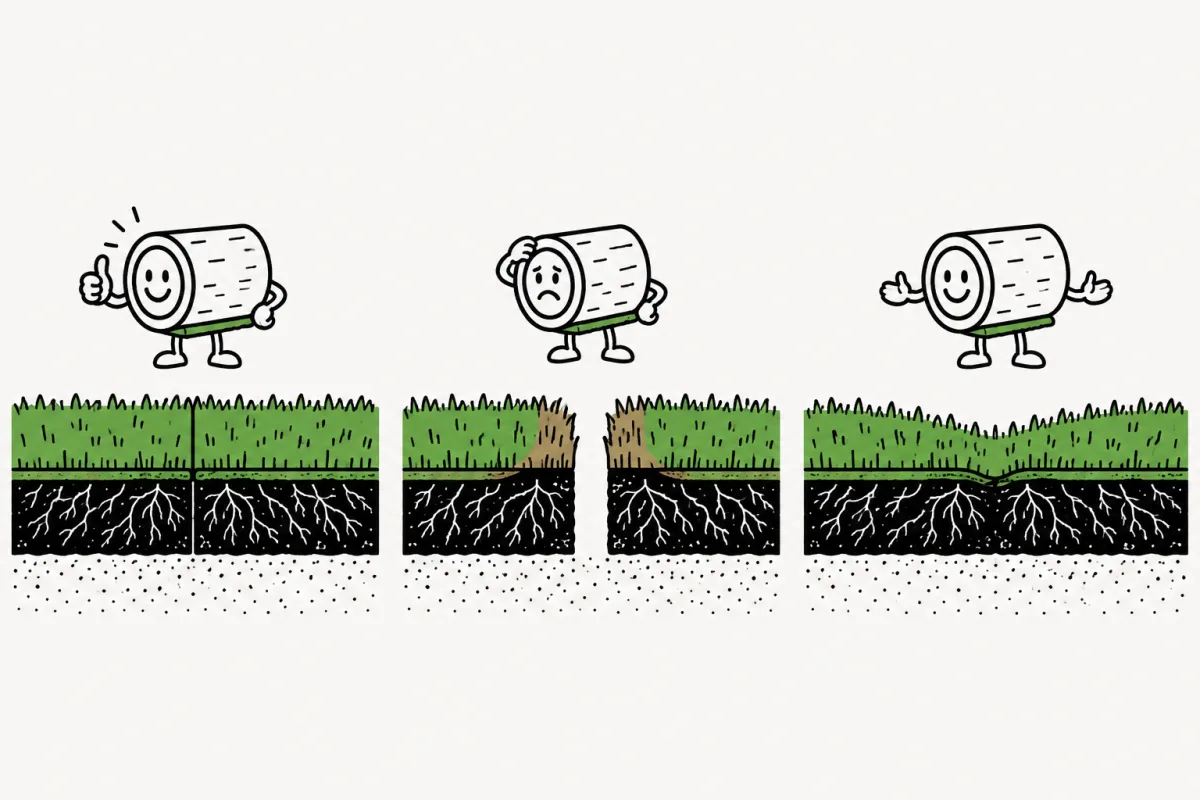
Separate color changes from settling
Green joints may need growing time. Dry edges need a moisture check. Low sections need a soil-level check.
Take a wide photo of the finished lawn and close-ups of any concern. These give you a record for the next moisture check.
For a later problem, use the seam guide or the yellow-sod guide.
Questions people ask
How long can sod sit on the pallet?
Plan to lay it the day it arrives. Summer heat builds quickly inside a stack. Shade waiting pallets and avoid unnecessary delays.
Why do you stagger sod seams?
Offset joints break up long continuous seams. Start alternate rows with a half piece and fit the edges closely.
Do I need a lawn roller?
A suitable light roller can improve contact between sod and soil. Plywood can also spread pressure. Avoid heavy rolling on saturated ground.
Sources
This guide is part of The complete guide to sod in Dallas-Fort Worth.