
At a glance
Prepare the patch before the pallet arrives
When can you replace only part of a lawn?
You can replace a damaged section with sod while keeping the healthy lawn around it. Patching makes sense when the problem is confined to that section and has been corrected. Widespread drainage, shade, or soil problems need a broader plan before you buy replacement grass.
Start with a walk around the yard. Is the bare area one worn route, or does the same damage repeat throughout the lawn? Mark the affected sections on a photo. That gives you a useful starting point for deciding between a repair and a larger resodding project.
Check why the grass failed before replacing it
Brown grass is not always dead. Cold, drought, insects, and disease can leave similar-looking damage. Compare the affected area with nearby healthy turf and check beneath the surface.
- Missed water: Run the sprinklers and look for blocked spray or a dry strip.
- Persistent wetness: Check whether the patch stays muddy after the rest of the lawn drains.
- Repeated wear: Identify the route used by feet, pets, or equipment.
- Shade: Notice whether the thin area follows a tree canopy or building shadow.
If the cause remains unclear, get it identified before repeating the same planting. Our yellowing-sod checks help organize the observations to share.
Match the grass already in the lawn
Identify the species and, if available, the cultivar from the original order. A different grass can leave a visible change in blade width, color, or growth. Compare an intact section of the lawn, not just a dried-out piece.
Match the site as well as the name. Replacing Bermuda in persistent shade with more Bermuda leaves the light problem unresolved. Review our sod varieties with the sunlight and traffic in that section in mind.
Prepare exposed soil and fit the new sod
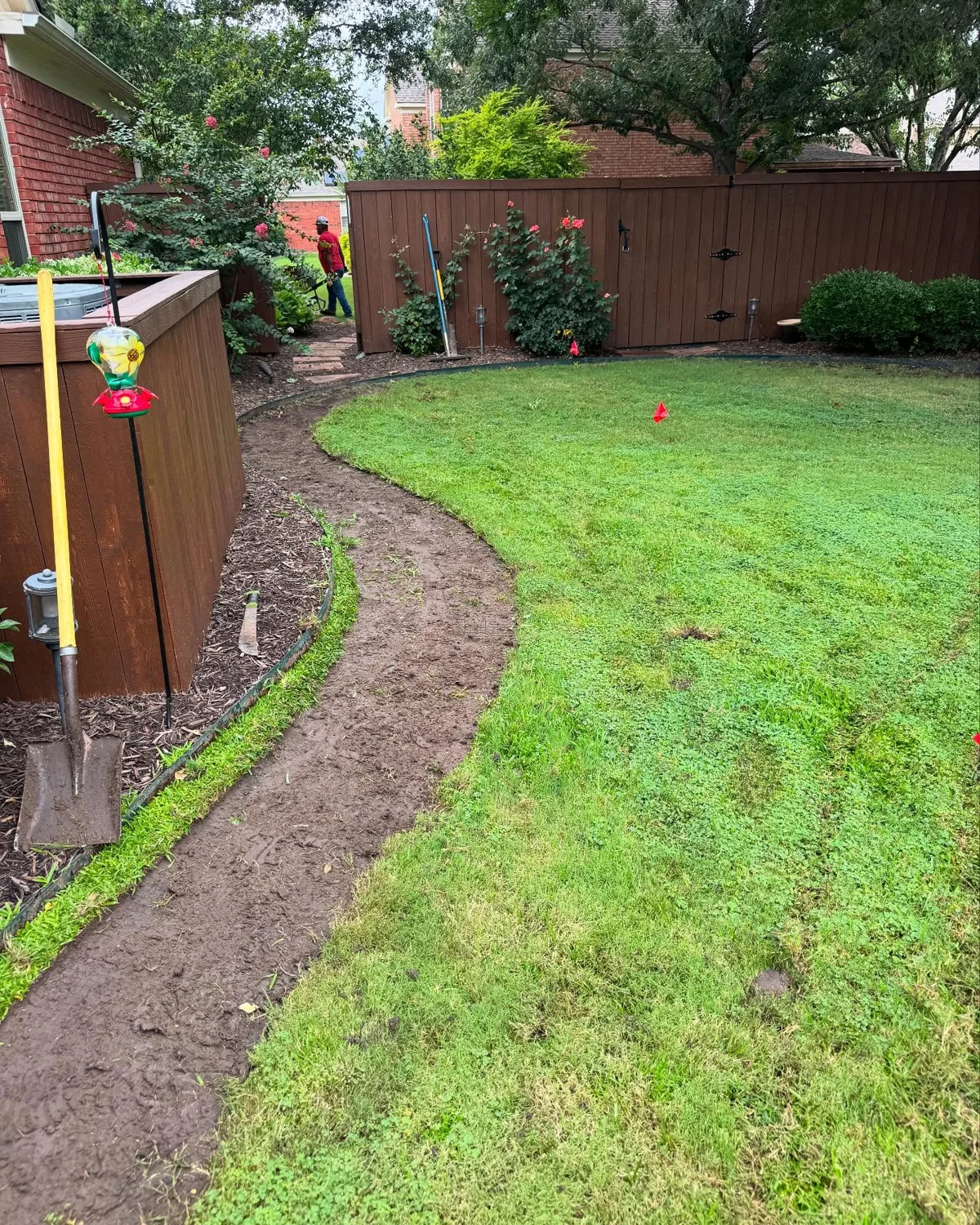
- Remove the failed turf, weeds, debris, and thick thatch from the repair area.
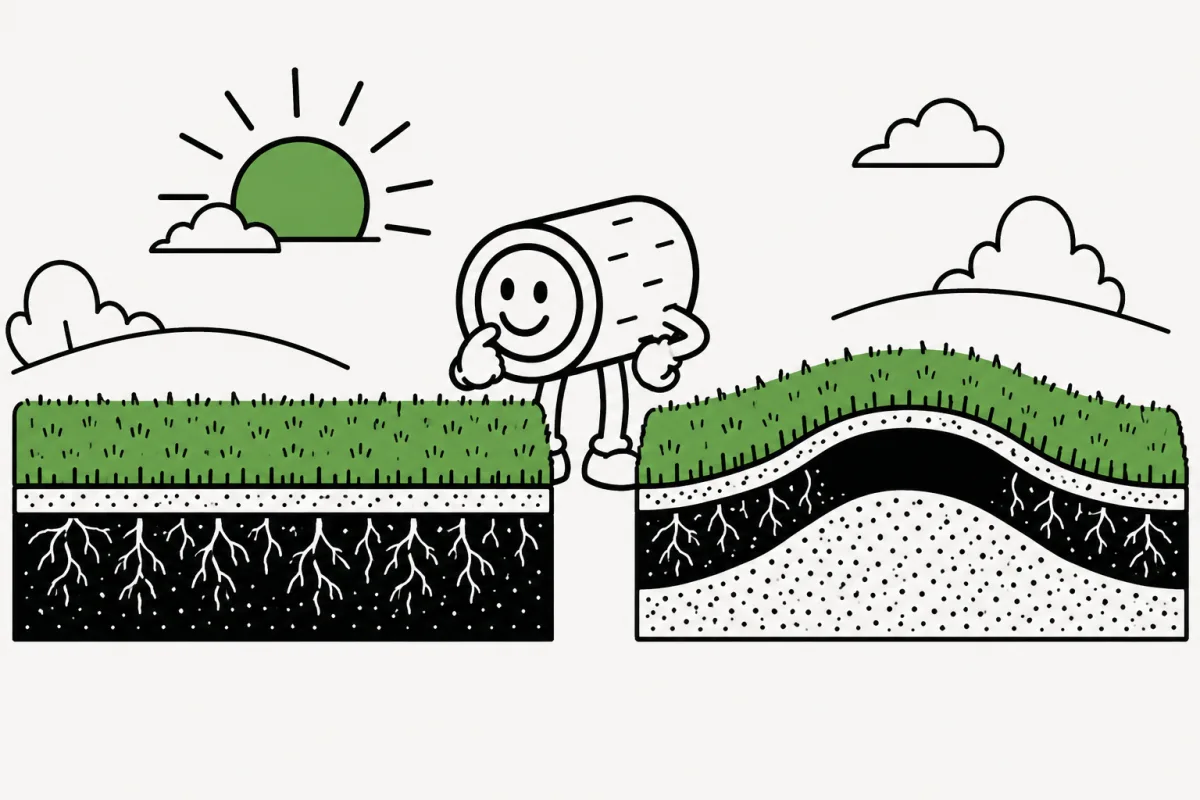
- Resolve compaction and low spots. Account for the thickness of the new sod so it meets the neighboring lawn.
- Rake and firm the soil. Avoid leaving a raised patch or a hollow that collects water.
- Lay fresh pieces promptly, fit the edges closely, and stagger joints where the patch needs several rows.
- Press or roll the sod for even soil contact, then check moisture beneath it.
Do not cover the old grass with a second layer of sod. For a larger area, use the DFW soil-preparation guide to plan the work before delivery.
Treat the repaired section as new sod
We recommend installing sod where irrigation is close at hand and available for use.
Check the patch separately from the established lawn. Keep the soil beneath it moist without leaving it saturated, and follow current local watering rules. Reduce foot traffic while roots develop. Wait until the sod is anchored and the ground can support a mower before mowing across it.
The new section may look different while it establishes. Watch moisture and rooting rather than treating a color mismatch as proof of failure.
Measure the repair before ordering
Add together the areas you plan to replace. Sod Friend sells whole pallets, each covering 450 square feet. A small patch may need less than a pallet, so check the total before committing to an order.
Send a whole-yard photo, a close-up of the repair area, its measurements, and the grass name if you know it. Include narrow gates or other access details if you want installation. The complete DFW sod guide connects the selection, preparation, and care steps.
Get a free estimate for your sod project before scheduling the removal work, so the order quantity and preparation scope fit the area you actually need to replace.
Questions people ask
Can I put new sod over a dead patch?
Remove the old turf and thick thatch first. New sod needs contact with prepared soil, and the finished surface should meet the surrounding lawn.
Will a sod patch match my existing lawn?
Matching the species and, when known, the cultivar gives you a better starting point. Color and texture can still differ during establishment.
Do I need a whole pallet for a small repair?
Sod Friend sells whole pallets covering 450 square feet each. Measure all repair areas before requesting a quote so you can compare the order size with the work needed.
Sources
This guide is part of The complete guide to sod in Dallas-Fort Worth.