

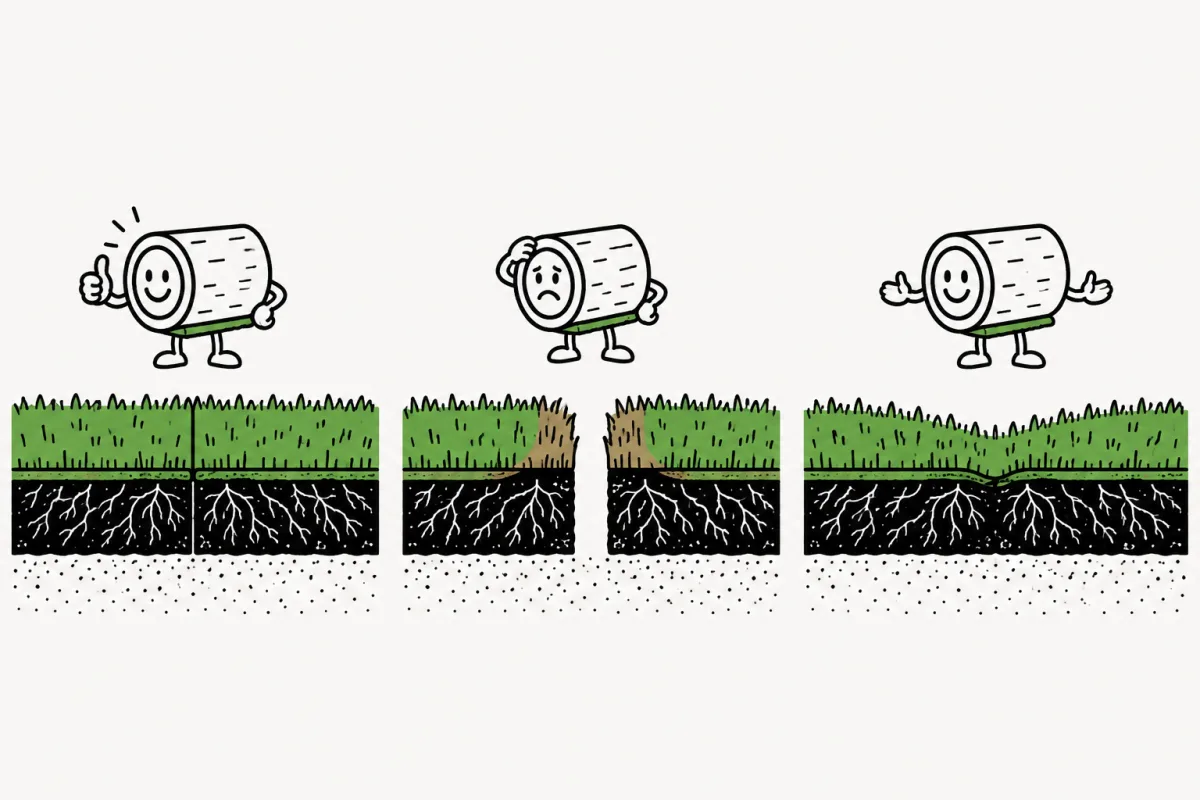
At a glance
Which kind of seam are you seeing?
Identify the type of seam
- Green and level: The pieces may still be growing together.
- Brown or yellow: Check moisture and coverage along the edges.
- Sunken or raised: Check the soil level and contact beneath the pieces.
Green, level seams often need time
Fresh sod consists of separate pieces. Joints can remain visible for several weeks, especially when light falls across the lawn at a low angle.
During active growth, many seams fill within four to six weeks. Grass type and conditions affect the rate. Dormant sod may wait until spring.
Watch for growth across the joint. A visible line alone does not show that the sod has failed.
Check brown edges for drying
Cut edges can dry faster than the center of each piece. Check the soil along the seam before adding water.
- Inspect the joints for dry soil and open gaps.
- Run the sprinklers to check coverage.
- Correct blocked heads or missed strips.
- Water dry edges within the permitted rules.
Recovery depends on whether the crowns and roots remain alive. The yellow-sod guide explains further checks.
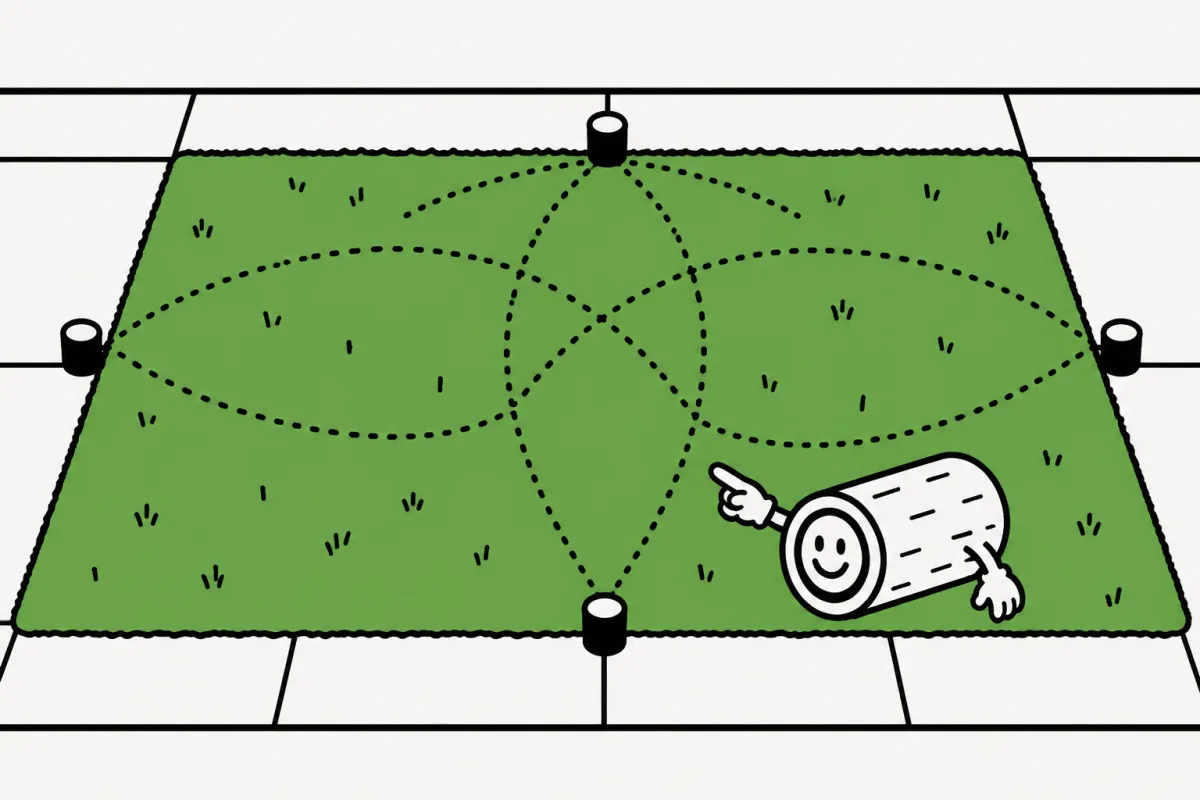
Check where the spray patterns meet
Watch the edges between coverage areas. A missed strip can stay dry even when the rest of the zone gets enough water.
Inspect the soil beneath low areas
Loose fill, soft spots, and poorly firmed soil can settle after watering and traffic. A low piece may reflect the surface beneath it.
Avoid disturbing loose sod for a minor cosmetic dip. After rooting, small low spots may suit light topdressing.
If a large area sinks or holds water, investigate the grade or underlying soil. Repeated topdressing will not resolve every drainage problem.
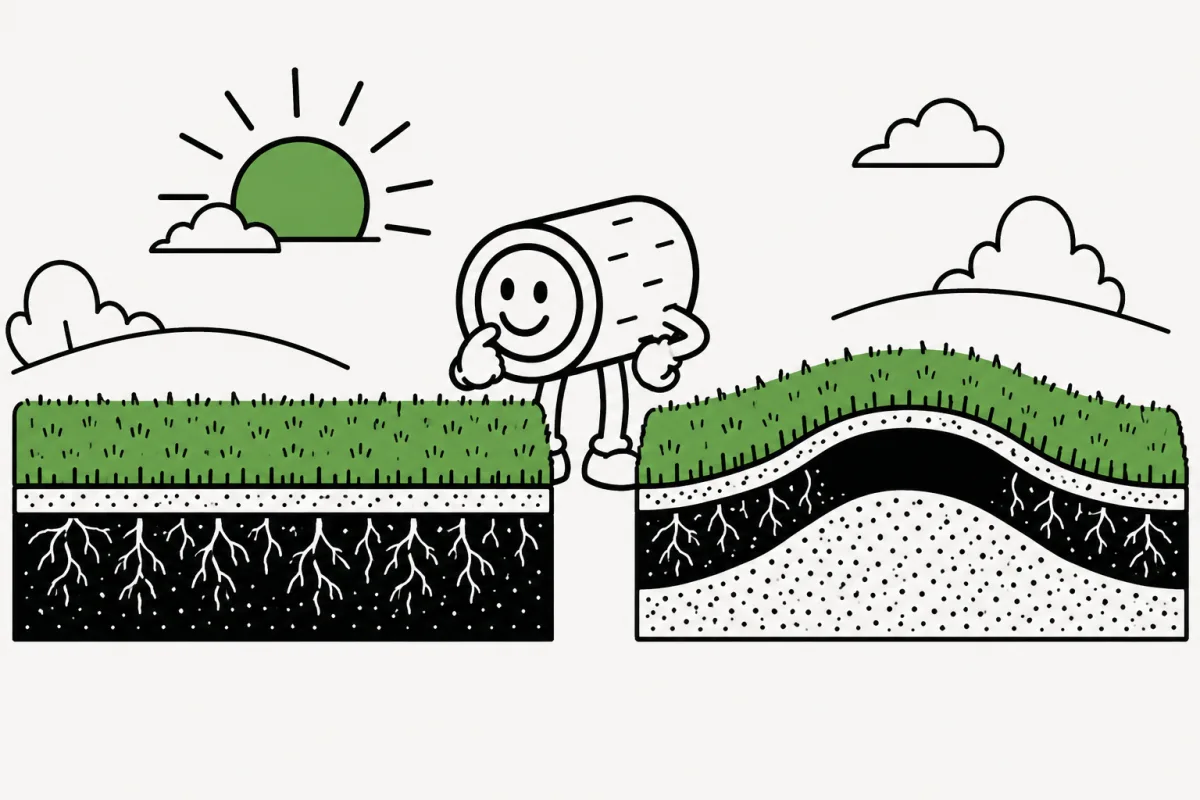
Roots need contact with the soil
Firm the bed and fit each piece flat. Air pockets leave roots exposed and can contribute to uneven settling.
Apply topdressing lightly
Topdressing adds a thin layer of suitable material across established turf. Check that the sod is rooted before working material into the joints.
- Choose material compatible with the existing soil.
- Spread no more than about a quarter inch in one pass.
- Brush it into the low area while leaving grass blades exposed.
- Allow the grass to grow through before deciding on another pass.
Do not bury the canopy. Avoid assuming pure sand is suitable for a clay lawn.
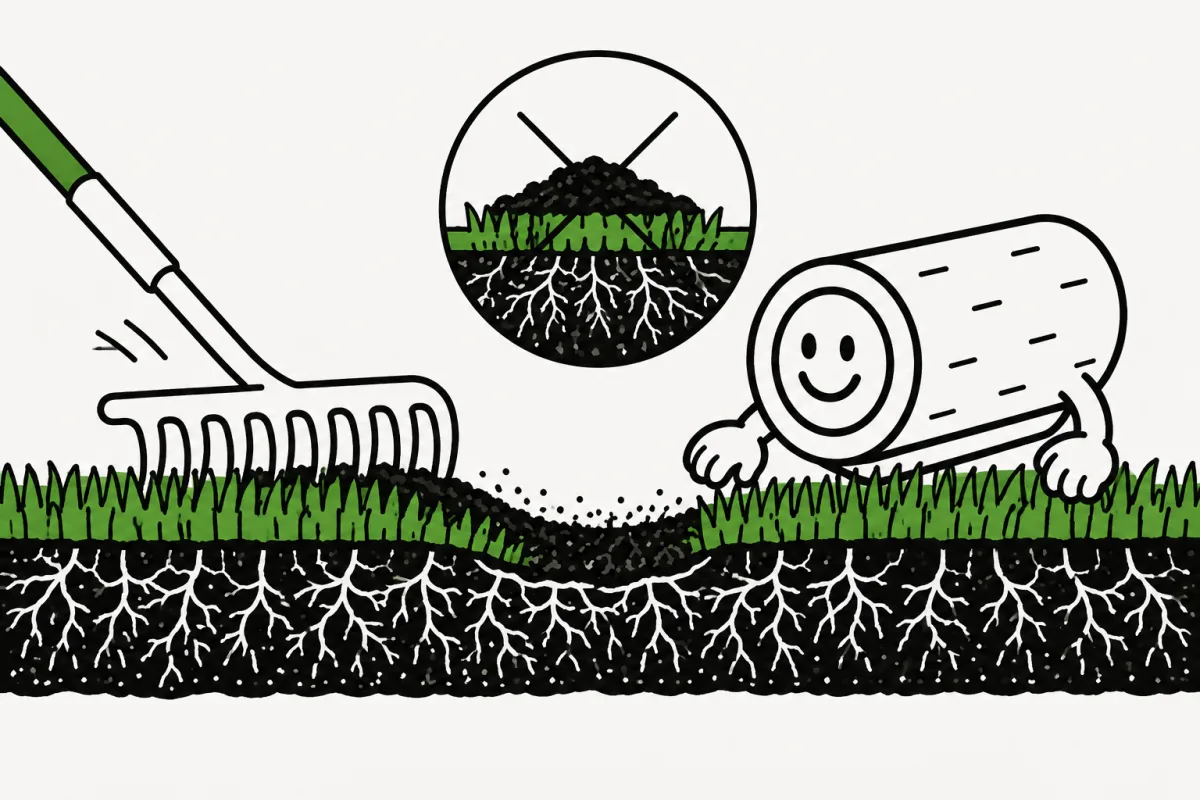
Leave the grass above the topdressing
Wait until the sod is rooted. Brush in a thin layer and keep the leaves exposed instead of burying the canopy.
Prevent gaps during installation
Prepare a firm, even bed. Lay the pieces tightly without stretching them, and stagger the short joints.
Press the sod against the soil so it does not bridge air pockets. Check for consistent piece thickness as you work.
See the installation guide for the laying pattern and our sod standards for delivery checks.
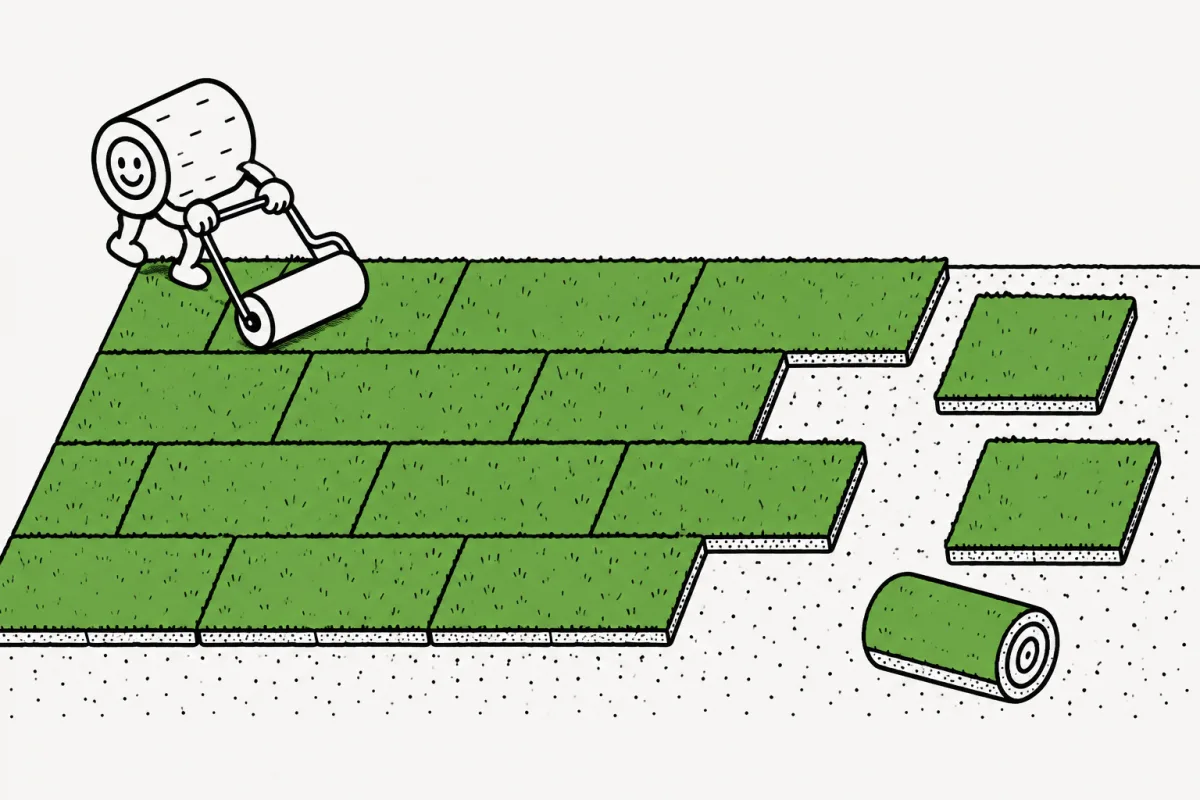
Offset the short joints
Start alternate rows with a half piece. Fit edges closely without stretching or overlapping the sod.
Questions people ask
How long until sod seams disappear?
Many fill within four to six weeks during active growth. Grass type and conditions affect the rate. Dormant sod may retain visible joints until spring.
Why are my sod seams turning brown?
The edges may be drying faster than the centers. Check moisture beneath the joints and look for missed sprinkler coverage.
Should I fill the gaps between sod pieces?
Fit substantial installation gaps with sod. For minor settled joints after rooting, thin topdressing may help. Keep the grass exposed and use compatible material.
My lawn is lumpy after install. Can it be fixed?
Minor low spots may suit thin topdressing after rooting. Large depressions or persistent settling need a closer look at the grade and underlying soil.
Sources
This guide is part of The complete guide to sod in Dallas-Fort Worth.