
At a glance
Inspect. Measure. Adjust.
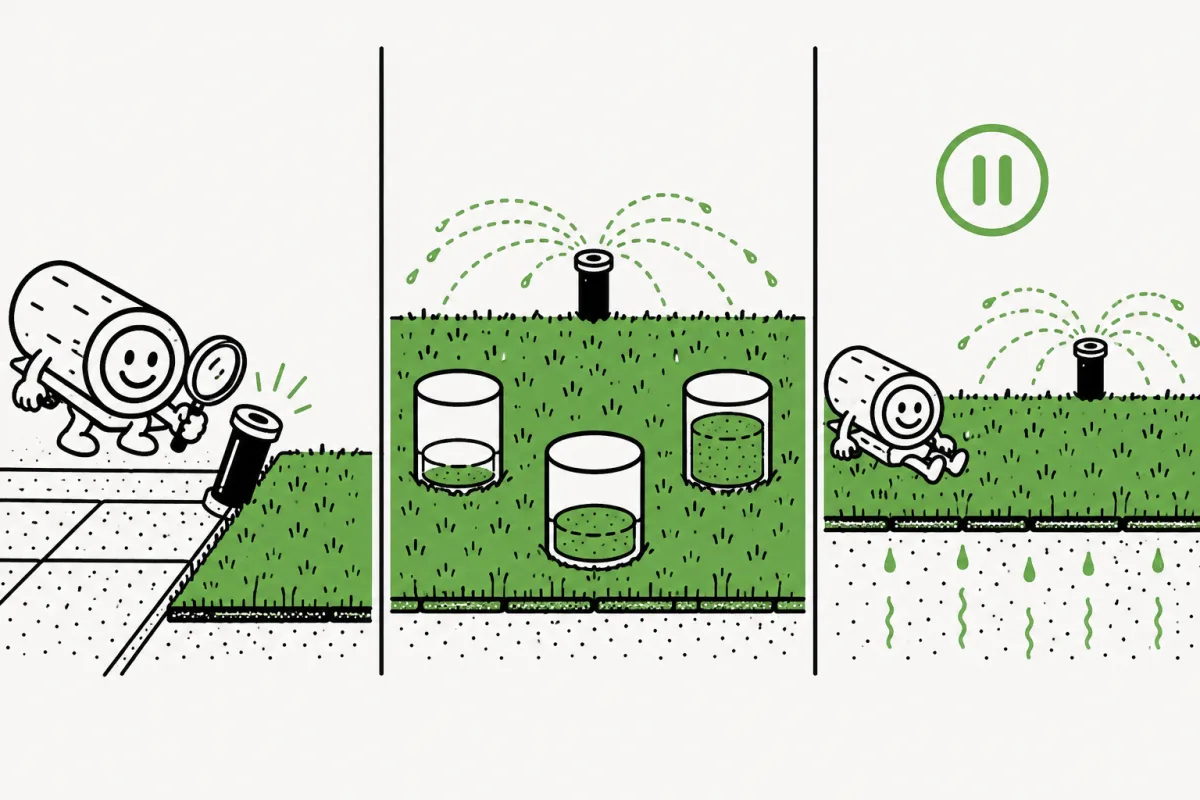
Inspect one zone at a time
- Run a zone and watch where the water lands.
- Flag heads that fail to rise, lean, leak, or spray outside the lawn.
- Check corners and areas behind plants.
- Repeat for every zone.
Persistent pooling between runs may indicate a leak. Fine mist can indicate excessive pressure. The EPA inspection guide explains these checks.
Mark heads before installation and check them afterward. The finished sod height can affect whether spray clears the turf.
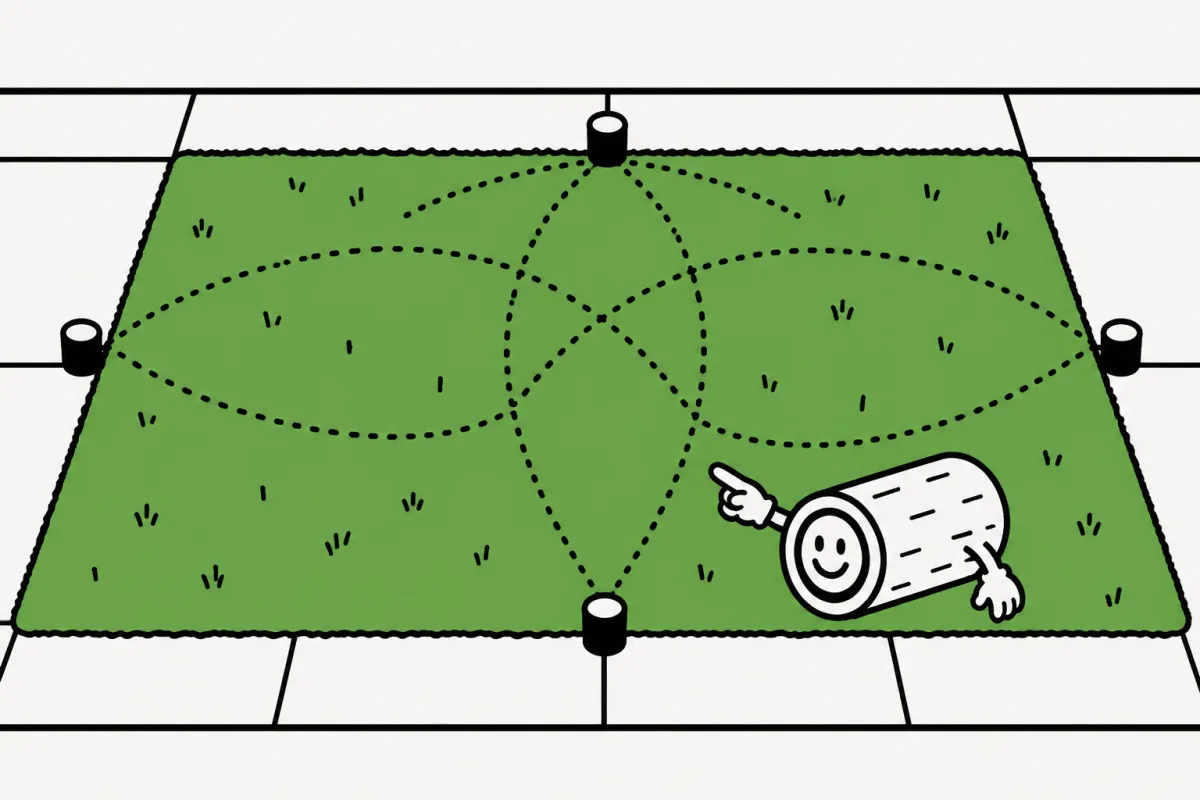
Check where the spray patterns meet
Watch the edges between coverage areas. A missed strip can stay dry even when the rest of the zone gets enough water.
Measure coverage with catch cups
Use matching, straight-sided containers to compare water across a zone. Include edges and any area that looks dry.
- Place the containers upright across the lawn.
- Run one timed watering test.
- Compare the collected depths.
- Record the zone, duration, and results.
If one cup collects much less, inspect nearby heads, obstacles, and spray overlap. Correct the problem before adding runtime.
Longer watering also adds water to the wettest areas. Repeat the measurement after repairs. Texas A&M’s catch-can instructions provide more detail.
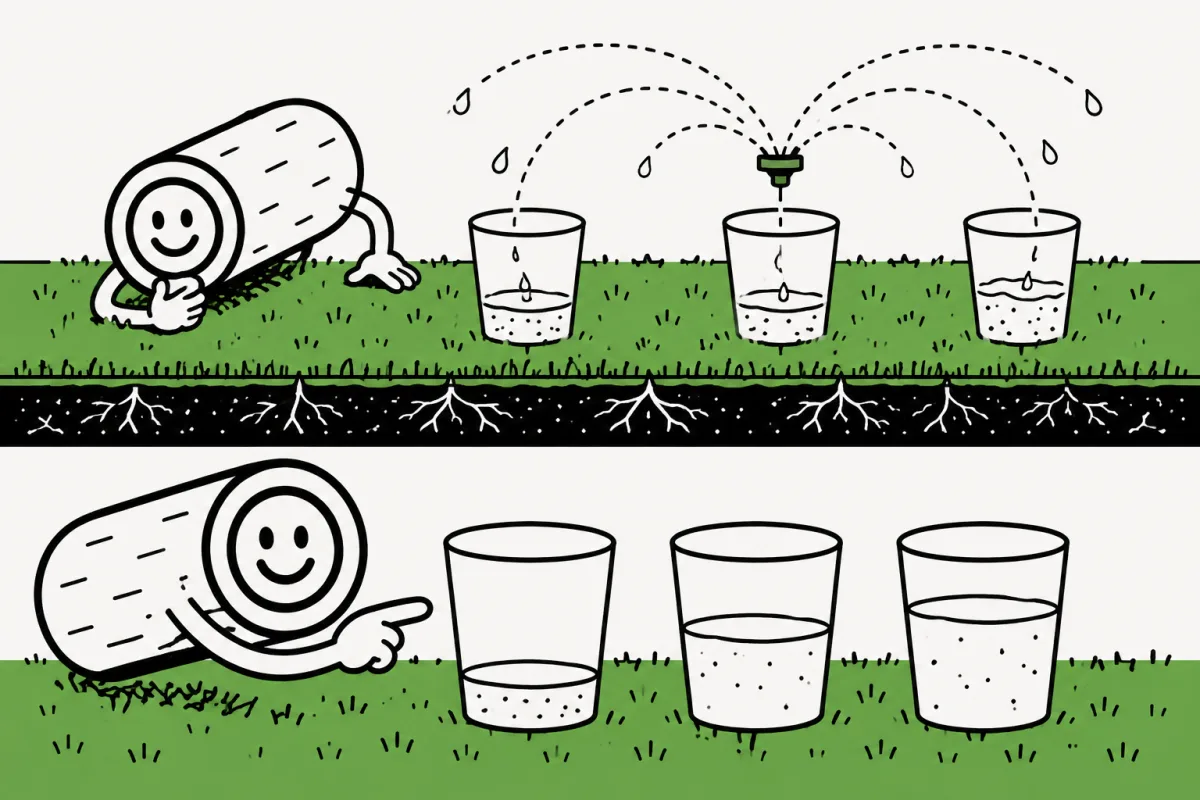
Compare what each cup collects
Use equal containers during the same timed run. Low collection in one area points to a coverage check before adding runtime.
Use shorter cycles where water runs off
If runoff starts before the soil absorbs enough water, try shorter runs with soaking time between them. This is cycle-and-soak watering.
The useful cycle length depends on soil, slope, and sprinkler output. Observe the lawn and stop a cycle before runoff develops.
Keep every cycle within the permitted watering window. Follow Texas A&M’s cycle-and-soak guidance for controller setup.
Check the complete controller program. An extra start time may repeat every zone in that program, rather than adding time to one zone.
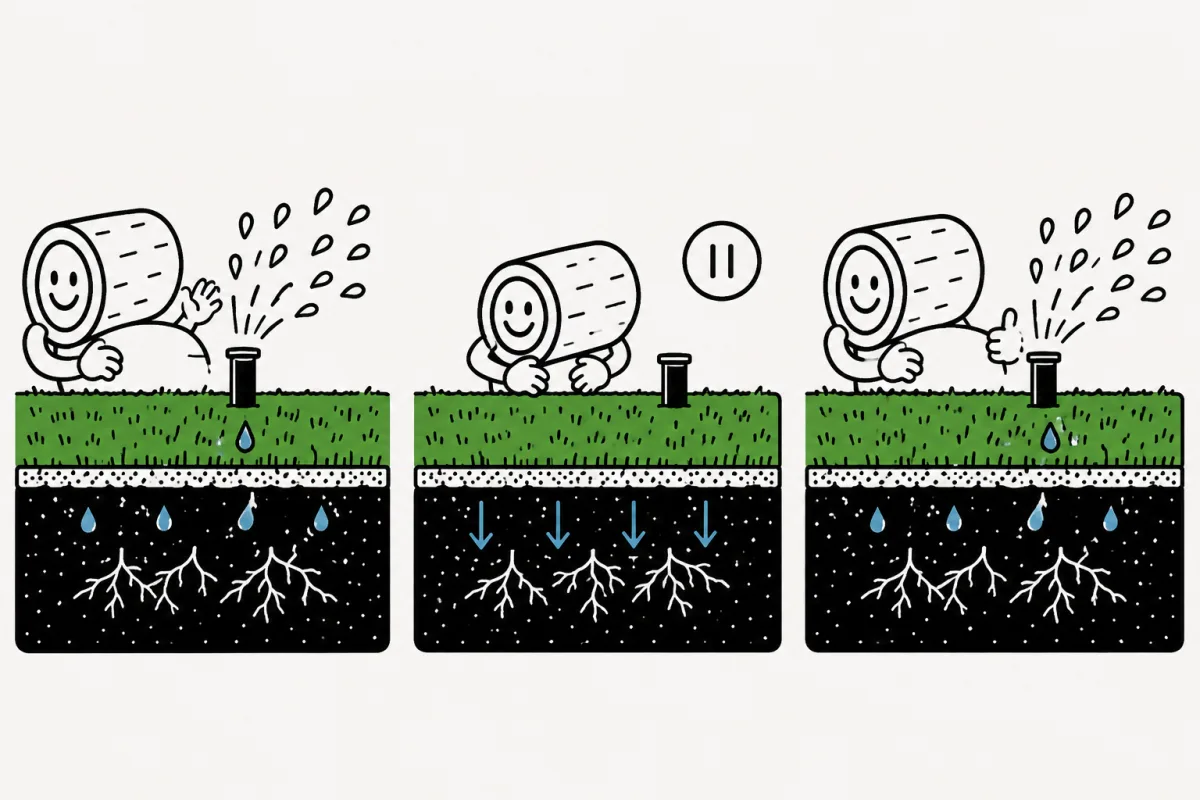
Water, pause, then reassess
Shorter cycles can help water soak in before runoff starts. Keep every cycle within your permitted watering window.
Set the schedule from conditions
Catch cups measure sprinkler output. They do not show how much water the lawn needs today.
For new sod, lift a corner and check moisture underneath. Use the watering guide as the roots establish.
Confirm the current city rules before setting the timer.
A weather-based controller uses weather and site settings to adjust watering. It still needs correct setup and maintained sprinklers.
Read the EPA controller overview, or return to our irrigation guides.

Confirm the rules before delivery
Check the current schedule and drought stage. Get any required approval and keep its conditions.
Sources
This guide is part of The complete guide to sod in Dallas-Fort Worth.