

At a glance
Brown is a clue, not a verdict
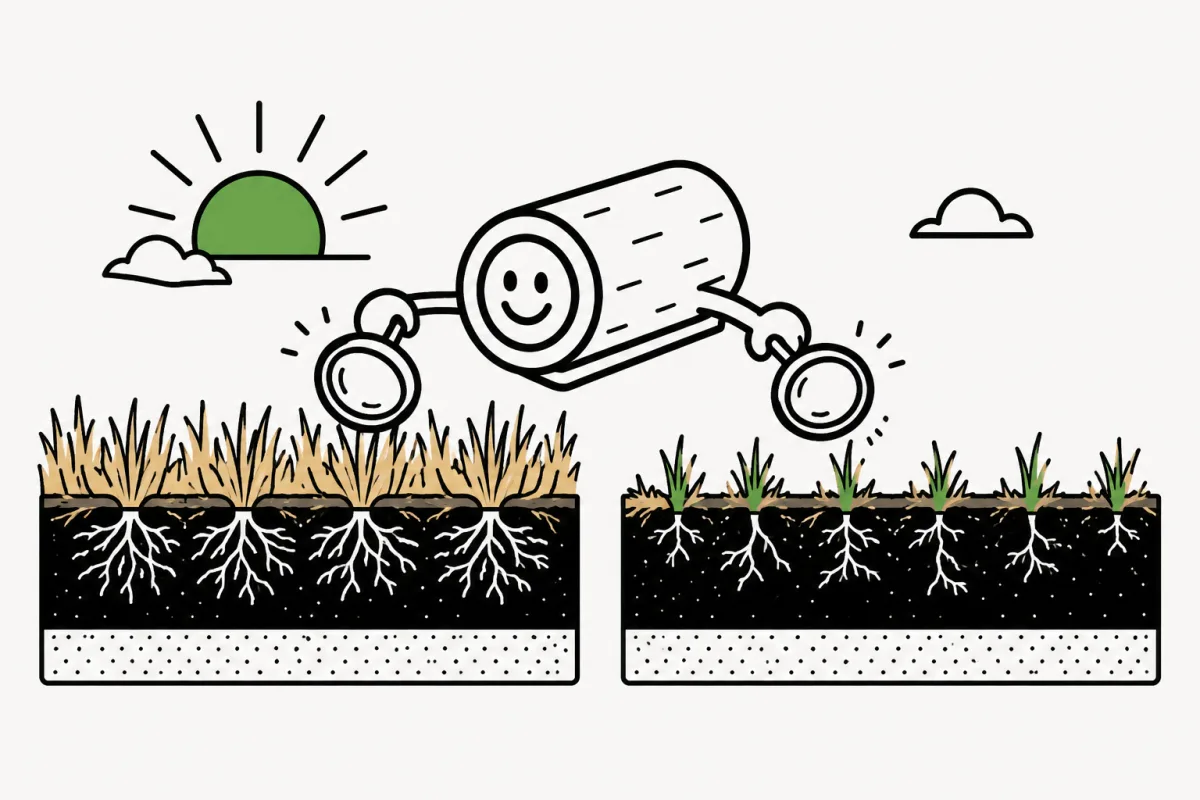
Tan grass can be dormant
Bermuda, Zoysia, and St. Augustine are warm-season grasses. Growth slows as the soil cools, and the leaves may turn tan.
In Dallas-Fort Worth, this often happens from November through March. Color alone does not show whether the plant has died.
Check the roots and crowns
- Gently tug a small section to check whether roots anchor it.
- Part the leaves and examine the crown where the plant meets the soil.
- Inspect a small lifted edge for roots and moisture.
Firm crowns and intact roots are useful signs. Brittle tissue and root loss need closer inspection. Compare several affected and healthy-looking areas.
Newly laid sod starts out loose, especially during cold weather. A loose corner alone does not prove that it is dead.
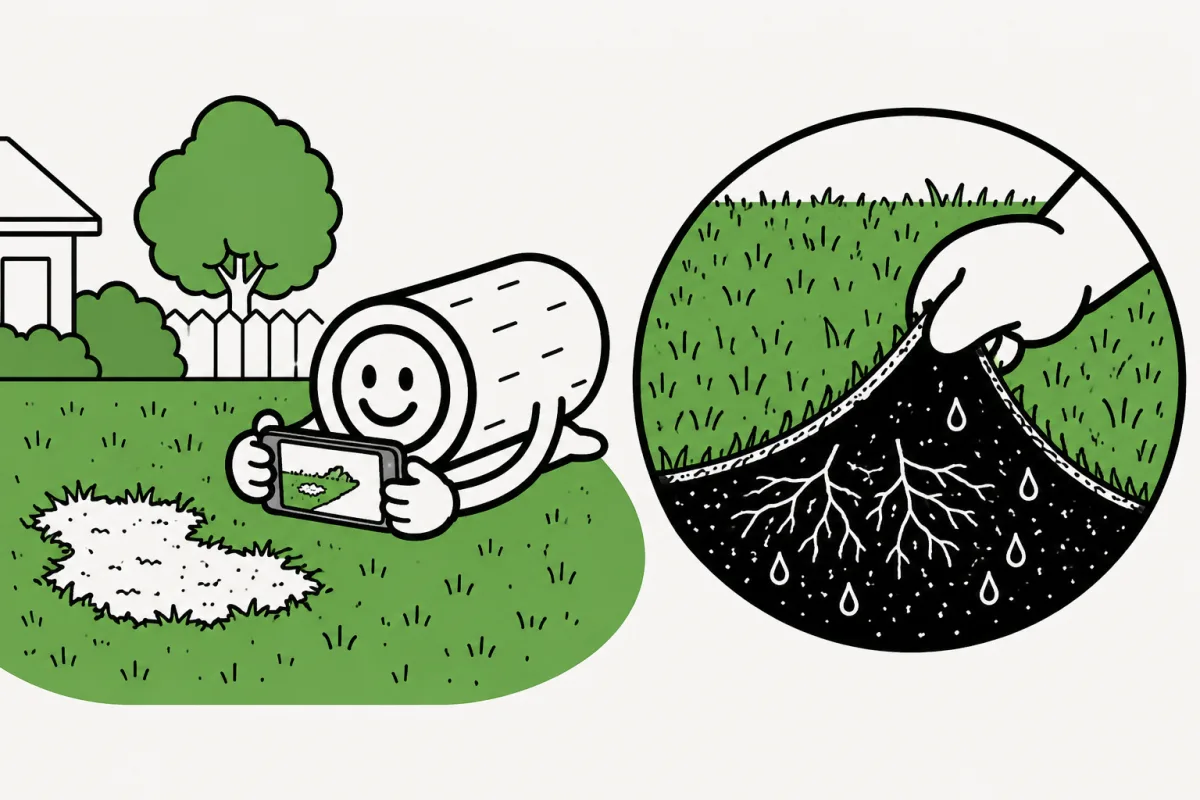
Take a wide photo and a close-up
Show the whole pattern, then the soil beneath a corner. Include the installation date and recent watering.
Compare the affected areas
Seasonal dormancy can affect much of a lawn at once. Localized damage may follow a missed sprinkler area, a wet depression, or repeated traffic.
Sun exposure and grass type can also create uneven color. Treat the pattern as a clue and check the soil beneath it.
Protect sod during its first winter
New sod has less established roots than an older lawn. Cold soil slows rooting, and dry wind can remove moisture.
During dry spells, check beneath the sod. Water as needed when the ground is not frozen and local rules allow it.
Cold injury is also possible, particularly with St. Augustine. Do not assume every brown area is harmless dormancy.
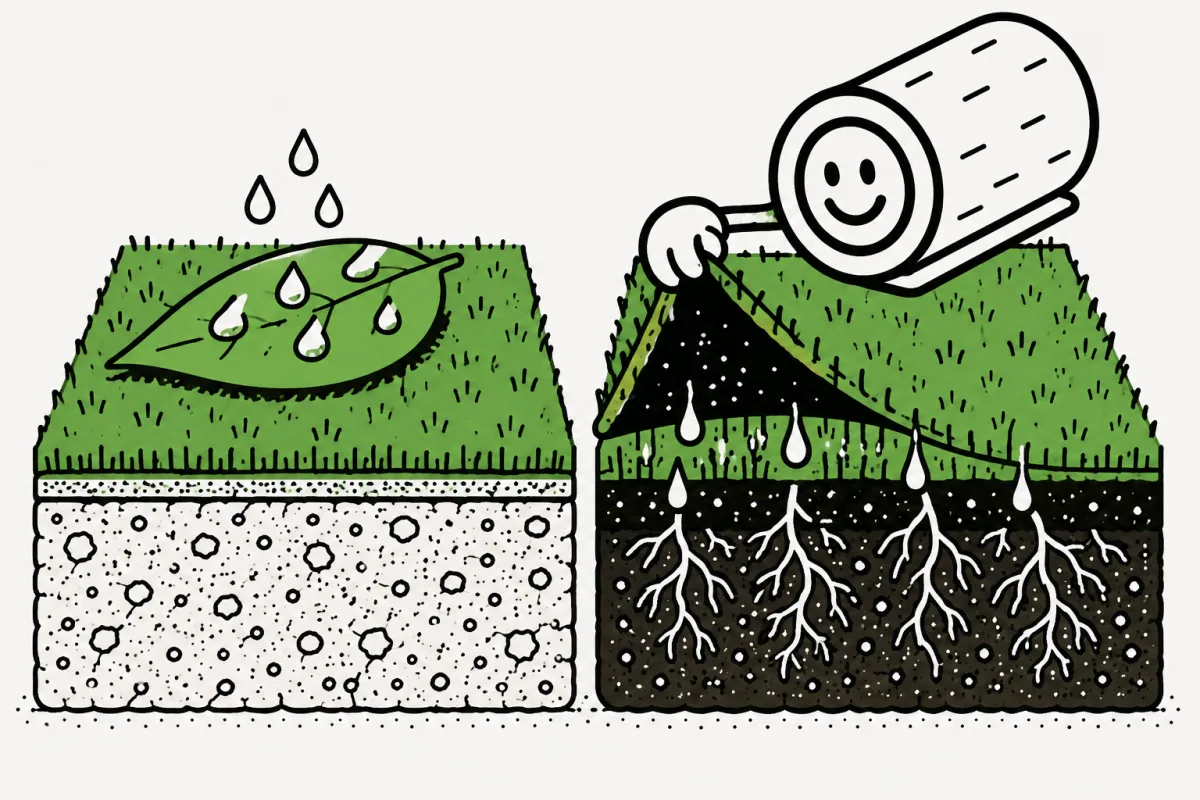
Check below the green surface
Lift a corner gently. The soil beneath the sod tells you more than the appearance of the leaves.
Watch for spring growth
Growth usually resumes as the soil warms in spring. Sunny areas may green before shaded areas. Zoysia can recover slowly.
If the soil is warm and nearby lawns are growing, inspect areas that remain tan. Pay particular attention to crowns, roots, and moisture.
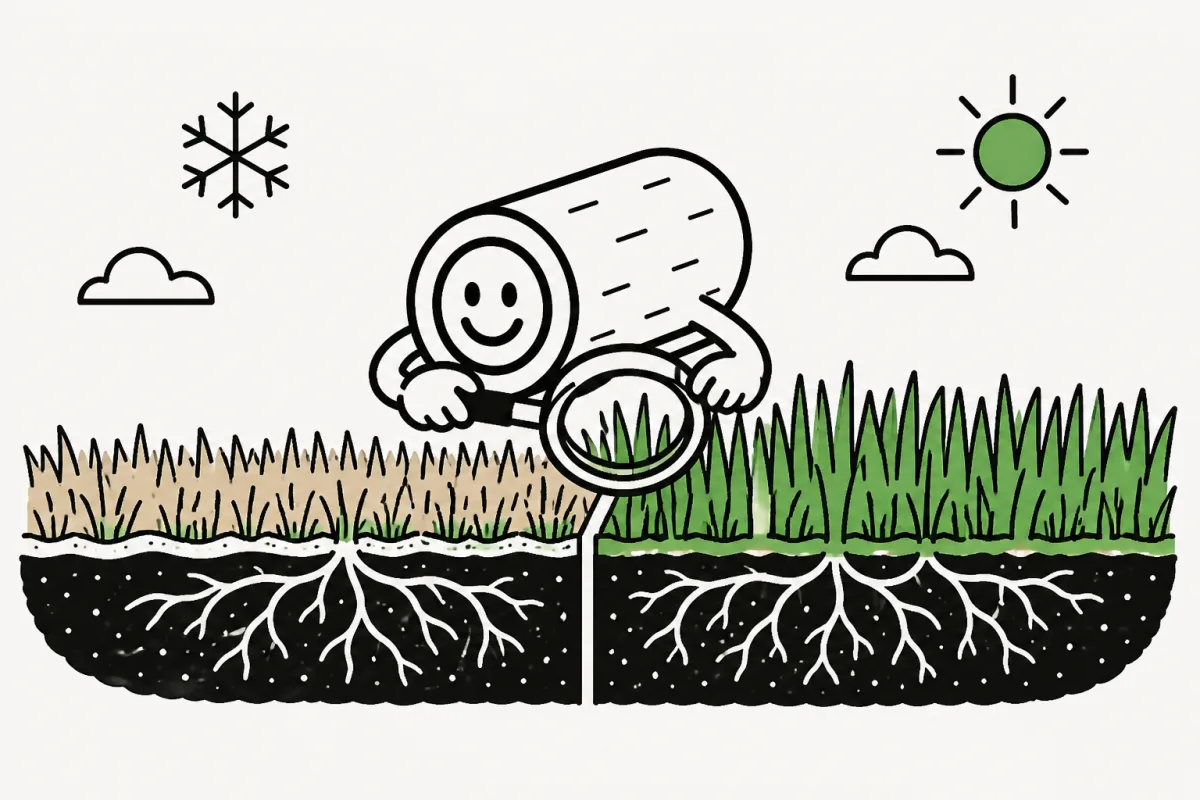
Winter color changes above living roots
Dormancy can change leaf color while the plant remains alive. Inspect roots and crowns before deciding a patch has failed.
Care for the lawn while you wait
- Hold fertilizer while the grass is dormant.
- Adjust watering to winter moisture conditions.
- Limit traffic because dormant grass repairs damage slowly.
- Photograph uncertain areas so you can compare them as the weather warms.
We recommend installing sod only where irrigation is close at hand and available for use. Read the watering guide for moisture and rooting checks.
The care guide covers the rest of the year.
Questions people ask
When does grass go dormant in Dallas-Fort Worth?
Warm-season lawns often turn tan from November through March. Timing varies with temperature, light, and grass type. Growth resumes as conditions warm.
Do I water dormant sod?
Check moisture during dry winter spells and water as needed when the ground is not frozen. Follow the current local rules.
My neighbor's lawn greened up and mine has not. Why?
Grass type, shade, exposure, and establishment can change the timing. Inspect areas that stay tan after the soil warms and growth resumes nearby.
Can I lay sod in winter in Texas?
Yes, when conditions allow. Avoid frozen ground and expect slower rooting. Keep checking moisture while the grass is dormant.
Sources
This guide is part of The complete guide to sod in Dallas-Fort Worth.