
At a glance
Give the roots a good landing
Check compaction and drainage first
Heavy clay can become hard when dry and hold water when wet. Compacted fill can also limit root growth.
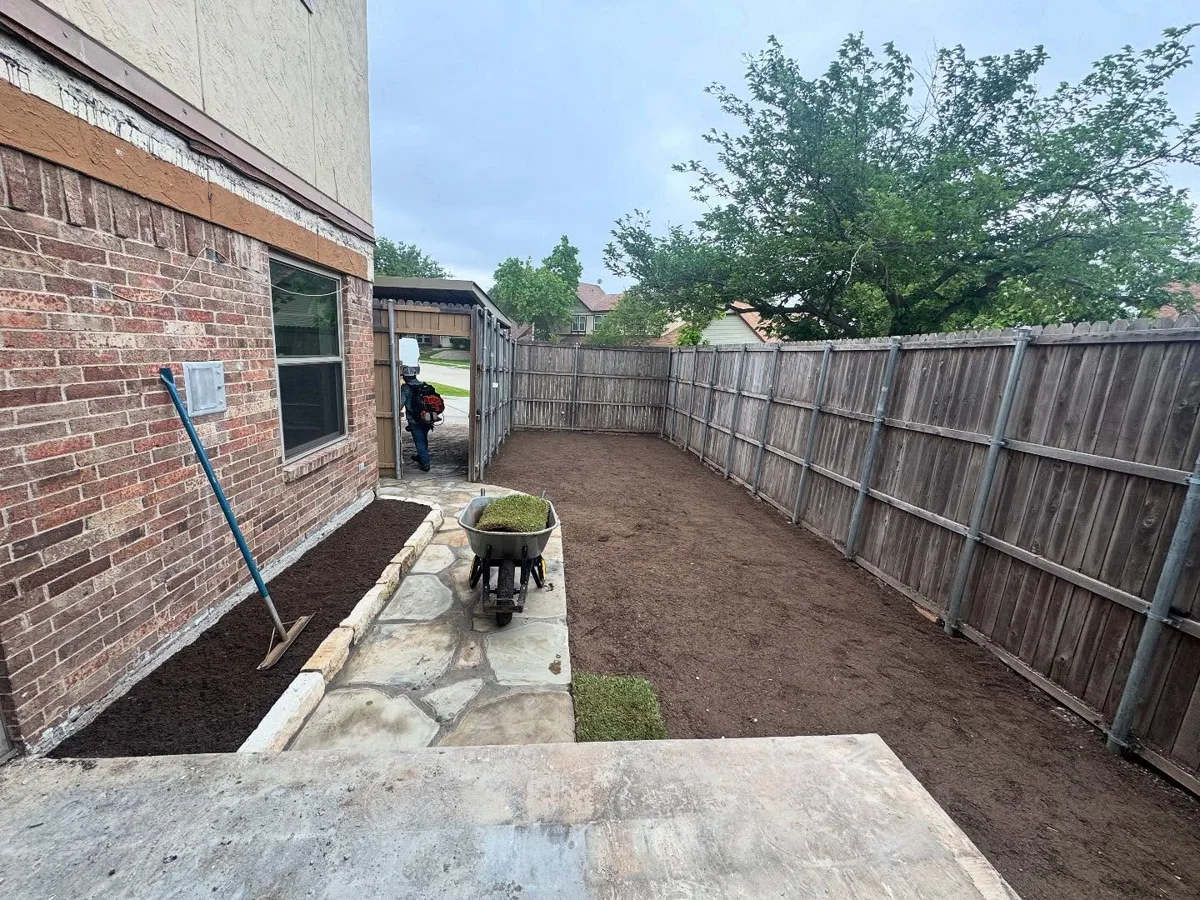
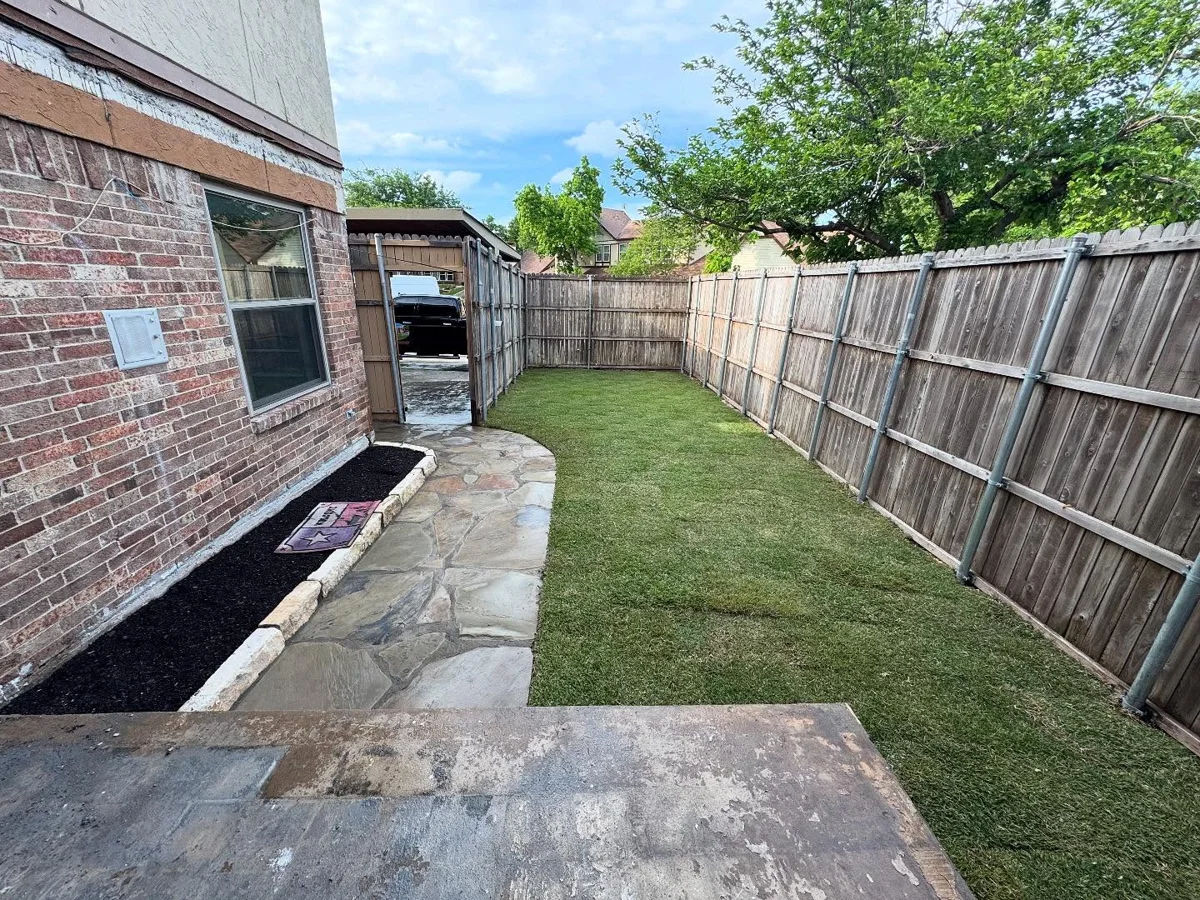
New sod needs close contact with prepared soil. Before adding topsoil, check the grade, compaction, and depth available below paths and sprinkler heads.
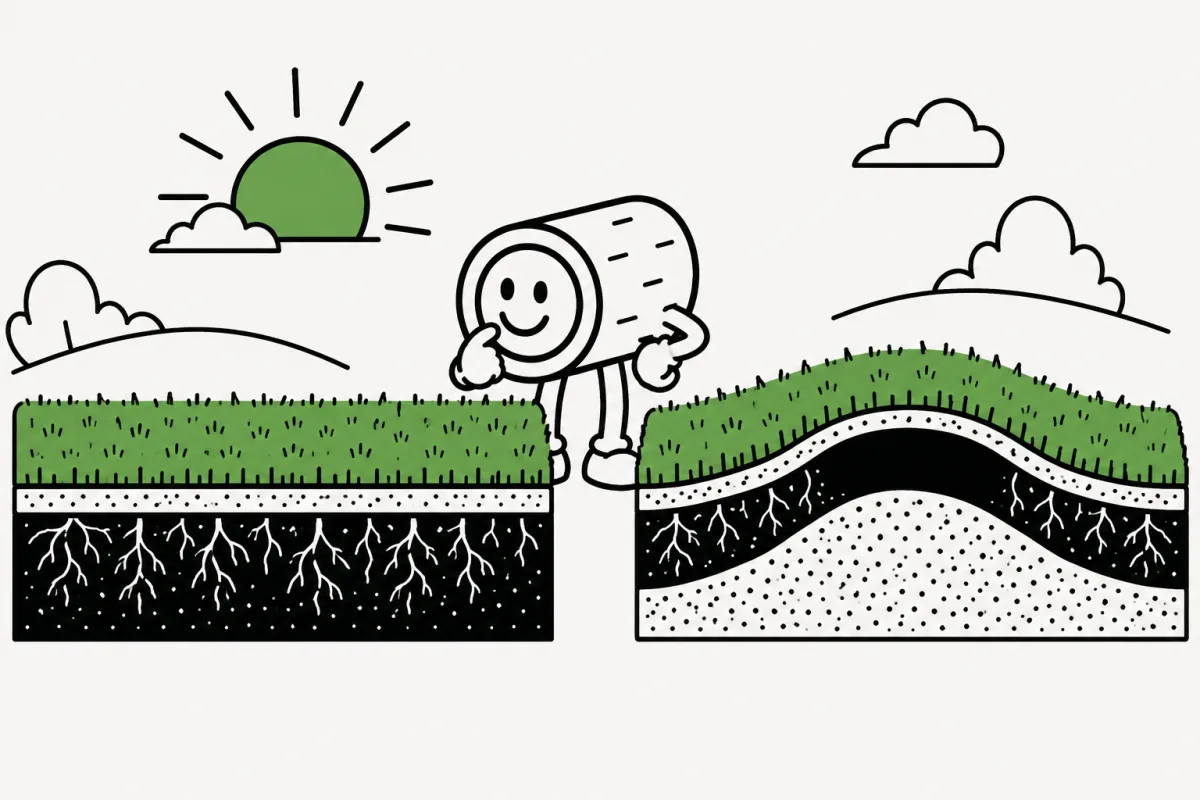
Roots need contact with the soil
Firm the bed and fit each piece flat. Air pockets leave roots exposed and can contribute to uneven settling.
Step 1. Remove the old lawn
Remove living grass, weeds, and thick thatch before laying sod. A sod cutter can remove the old turf in strips.
If you use a herbicide, follow its label for application and planting intervals. Remove the dead material before installation.
Clear rocks, roots, and construction debris that interfere with an even soil surface.
Step 2. Correct the drainage
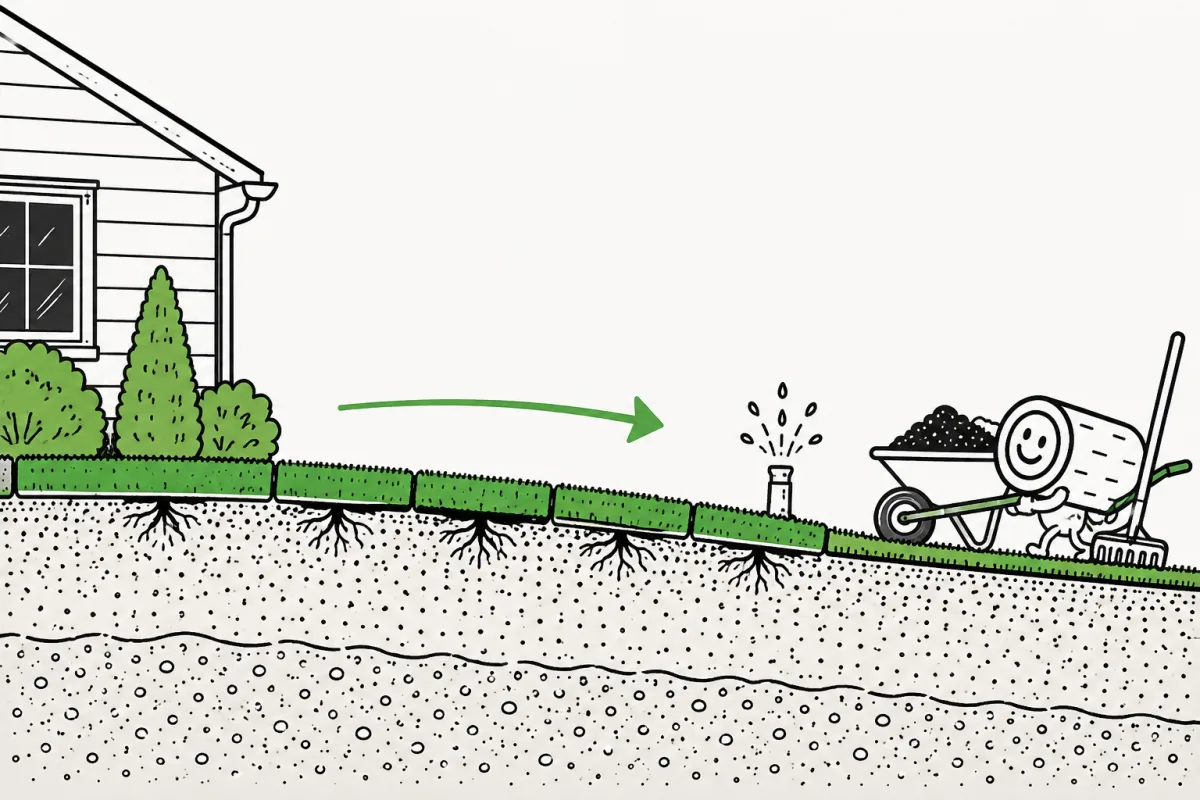
Water should drain away from the house. Check low spots after rain and identify any slope that directs water toward the foundation.
Leave room for the actual sod thickness beside paths and driveways. The finished turf should meet those edges without creating a raised strip.
For substantial grade changes or drainage near a foundation, get a site-specific plan before moving soil.
Step 3. Plan the soil depth
The amount of topsoil depends on the existing soil and finished grade. A two-inch layer is a useful estimating example, not a cure for every site.
At two inches deep, one cubic yard covers about 162 square feet. A 3,000-square-foot area needs about 18.5 cubic yards before allowances.
Our measuring tool calculates the volume from the area and depth. Confirm the depth before ordering soil.
Avoid working wet clay that smears or forms large clods. Adding soil does not replace correcting compaction or drainage.
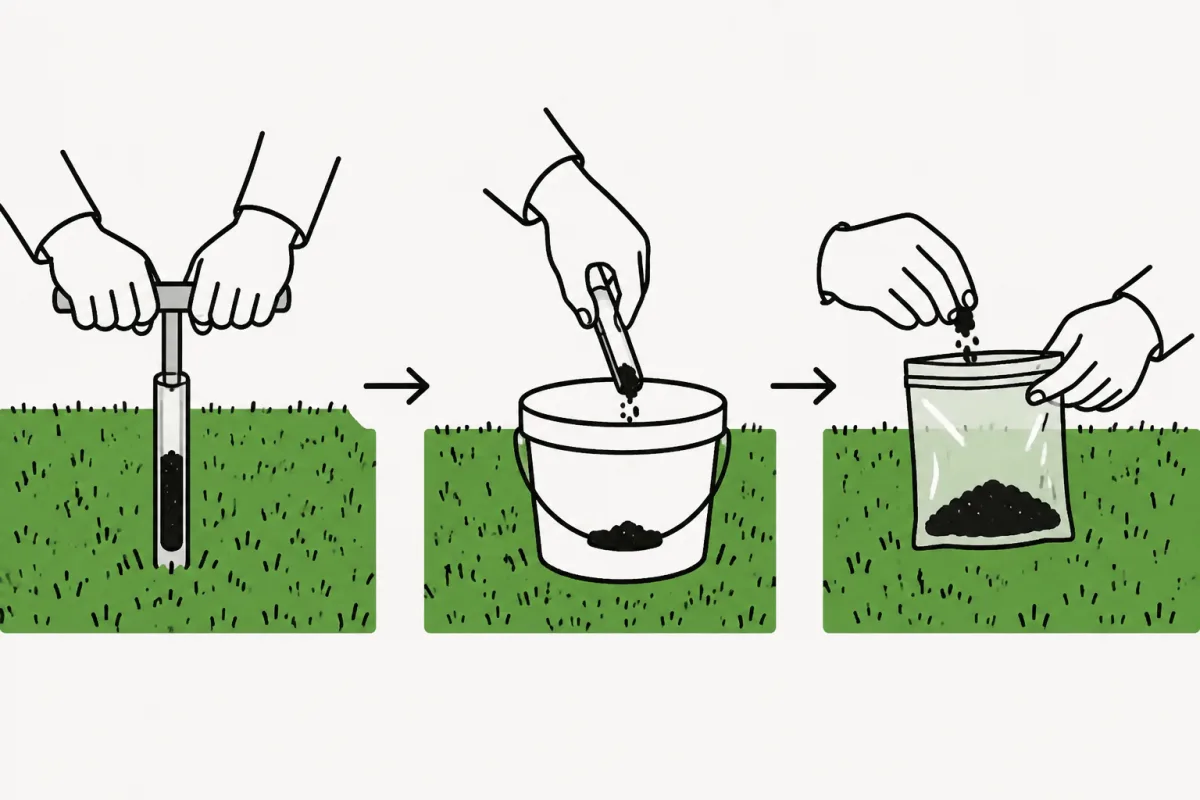
Check the soil before choosing fertilizer
Use the testing lab’s sampling instructions. Match the fertilizer to the results, grass type, and growth conditions.
Step 4. Rake and firm the surface
- Rake out ridges and fill shallow low spots.
- Firm the soil lightly so it supports the sod without deep footprints.
- Check the finished height beside hard surfaces.
- Moisten dry soil before laying sod.
The bed should support the pieces evenly. Loose mounds and air pockets can leave the finished lawn uneven.
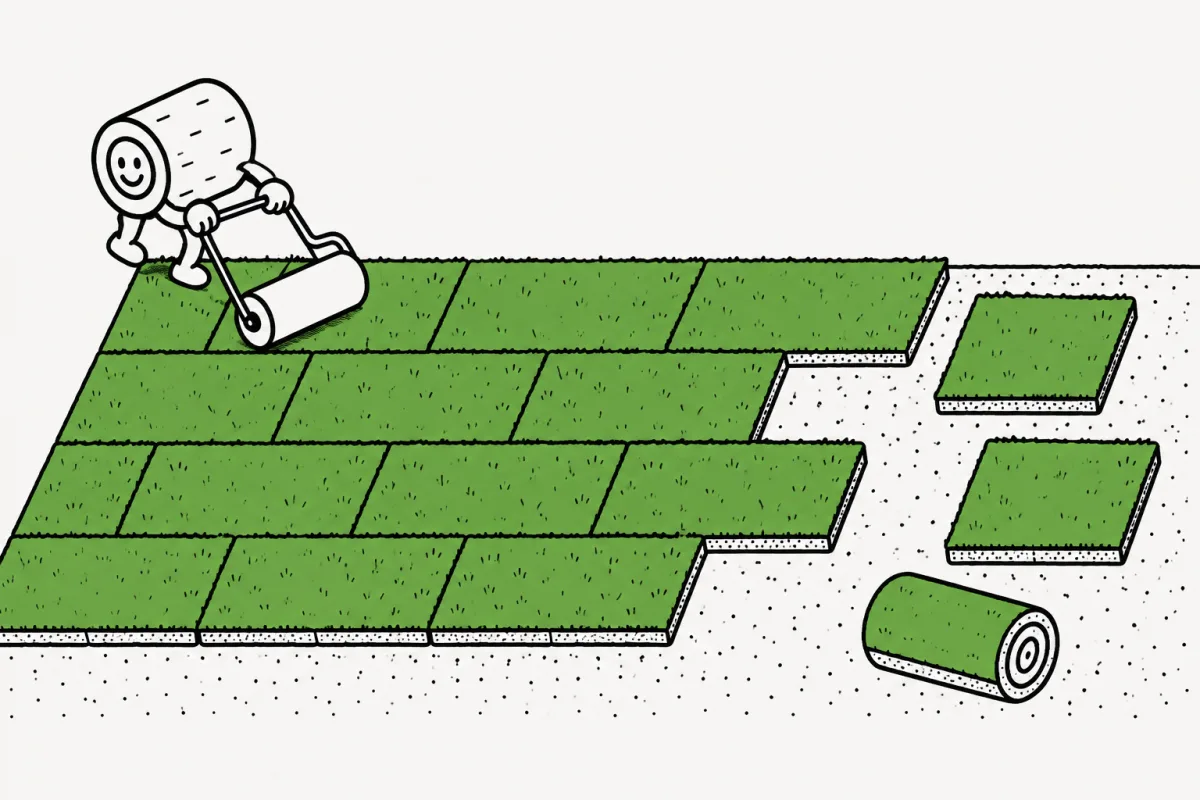
Offset the short joints
Start alternate rows with a half piece. Fit edges closely without stretching or overlapping the sod.
Step 5. Check sprinkler coverage
Run every zone before delivery. Fix heads that fail to rise, spray outside the lawn, or miss an area.
Flag each head so the installation crew can see it. Use the coverage guide to check edges and corners.
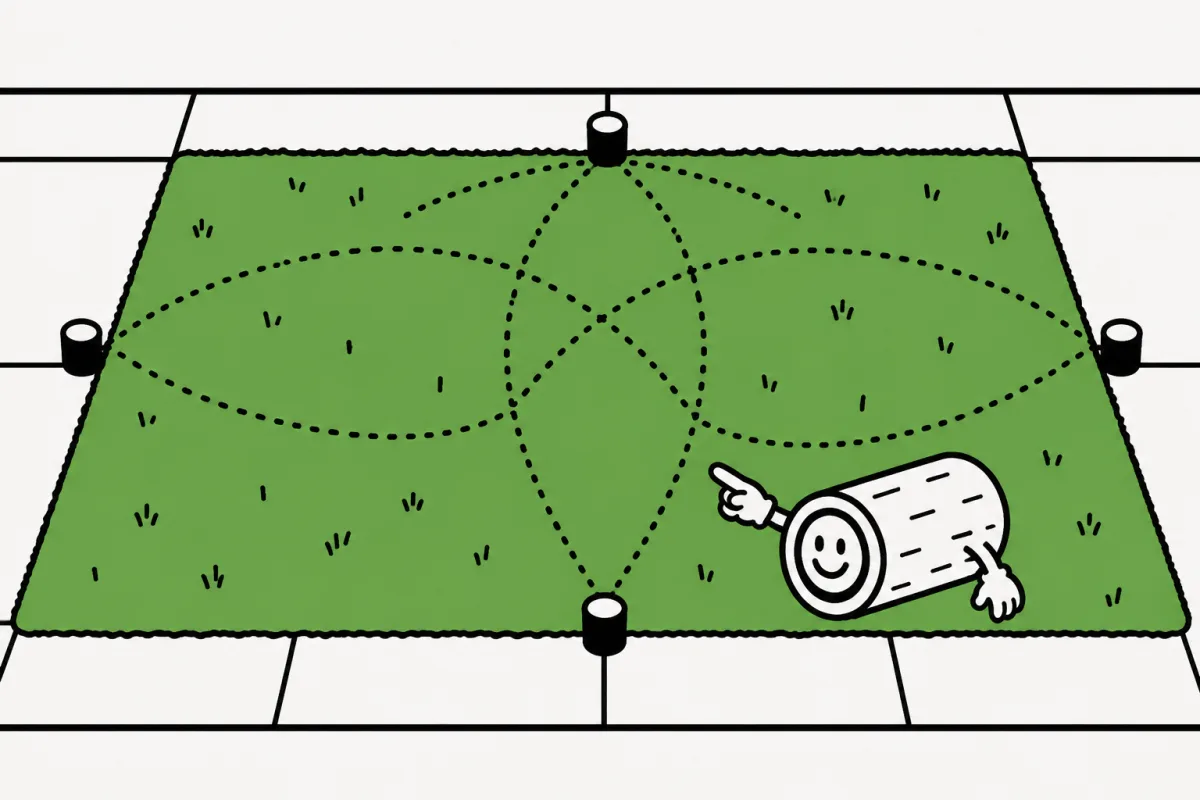
Check where the spray patterns meet
Watch the edges between coverage areas. A missed strip can stay dry even when the rest of the zone gets enough water.
Inspect fill on new builds
Construction traffic can compact fill. Check for buried debris, uneven levels, and water collecting near the house.
Assess the site before choosing a topsoil depth. Additional soil alone may leave the original drainage problem underneath.
What affects the preparation quote
Removing old turf, hauling debris, changing the grade, and bringing in soil add work. A bare, prepared yard needs less.
We quote preparation with installation. See lawn preparation services, or continue to the DIY installation guide.
Questions people ask
Do I really need topsoil under sod in DFW?
It depends on the soil and finished grade. Correct compaction and drainage first, then choose a suitable depth. Topsoil alone does not resolve every problem.
Can I lay sod over builder fill on a new house?
Inspect the fill for compaction, debris, and drainage problems before laying sod. Prepare it so the roots can reach suitable soil.
Should I till the clay before sod?
Avoid working wet clay that smears or forms large clods. Choose the preparation method from the site conditions rather than tilling every lawn the same way.
Sources
This guide is part of The complete guide to sod in Dallas-Fort Worth.